All news
-
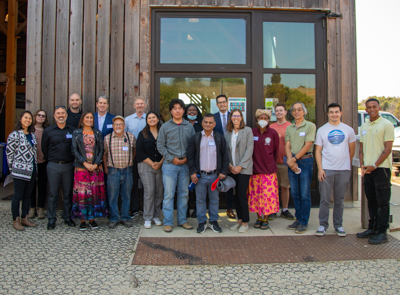
US Department of Agriculture visits UC Santa Cruz to learn about research and workforce development projects
UC Santa Cruz faculty, staff, and students shared information about USDA-funded research and education projects on campus with special guests from the USDA.
-
Anthropology faculty members partner on new National Science Foundation Center for Braiding Indigenous Knowledges and Science
UC Santa Cruz anthropology faculty members Tsim Schneider and Jon Daehnke received a more than $500,000 subaward through a new National Science Foundation (NSF) center that aims to address climate change by equitably combining insights from Indigenous knowledges and mainstream…

-
UCSC’s David Deamer and Mark Akeson honored for invention of nanopore sequencing
UCSC’s David Deamer and Mark Akeson won the AAAS Golden Goose award for the invention of nanopore sequencing, a transformational technology for reading DNA and RNA.

-
Research partnership will turn power plant emissions into fish feed
UC Santa Cruz’s ecological aquaculture research team will partner with the company Global Algae Innovations to test whether a microalgae grown using captured carbon dioxide emissions could be an effective feed ingredient for rainbow trout.

-
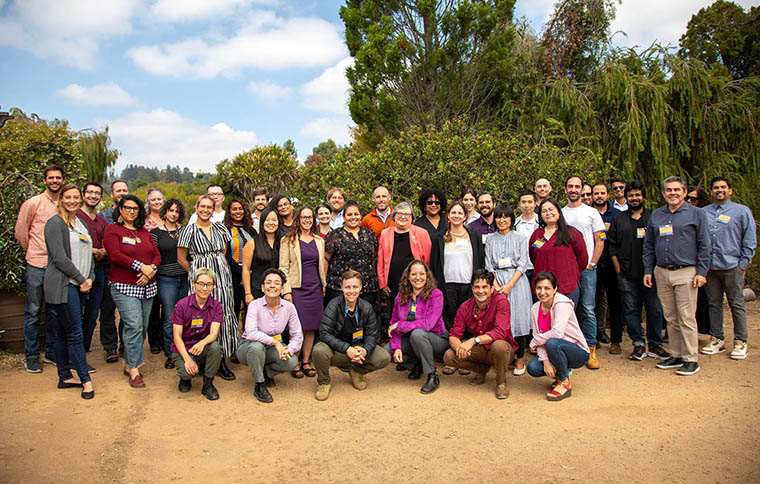
UC Santa Cruz welcomes new faculty to campus
UC Santa Cruz welcomes 54 new faculty members to campus who bring a wide array of expertise in research and creative scholarship that will open new areas of investigation and expression and expand existing areas of work.
-
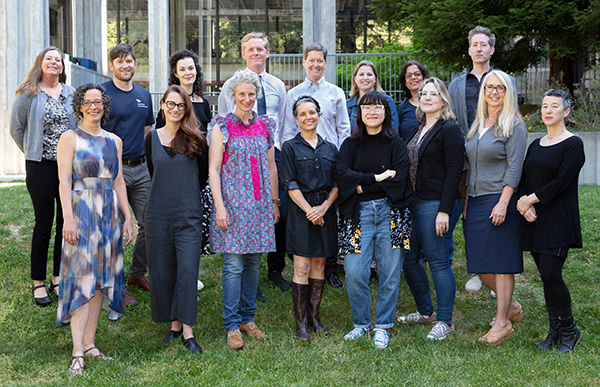
CITL and Online Education are now the Teaching and Learning Center
The merger officially brings together the expertise of both units to support the campus as it navigates the contemporary instructional landscape and strives to become a learner-centered research university.
-
2023 ARCS Foundation scholarships support UCSC graduate students in the sciences and engineering
Sixteen UC Santa Cruz graduate students have received scholarships worth a total of $175,000 from the Achievement Rewards for College Scientists (ARCS) Foundation for the 2023-24 academic year.

-
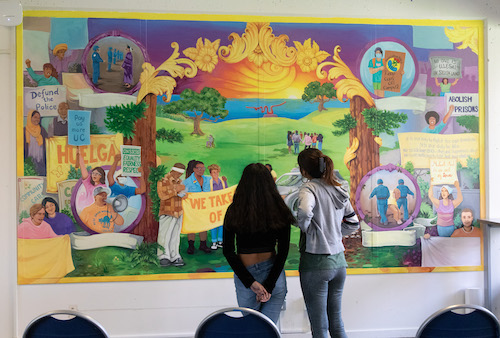
Student mural at Porter envisions a future without police
A mural by Irene Juarez-O’Connell, addressing community safety and policing, is now on display at the Porter Study Center at Porter College.
-
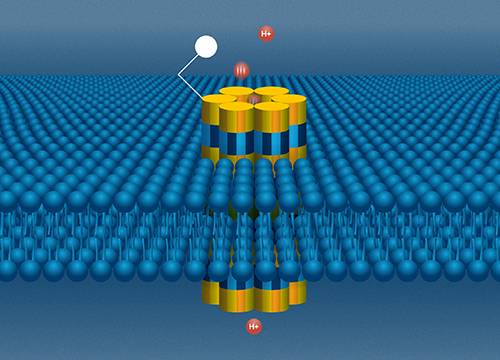
Novel device combines nanopores with electronic signals for disease detection
Research led by UC Santa Cruz Professor of Electrical and Computer Engineering Marco Rolandi shows the power of bioprotonic nanopores for disease detection.
-
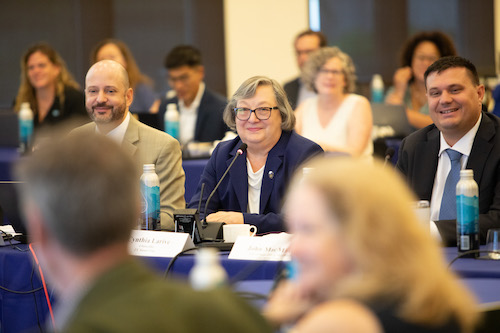
Campus leaders showcase innovation, entrepreneurship efforts to special Regents committee
UC Santa Cruz Chancellor Cynthia Larive and other campus leaders showcased the university’s innovation and entrepreneurship initiatives to a group of UC regents and external advisors on Monday.
-
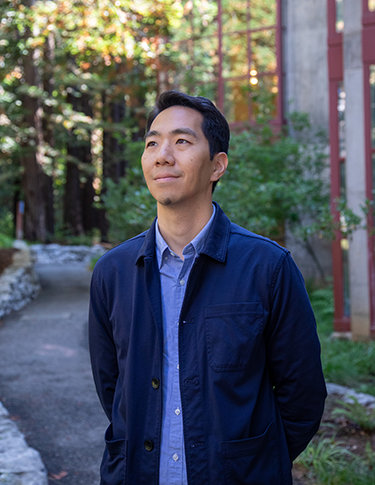
New blood test for noncoding RNA significantly improves cancer detection
Assistant Professor of Biomolecular Engineering Daniel Kim and his lab are developing more accurate and powerful liquid biopsy technologies that take advantage of signals from RNA “dark matter,” an understudied area of the genome.
-
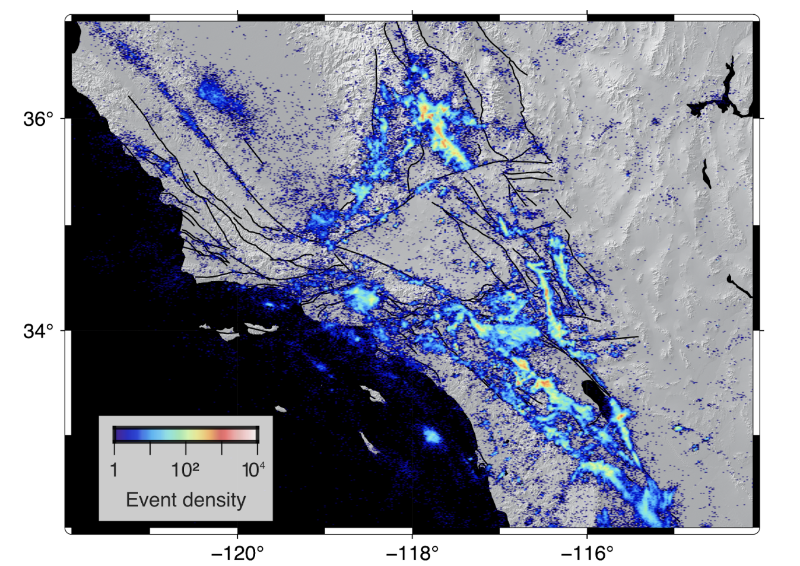
Seismologists use deep learning to forecast earthquakes
A team of researchers at UC Santa Cruz and the Technical University of Munich created a new model that uses deep learning to forecast aftershocks.
-
Coastal fisheries show surprising resilience to marine heatwaves
Researchers found that fish biomass often increased or was unaffected in the year following a marine heatwave.
-
Scientists release the first complete sequence of a human Y chromosome
Scientists have completed the first full sequence of a human Y chromosome, completing the set of end-to-end human chromosomes and helping researchers to better understand human reproduction, evolution, and population change.

-
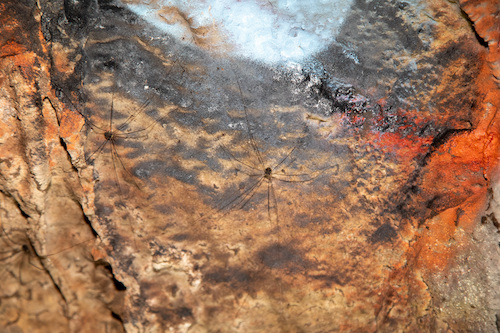
Campus acts to protect rare cave habitat
Earlier this month, as part of a new approach to protect this unique habitat, a crew from the campus carpentry shop installed a wildlife-friendly gate across the Empire Cave entrance. Access is now limited to education, research, and the Amah…
-
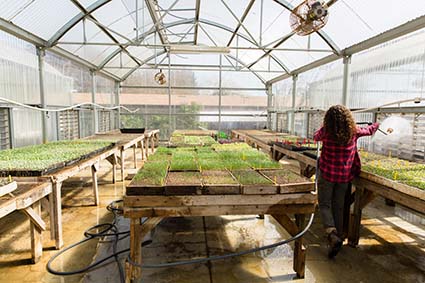
Nearly $1 million in USDA grants will support 3 UCSC-led agricultural technology projects
Three UC Santa Cruz research teams led by engineering faculty will pursue innovative agriculture technology projects with the support of seed grants from the USDA’s Agriculture and Food Research Initiative.
-
UCSC computer science student selected into Major League Hacking’s top 50 list
Rising second-year computer science student Marina Lee was chosen out of a community of 150,000 hackers for her outstanding work in developing accessible STEM education programming and building an inclusive hacking community.

-
Marine scientists explore the future of open data science
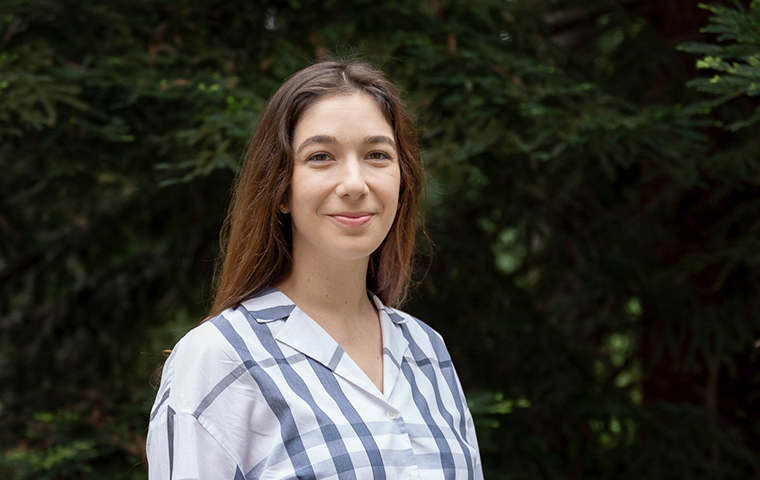
Alexa Fredston, an assistant professor of ocean sciences considers open science to be a vital part of their academic career and a key way to make the field of marine science more transparent and inclusive. They recently published an article…
-
UC Santa Cruz’s Institute of the Arts and Sciences presents West Coast Premiere of Maria Gaspar: Compositions
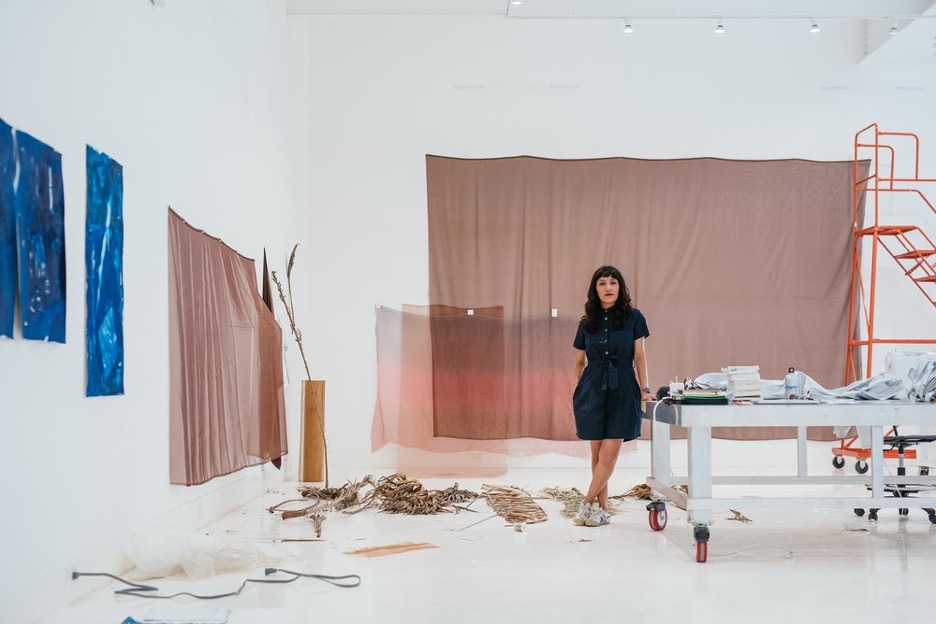
UC Santa Cruz’s Institute of the Arts and Sciences, is opening a new exhibition beginning on September 26, 2023 that goes through March 3, 2024. Entitled Maria Gaspar: Compositions, it is the first West Coast solo exhibition by the Chicago-based,…
-
Researchers’ tool finds bias in state-of-the-art generative AI model
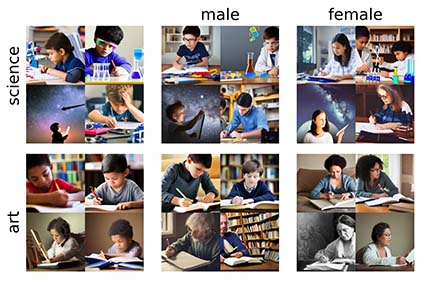
UCSC researchers introduce a new tool to measure bias in text-to-image AI generation models, which they have used to quantify bias in the state-of-the-art model Stable Diffusion.
-
UC Santa Cruz welcomes vibrant and talented incoming class
The University of California, Santa Cruz is preparing to welcome more than 5,500 new Banana Slugs to campus this fall, reflecting its commitment to providing equitable access and a transformational experience.

-
A childhood cancer survivor becomes a cancer researcher
This summer, 15-year-old Robert McCabe helped to sequence and analyze a tumor sample in the lab of the UC Santa Cruz Treehouse Childhood Cancer Initiative.
-
Student-supported global research compares regional relationships with Big Pharma
Recent UC Santa Cruz graduates helped to author a study on the strategies governments use to attract and manage the biopharmaceutical industry, focusing in particular on the different types of economic value and health value that these efforts provide, or…

-
UCSC students behind bus tracking app selected as only U.S. team in Google Solution Challenge’s top 10
The competition, which invites thousands of students worldwide to compete, tasks students to come up with technical solutions that contribute to the United Nations’ 17 Sustainable Development goals.

-
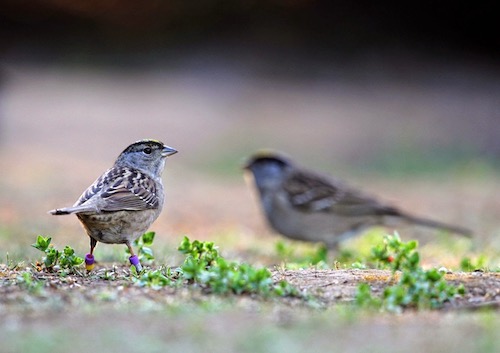
Golden-crowned sparrows return to overwintering sites in part because of their friends
Golden-crowned sparrows return to the same wintering sites each year after migrating thousands of miles. But their precision — which is often within the tens of meters — depends in part on the return of their friends.