All news
-
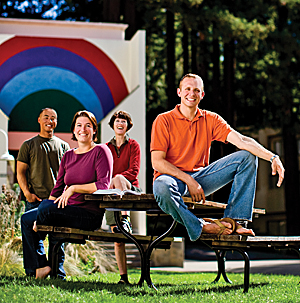
UC Santa Cruz veterans’ programs get $100,000 funding boost
UCSC’s veterans’ programs are among the best in the country, say funders.
-
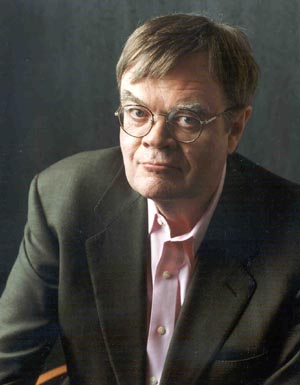
Write an “Ode to Santa Cruz”–winning poem to be read onstage by Garrison Keillor during May 13 show at Santa Cruz Civic
Submit your best “Ode to Santa Cruz” for a chance to win tickets to attend An Evening with Garrison Keillor at the Santa Cruz Civic. The host of A Prairie Home Companion will read the winning poem onstage at the…
-
Racism expert Thomas F. Pettigrew receives top UC honor for emeriti faculty
For some, retirement means slowing down and shifting gears. Not so for Thomas F. Pettigrew.
-
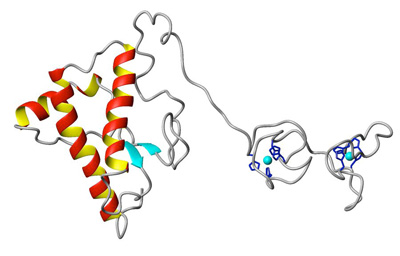
Study points to disruption of copper regulation as key to prion diseases
An investigation of a rare, inherited form of Creutzfeldt-Jakob disease suggests that disrupted regulation of copper ions in the brain may be a key factor in this and other prion diseases.
-
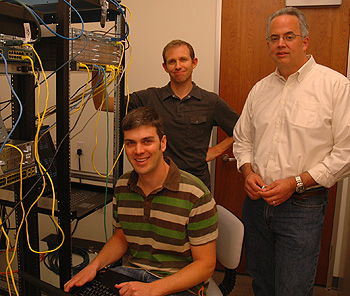
Baskin School of Engineering and Cisco find mutual benefit in networking partnership
Students in the Baskin School of Engineering are getting real-world experience in computer networks through a partnership with San Jose-based Cisco Systems
-
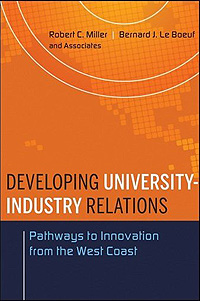
New book explores relations between universities and industry
Developing University-Industry Relations addresses the transfer of new discoveries and innovation from the research conducted at universities to the commercial sector.
-
UCSC grad students to present exhibition of digital art with social impact at Museum of Art and History
Ten graduate students from UCSC’s Digital Arts and New Media (DANM) program will present a two-part exhibition at the Museum of Art and History in downtown Santa Cruz, running April 17 to June 24.

-
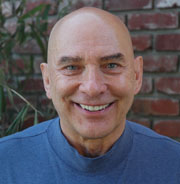
Bill Domhoff’s new book documents the rise of progressive politics in Santa Cruz
A new book reveals the roots of progressive politics in Santa Cruz.
-
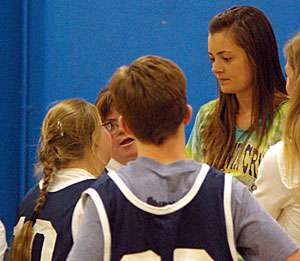
Student Brittany Guest is a special kind of coach
Brittany Guest, a fifth-year health sciences student, directs the Special Olympics program for the Santa Cruz area.
-
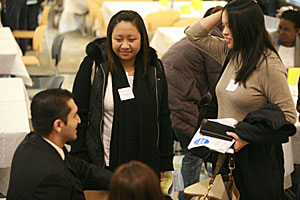
Career Center ready to help Slugs of any age
Alumni–whether unemployed or just seeking a career change–might not know that the campus Career Center is a resource that’s available to them.
-
UC Santa Cruz’s fall 2009 ‘admit rate’ reflects increasing competitiveness for freshman spaces
The percentage of freshman applicants who have been admitted to UC Santa Cruz for this coming fall declined by more than 10 percent in just one year, reflecting the increasingly competitive nature of undergraduate admission to the campus.
-
Statement from UCSC dean concerning proposed budget cuts
Sheldon Kamieniecki, dean of Social Sciences at UCSC, issued the following statement today (April 7, 2009) regarding divisional cuts, including cuts in Community Studies, that he is considering in response to the need to reduce the division’s budget by $1.3…
-
Robert F. Kennedy Jr. tops UCSC Alumni Reunion Weekend festivities April 24-26
Environmental leader Robert F. Kennedy Jr. kicks off UCSC’s Reunion Weekend 2009 festivities on April 24.

-
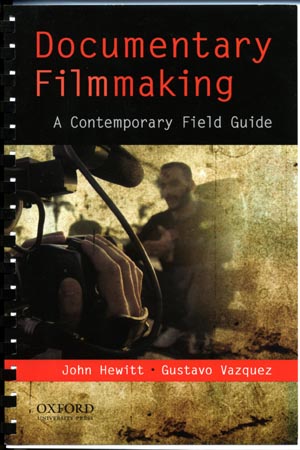
UCSC professor offers ‘street smart’ guide to making documentary films
Looking for a practical, step-by-step guide to creating a documentary film? You might look no further than a new compact handbook co-authored by UC Santa Cruz associate professor of film and digital media Gustavo Vazquez.
-
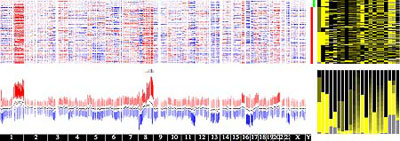
Cancer Genomics Browser gives cancer researchers a powerful new tool
The UCSC Cancer Genomics Browser provides a new way to visualize and analyze data from studies aimed at improving cancer treatment by unraveling the complex genetic roots of the disease.
-
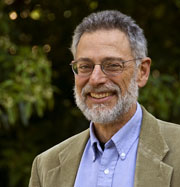
Obama’s regulatory plan doesn’t go far enough, says author of new book Morals and Markets
In his new book, economist Dan Friedman identifies the systemic problems that underlie the economic crisis.
-
Reunion Weekend features a panel discussion about the environment
UCSC’s Reunion Weekend 2009 will feature a panel discussion about the environment.

-
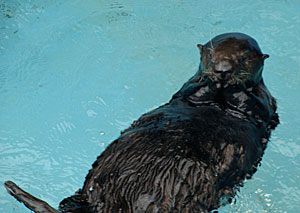
Dedicated marine mammal volunteers save oiled otter
When a young sea otter was found on the beach covered with tar balls and slick oil, volunteers with the Marine Mammal Physiology Project sprang into action.
-
Hollow gold nanospheres show promise for biomedical and other applications
A new metal nanostructure has already shown promise in cancer therapy studies and could be used for chemical and biological sensors and other applications as well.

-
Transfer students to benefit from physics and astronomy scholarships
UCSC has received a five-year, $600,000 grant from the National Science Foundation to support talented but financially needy students pursuing bachelor’s degrees in physics or astrophysics.
-
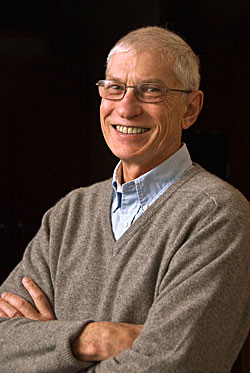
Richards, Cabrera, Rickford win Alumni Association top honors
The common thread running through the Alumni Association’s top award winners for 2008-09 is their exceptional ability to inspire.
-
Universities, NASA unveil plans to build new campus at Ames
UCSC and Foothill-De Anza Community College District today announced a new partnership with NASA Ames Research Center to establish a sustainable community for education and research at the NASA Research Park.

-
Exhibition by Elliot Anderson at Gallery 16 in San Francisco through March 27
Equivalents, a new body of work by assistant professor of art and electronic media Elliot Anderson, will be on display at Gallery 16 in San Francisco through March 27.

-
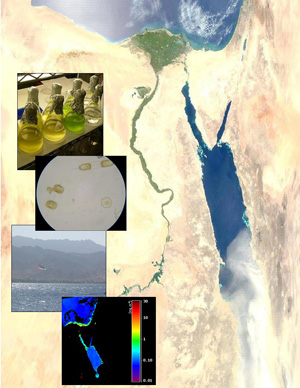
Dust deposited in oceans may carry elements toxic to marine algae
New findings show that some sources of dust deposited in the oceans carry toxic elements that can kill marine phytoplankton.
-
New general education requirements emphasize bold interdisciplinary themes, global engagement
A new forward-looking approach to education will prepare undergraduates for life in the complex, information-rich environment of the 21st century.
-
New book dedicated to work of international literary scholar/founding UCSC faculty member
A Touch More Rare: Harry Berger, Jr. and the Art of Interpretation (Fordham University Press, 2009) celebrates more than four decades of groundbreaking work by UC Santa Cruz emeritus professor of literature and art history Harry Berger, Jr.
