Office of Research
-

Astrophysics meets theater in ‘Birth of Stars’
What does the birth and death of stars have to do with the lives of real human beings? How do we balance the joy and pain of life in a productive way? Does technology make us less than human…or something more?
-

A global surge of great earthquakes holds clues to future quakes
UC Santa Cruz seismologist Thorne Lay discusses the implications of recent studies for quake risk in Cascadia
-

Astronomers create first 3-D map of the ‘adolescent’ universe
Astronomers have created the first map of the ‘adolescent’ universe as it appeared 10.8 billion years ago.
-
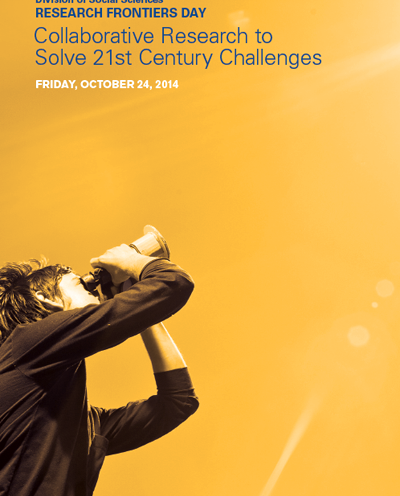
Social Sciences Research Frontiers Day focuses on data, environment, and justice
The second annual Social Sciences Research Frontiers Day at UC Santa Cruz will take place Friday, October 24, 2014, from 8 a.m.-2 p.m. with a focus on data, the environment, and justice.
-

UC Santa Cruz leads $11 million Center for Big Data in Translational Genomics
National Institutes of Health awards UC Santa Cruz funding for new research center as part of the NIH Big Data to Knowledge initiative.
-

Graduate applications, enrollment increase at UC Santa Cruz
Graduate student enrollment at UC Santa Cruz is projected to top 1,625 for fall 2014, about 9 percent of total enrollment, indicating continued strong interest in the academic programs offered.
-

UC Santa Cruz ranked first for research influence in world university rankings
Times Higher Education measured overall research influence based on the average number of citations per paper published by faculty.
-
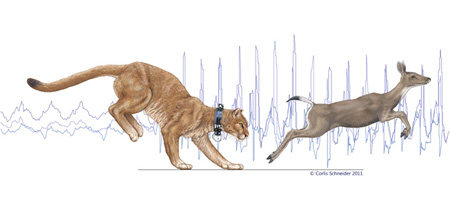
Study of mountain lion energetics shows the power of the pounce
High-tech collars enabled scientists to track mountain lions in the wild and determine how much energy the big cats use to hunt their prey.
-

Astronomer Claire Max appointed interim director of UC Observatories
Claire Max, professor of astronomy and astrophysics at UC Santa Cruz, succeeds Sandra Faber as interim director of UC Observatories.
-
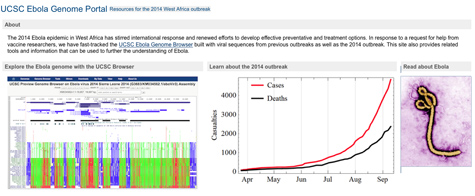
UCSC Ebola genome browser now online to aid researchers’ response to crisis
The UC Santa Cruz Genomics Institute late Tuesday (September 30) released a new Ebola genome browser to assist global efforts to develop a vaccine and antiserum to help stop the spread of the Ebola virus.
-
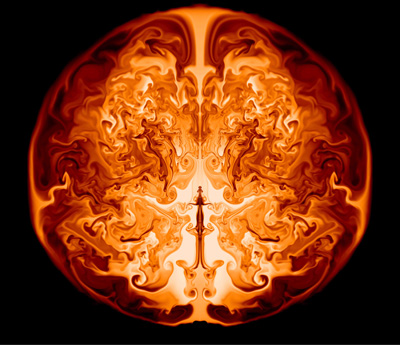
Simulations reveal unusual death for ancient stars
Study led by UC Santa Cruz postdoc indicates some supernovae would leave no remnant black hole behind
-

Human genome was shaped by an evolutionary arms race with itself
A study of primate genomes reveals an ongoing battle to control “jumping genes,” driving the evolution of greater genomic complexity