Office of Research
-
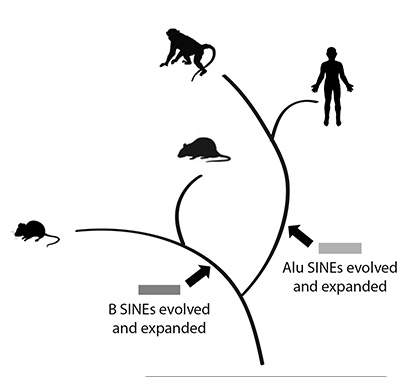
Study finds convergent evolution of gene regulation in humans and mice
Molecular biologists have found evidence of convergent evolution in an important mechanism of gene regulation in humans and mice.
-

Judge relies heavily on Haney’s testimony in case banning solitary confinement
In a landmark court ruling that prohibits solitary confinement in Canada, a Canadian judge relied heavily on expert testimony by Psychology Professor Craig Haney.
-
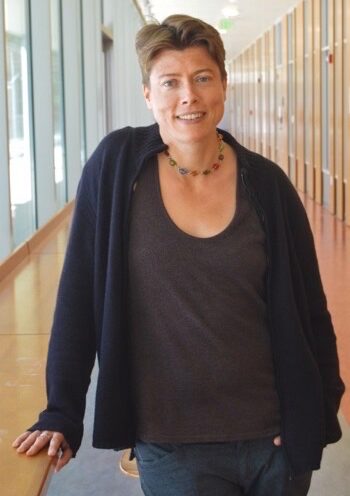
New book, The Postgenomic Condition: Ethics, Justice, and Knowledge After the Genome, assesses progress since 2000
Sociologist Jenny Reardon evaluates the promise and pitfalls of genomics in her new book The Postgenomic Condition: Ethics, Justice, and Knowledge After the Genome (University of Chicago Press, 2017).
-

New catalyst for hydrogen production is a step toward clean fuel
A novel material developed at UC Santa Cruz has shown impressive performance as a catalyst for the electrochemical splitting of water to produce hydrogen.
-

New name, enduring vision
Irena Polić, Managing Director, and Nathaniel Deutsch, Director, The Humanities Institute — Since its founding, The Humanities Institute has been committed to cultivating humanities research by supporting hundreds of individual faculty, graduate, and undergraduate fellows, as well as collaborations across campus and with other universities around the world.
-
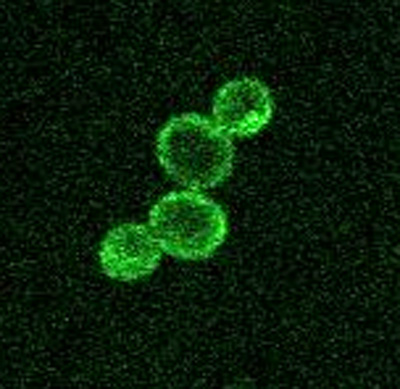
Unraveling the mechanisms that control cell growth and size
Scientists studying how cells control their size and growth rate are closing in on fundamental mechanisms that are common to all cells and are disrupted in cancer.
-

Supermassive black holes control star formation in large galaxies
Astronomers found a close correlation between the mass of a galaxy’s central black hole and its star formation history.
-
UC Santa Cruz ranks in top 50 of global research universities, 5th for space sciences
UC Santa Cruz ranks fifth in the world for space sciences and is one of six University of California campuses ranked among the top 50 research universities overall, according to a study by U.S. News and World Report.
-

Five-day Pacific Rim Music Festival to feature historic collaboration with Korean performing artists
A dazzling array of traditional and contemporary Korean music will be performed at the 2017 Pacific Rim Music Festival, October 25-29, on the UC Santa Cruz campus.
-
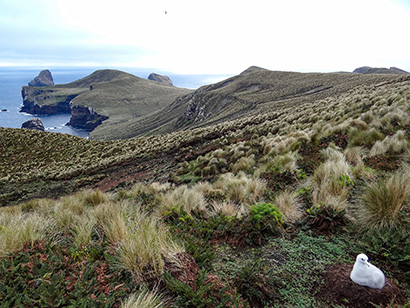
Want to save 41 percent of the planet’s highly threatened vertebrates? Work on islands
A new study has mapped the world’s most vulnerable island species and identified invasive species as a key threat to their survival.
-

Local cancer charity group funds four cancer researchers at UC Santa Cruz
The Santa Cruz Cancer Benefit Group has given more than $450,000 in grants to the campus since 2005.
-
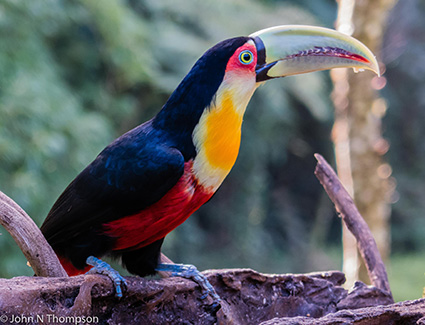
Understanding the coevolving web of life as a network
A new study exploring how mutualistic species coevolve suggests rapid environmental change can destabilize networks of interacting species.