Office of Research
-

Evidence supports ‘hot start’ scenario and early ocean formation on Pluto
A new study suggests that Pluto and other large Kuiper belt objects started out with liquid oceans which have been slowly freezing over time.
-

UCSC’s SocDoc graduate documentary films to be screened online June 15 to August 31
UC Santa Cruz will present the premiere of thesis films by nine graduating M.F.A. students in the field of social documentation this year—in a special online presentation from June 15 to August 31.
-

UC COVID-19 seed funding supports UCSC coronavirus genome browser
The UC Santa Cruz Genomics Institute’s Genome Browser Team has received UC seed funding for its work on the UCSC Genome Browser for SARS-CoV-2.
-

Historian Greg O’Malley awarded ACLS grant to expand Intra-American Slave Trade Database
UC Santa Cruz associate history professor Gregory O’Malley has received a 2020 Digital Extension Grant from The American Council of Learned Societies (ACLS) to expand coverage of the Intra-American Slave Trade Database.
-

New method predicts spin dynamics of materials for quantum computing
A universal first-principles approach will accelerate the identification and design of materials for quantum information science and other spintronics applications.
-
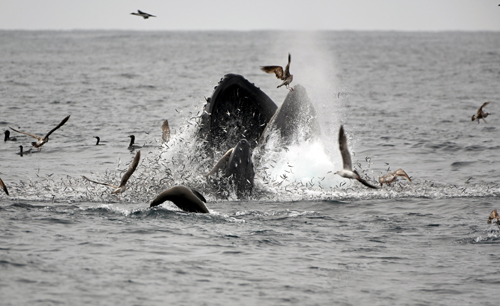
NOAA funds new Cooperative Institute for Marine, Earth and Atmospheric Systems
CIMEAS supports the ongoing collaboration between UC Santa Cruz and the National Marine Fisheries Service Southwest Fisheries Science Center.
-

Two vital buffers against climate change are just offshore
A new study underscores the need to conserve and restore mangroves and coral reefs for coastal protection.
-
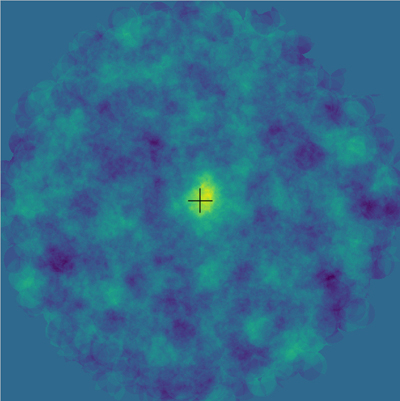
Detection of Crab Nebula shows viability of innovative gamma-ray telescope
A new prototype telescope opens doors for future discoveries at the upcoming Cherenkov Telescope Array.
-
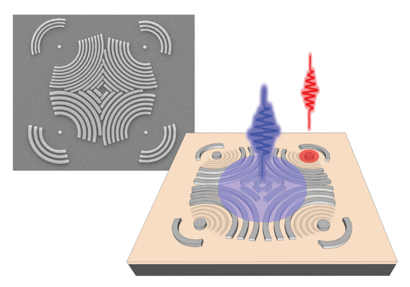
New optical technique provides more efficient probe of nanomagnet dynamics
Data storage devices and other emerging technologies use magnetic elements smaller than 100 nanometers, but studying their magnetization dynamics can be a challenge.
-
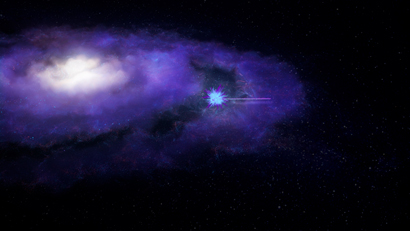
Universe’s ‘missing matter’ finally found in the space between galaxies
An international team of astronomers has solved the decades-old mystery of the ‘missing matter’ long predicted to exist in the universe but never before detected.
-
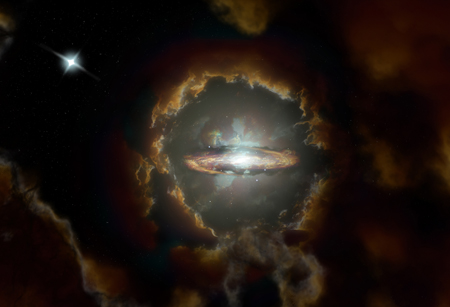
Astronomers discover a massive rotating disk galaxy in the early universe
The discovery by an international team of astronomers of a massive rotating disk galaxy, seen when the universe was only ten percent of its current age, challenges traditional models of galaxy formation.
-
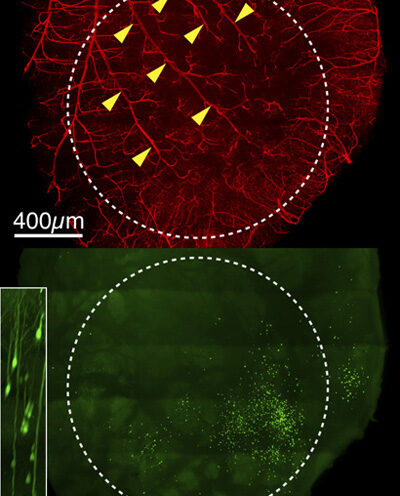
Tracing neurons in the visual cortex sheds light on brain’s circuitry
Researchers used a combination of techniques to identify different neuronal cell types and trace their connectivity within the mouse visual cortex.