Office of Research
-
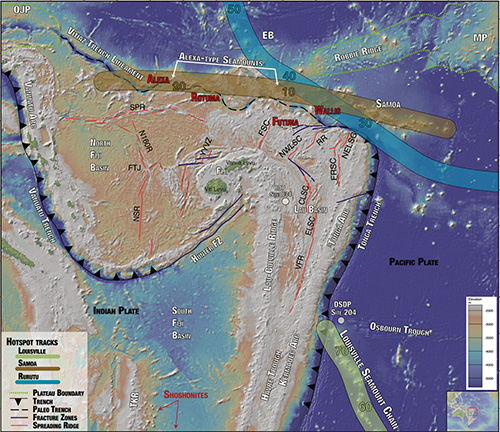
Breaking up is hard to do: Separation of Fiji and Vanuatu tied to Samoan seamounts
New analyses of volcanic rock samples collected in the 1980s link the geologic histories of these South Pacific islands to explain their current locations and character.
-

UC Santa Cruz scholar receives major new grant to support inclusive community development throughout California
As state and federal agencies are investing increasing funding in pandemic recovery, infrastructure development and initiatives to address climate change, a collaboration of renowned scholars led by UC Santa Cruz are working with community groups to ensure equity and inclusion are at the heart of these efforts.
-
Social Sciences dean wins prestigious research award, visiting fellowship in Germany
Social Sciences dean Katharyne Mitchell will be busy packing her bags for the holidays, but not for the reason you may think. She’s heading to Göttingen, Germany, as a visiting scholar for the next six months at the Max Planck Institute for the Study of Religious and Economic Diversity.
-
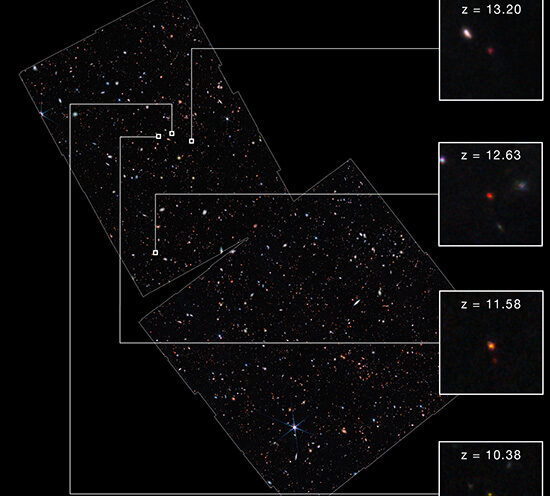
Astronomers report most distant known galaxies, detected and confirmed by Webb telescope
Spectroscopic observations with the James Webb Space Telescope confirm four early galaxies dating back to less than 400 million years after the Big Bang, three of which are the most distant confirmed to date.
-
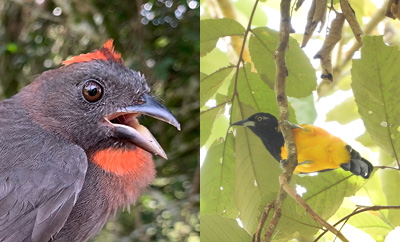
Colombia, a global biodiversity hotspot, faces rising threats to bird species from expanding human footprint
A new study published in the journal Environmental Research Letters used satellite mapping data to analyze how changes in human footprint on the landscape between 1970 and 2018 overlapped with distributions of 1,469 Colombian bird species. The study is the first of its kind to expand focus from forested regions, like the Amazon and Chocó,…
-

Computer engineer embarks on bold project for a new vision of distributed shared memory
With the support of a new NSF grant, Professor of Computer Science and Engineering Peter Alvaro is embarking on a project, called Memory at Scale On Networks (MaSON), to achieve a bold vision for a novel operating system and network that support a new overall model for programming big data systems.
-
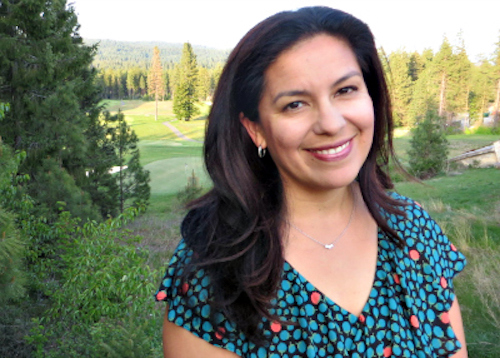
Undergraduates in UC Santa Cruz’s Human Rights Investigations Lab fight for migrant rights
UC Santa Cruz’s Human Rights Investigations Lab, housed in the Dolores Huerta Research Center for the Americas, has been assisting those seeking asylum in the United States and fighting back against the controversial Title 42 immigration policy.
-
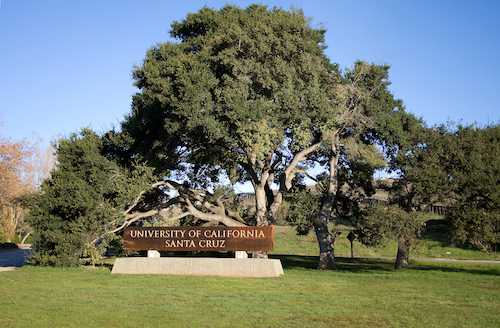
Central Coast K-16 Education Collaborative secures planning grant for six-county region
Spurred by California’s Regional K-16 Education Collaborative Grant Program, educational leaders from Santa Cruz to Ventura formed the Central Coast K-16 Education Collaborative to address the urgent, systemic educational inequities and economic needs in the region.
-
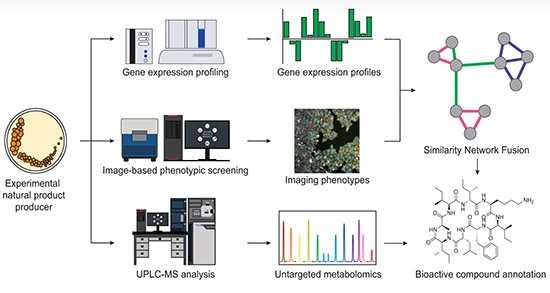
Integrated platform promises to accelerate drug discovery process
Novel approach integrates complex datasets from screening of natural products libraries, improving characterization of bioactive molecules and their mechanisms of action.
-
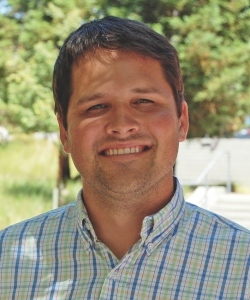
Long-standing genomic mystery about the origins of introns explained in new study
A new study led by scientists at UC Santa Cruz and published in the journal Proceedings of the National Academy of Sciences (PNAS) points to introners, one of several proposed mechanisms for the creation of introns, as an explanation for the origins of most introns across species.
-
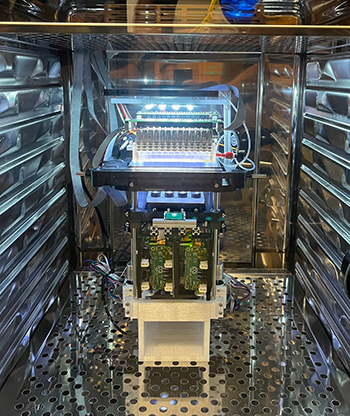
Braingeneers develop novel method to automate the growth of brain tissue organoids on a chip
A team of engineers and scientists at UC Santa Cruz has developed a new method for remote automation of the growth of cerebral organoids – miniature, three-dimensional models of brain tissue grown from stem cells.
-

New JWST data reveal more details of exoplanet WASP-39b’s atmosphere
A ‘mystery molecule’ seen in the initial spectrum has been identified as sulfur dioxide produced by photochemical reactions in the planet’s atmosphere.