Office of Research
-
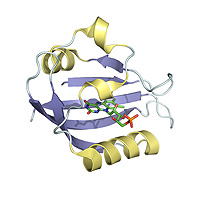
New light-sensing ability discovered in disease-causing bacteria
The bacteria that cause brucellosis can sense light and use the information to regulate their virulence, according to a study by UCSC researchers.
-

UCSC students present research at World History Association conference
Under the direction of professor Edmund Burke III, director of the UC Santa Cruz Center for World History, seven UCSC current and past graduate students in history presented papers at the 16th annual
-

New program color-codes text in Wikipedia entries to indicate trustworthiness
The online reference site Wikipedia enjoys immense popularity despite nagging doubts about the reliability of entries written by its all-volunteer team. A new program developed at UCSC aims to help with the problem by color-coding an entry’s individual ph
-
Silicon chip beams light through a liquid-core waveguide to detect one particle at a time
By guiding light through liquid-filled channels smaller than a human hair, researchers at UCSC and Brigham Young University have succeeded in building a silicon chip that can detect tiny particles one at a time.
-
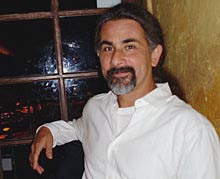
UCSC to host weeklong philosophy conference on Wittgenstein
More than 40 scholars from across the country and abroad will gather at UCSC the week of June 21-28 for a conference on philosopher Ludwig Wittgenstein and his significance for contemporary philosophy of mind. The event will be hosted by UCSC associate professor of philosophy Daniel Guevara and assistant professor of philosophy Jonathan Ellis. “Wittgenstein…
-
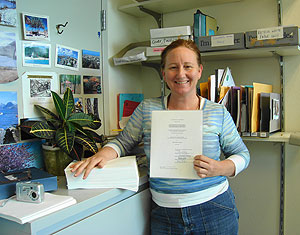
UCSC graduate awarded $10,000 for best American thesis on modern India
UC Santa Cruz graduate Gillian Goslinga has been honored with the 2006 Sardar Patel Award for “the best dissertation submitted at any American university on the subject of modern India.” The award of $10,000 is administered each year by the UCLA Center for India and South Asia. Eligible dissertations must be completed at an American…
-
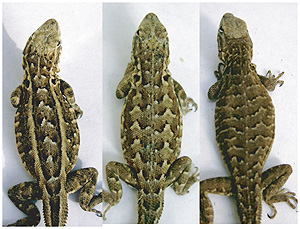
Study shows lizard moms dress their children for success
UCSC researchers have found that female side-blotched lizards are able to induce different color patterns in their offspring in response to social cues, “dressing” their progeny in patterns they will wear for the rest of their lives.
-

State funds stem cell research facility at UC Santa Cruz
The California Institute for Regenerative Medicine (CIRM) has approved a $2.7 million grant to fund a stem cell research facility at UC Santa Cruz.
-

UCSC researchers achieve atomic spectroscopy on a chip
Researchers at UC Santa Cruz have performed atomic spectroscopy with integrated optics on a chip for the first time, guiding a beam of light through a rubidium vapor cell integrated into a semiconductor chip.
-
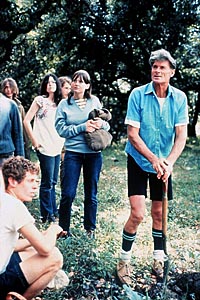
UC Santa Cruz celebrates 40 years of leadership in sustainable agriculture and organic farming
Decades before Wal-Mart began selling organic food, a charismatic Englishman and a group of students transformed a brush-covered hillside at the University of California, Santa Cruz, into a lush garden where vegetables and flowers were grown without chemi
-

New book Mistakes Were Made (But Not By Me) explains how self-deception dooms marriages, starts wars, and promotes a culture of unaccountability
In the new book Mistakes Were Made (But Not By Me), Elliot Aronson spells out how the psychological mechanism of self-justification puts us on a slippery slope of self-deception that frequently gets us into enormous trouble when we are unable to ac
-

Scientists reconstruct prehistoric behavior and ecology of northern fur seals
A team of researchers has documented major changes in the behavior, ecology, and geographic range of the northern fur seal over the past 1,500 years using a combination of techniques from archaeology, biochemistry, and ecology.