Office of Research
-
UCSC’s new Center for Integrated Water Research will help cities and regions secure safe and reliable water
A new interdisciplinary research center at the University of California, Santa Cruz, is bringing an innovative, regional approach to the challenge of meeting the demand for safe and reliable water.
-

Biologist Bruce Lyon’s research featured on cover of Science
Research on lark buntings by UCSC biologist Bruce Lyon and his former graduate student, Alexis Chaine, was featured on the cover of Science.
-
Jonathan Fox publishes new book about accountability politics
In his new book, Accountability Politics: Power and Voice in Rural Mexico, Latin American Studies professor Jonathan Fox explores how the seeds of accountability grow in authoritarian environments.
-

Unusual supernovae may reveal intermediate-mass black holes in globular clusters
A strange and violent fate awaits a white dwarf star that wanders too close to a moderately massive black hole.
-
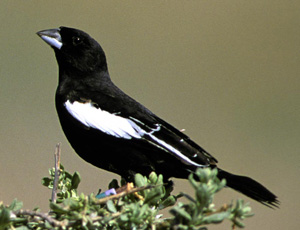
Changing fashions govern mating success in lark buntings, study finds
A study of how female lark buntings choose their mates, published this week in Science, adds a surprising new twist to the evolutionary theory of sexual selection.
-

Graduate student’s film featured at Sundance Film Festival
Documentary filmmaker Tadashi Nakamura can’t wait to see his film screened at the Sundance Film Festival. He just wishes he could get his hands on enough tickets for all his friends and family.
-
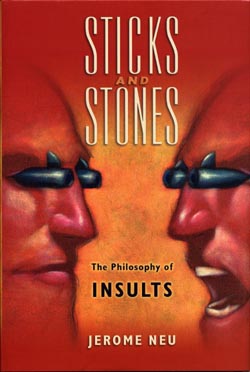
UC Santa Cruz professor investigates the extraordinary power of insults
What kind of injury is an insult? Is its infliction determined by the insulter or the insulted? What does it reveal about the character of both parties, as well as the character of society and its conventions? What is its role in social and legal life? How ready should we be to forgive? Those questions…
-

Sea otter study reveals striking variability in diets and feeding strategies
Scientists studying southern sea otters at different sites in California’s coastal waters were not surprised to find that the dietary diversity of the population is higher where food is limited. But this diversity was not reflected in the diets of individ
-
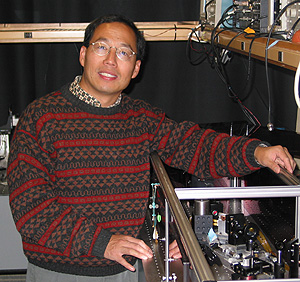
New nanostructured thin film shows promise for efficient solar energy conversion
Combining two nanotech methods for engineering solar cell materials appears to yield better results than either one alone does, according to UCSC chemist Jin Zhang.
-
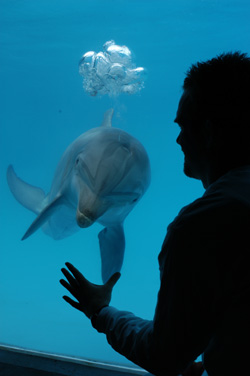
Why diving marine mammals resist brain damage from low oxygen
Certain animals–including dolphins, whales, and sea otters–appear to be protected from low oxygen by elevated levels of oxygen-carrying proteins in their brains, according to a new study by UCSC researchers.
-
Losses of long-established genes contributed to human evolution, scientists find
The evolution of new genes is not the only way for a species to change. UCSC scientists have now carried out the first systematic computational analysis to identify long-established genes that were lost during human evolution.
-
California Coastal Commission approves UC Santa Cruz’s Coastal LRDP
At a hearing today in San Francisco, the California Coastal Commission approved UC Santa Cruz’s Coastal Long Range Development Plan (CLRDP), a land-use blueprint for possible future development at the site of UCSC’s Long Marine Laboratory.