Office of Research
-
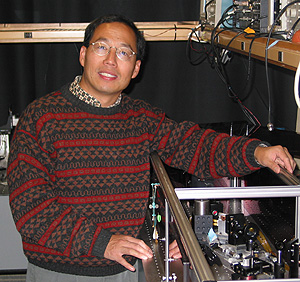
New nanostructured thin film shows promise for efficient solar energy conversion
Combining two nanotech methods for engineering solar cell materials appears to yield better results than either one alone does, according to UCSC chemist Jin Zhang.
-
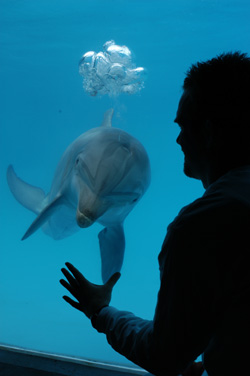
Why diving marine mammals resist brain damage from low oxygen
Certain animals–including dolphins, whales, and sea otters–appear to be protected from low oxygen by elevated levels of oxygen-carrying proteins in their brains, according to a new study by UCSC researchers.
-
Losses of long-established genes contributed to human evolution, scientists find
The evolution of new genes is not the only way for a species to change. UCSC scientists have now carried out the first systematic computational analysis to identify long-established genes that were lost during human evolution.
-
California Coastal Commission approves UC Santa Cruz’s Coastal LRDP
At a hearing today in San Francisco, the California Coastal Commission approved UC Santa Cruz’s Coastal Long Range Development Plan (CLRDP), a land-use blueprint for possible future development at the site of UCSC’s Long Marine Laboratory.
-

UCSC faculty receive $4.5 million in new grants for stem cell research
Two UCSC faculty members have received major grants totalling $4.5 million for stem cell research from the California Insitute for Regenerative Medicine (CIRM).
-
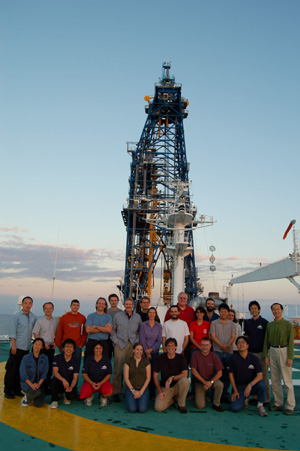
UCSC geologist probes undersea seismic zone as part of new deep-drilling experiment
The first effort to drill into an undersea zone where massive earthquakes and tsunamis are generated has yielded new data on the stresses that build up there, according to UCSC geologist Casey Moore.
-

Study finds oral traditions effectively warn people about tsunamis and reduce mortality
Oral traditions are a very efficient means of tsunami education, according to a new study that researchers say shows the power of education to reduce mortality from tsunamis.
-
Gordon and Betty Moore Foundation commits $200 million support for Thirty-Meter Telescope
The University of California and the California Institute of Technology have received a $200 million commitment over nine years from the Gordon and Betty Moore Foundation toward the further development and construction of the Thirty-Meter Telescope (TMT).
-

Discovery of gene for black coat color in dogs has broad implications
The discovery of a gene responsible for black coat color in dogs may help researchers understand fundamental processes in humans, including the regulation of body weight and stress hormones.
-
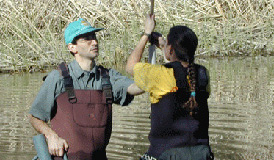
UCSC hydrogeologist provides expert advice on Pajaro Valley’s water supply
When a community forum was held in Watsonville on November 1 to discuss the future of the Pajaro Valley’s water supply, organizers turned to Andrew Fisher, professor of Earth and planetary sciences, to describe the state of the region’s ground water.
-
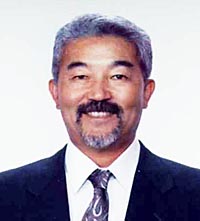
Nations embracing jury system as part of ‘wave of judicial reform,’ says UC Santa Cruz expert
Countries around the world are embracing the jury system in a wave of judicial reform that is democratizing jurisprudence in nations as diverse as South Korea, Mexico, and Japan, according to jury expert Hiroshi Fukurai.
-
Theoretical physicist says polymers in a vacuum may yield valuable data
A theoretical analysis of polymer behavior suggests that large molecules should behave very differently when they are in a vacuum than when in solution, suggesting new opportunities for analytical techniques such as mass spectrometry.