Office of Research
-
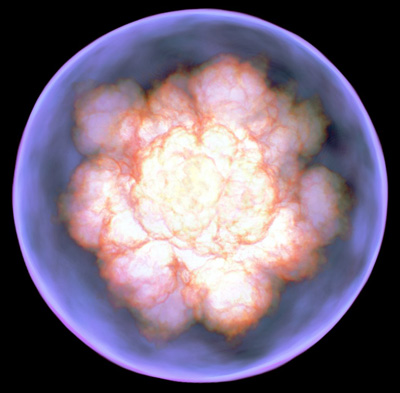
Variability of type 1a supernovae has implications for dark energy studies
A new study reveals sources of variability in type 1a supernovae that could affect the precision of cosmic distance measurements.
-
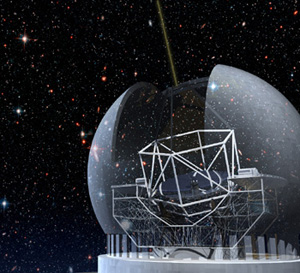
UC astronomer cheers Mauna Kea selection as site for Thirty-Meter Telescope
A leading astronomer at UC Santa Cruz hailed the selection of Mauna Kea in Hawaii as the site for construction of the Thirty-Meter Telescope.
-

UC researchers awarded $2.3M to study vocabulary assessment tool
A team of UC researchers creates a new approach to assessing student vocabulary.
-

UCSC scores high in competition for UC multi-campus research funding
Four research programs headquartered at UC Santa Cruz have received awards in the 2009 UC Multi-Campus Research Programs and Initiatives Competition (MRPI).
-

U.S. research vessel enroute to Bering Sea for climate change investigations
Preparations are under way for an international marine research expedition to investigate the role of the Bering Sea in climate change.
-
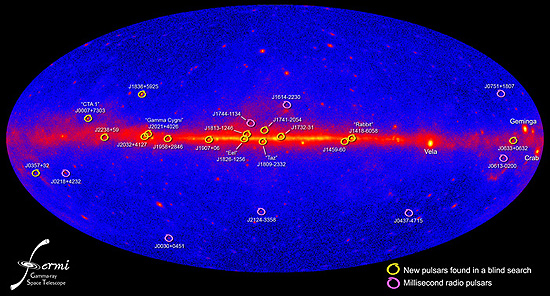
NASA’s Fermi Telescope reveals a population of radio-quiet gamma-ray pulsars
UCSC physicists have discovered a new class of pulsars using NASA’s Fermi Gamma-ray Space Telescope.
-

UCSC anthropologist Adrienne Zihlman honored for pioneering research on human evolution
Adrienne Zihlman is honored for pioneering research on human evolution.
-
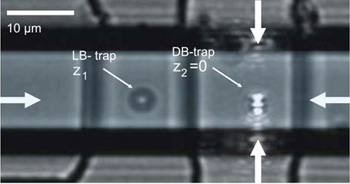
Integrated optical trap holds particles for on-chip analysis
A new type of optical particle trap can be used to manipulate bacteria, viruses and other particles on a chip as part of an integrated optofluidic platform.
-

Novel light-sensitive compounds show promise for cancer therapy
Novel compounds show promise for photodynamic cancer therapy, which uses light-activated drugs to kill tumor cells.
-

Top physicists gather at UCSC to honor Tom Banks and Willy Fischler
Top physicists will gather at UCSC on June 15 and 16 for a symposium in honor of Thomas Banks, professor of physics at UCSC, and Willy Fischler, professor of physics at the University of Texas, Austin.
-
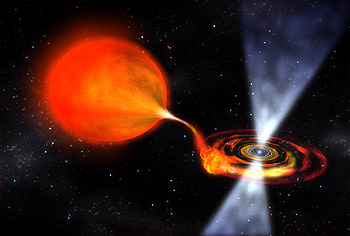
New technique improves estimates of pulsar ages
Astronomers have developed a new technique to determine the ages of millisecond pulsars, the fastest-spinning stars in the universe.
-
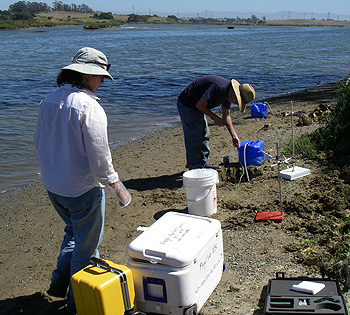
Groundwater fingered as a source of methylmercury in coastal waters
For the first time, scientists have detected a highly toxic form of mercury in groundwater flows at two coastal sites in California.