Office of Research
-
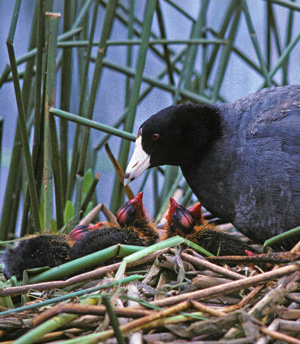
Soap opera in the marsh: Coots foil nest invaders, reject impostors
Coots have evolved a remarkable set of cognitive abilities to thwart other coots that lay eggs in their neighbors’ nests.
-

Icy moons of Saturn and Jupiter may have conditions needed for life
Evidence from recent NASA missions suggests that conditions necessary for life may exist on the icy satellites of Saturn and Jupiter, according to planetary scientist Francis Nimmo.
-

New planet discoveries suggest low-mass planets are common around nearby stars
An international team of planet hunters has discovered as many as six low-mass planets around two nearby Sun-like stars.
-
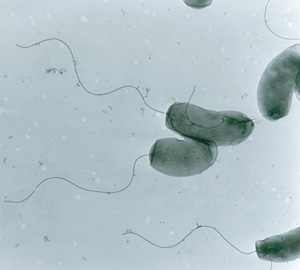
Cholera bacteria show adaptability to changing environments
Understanding the behavior of cholera bacteria between epidemics and how the pathogen moves between different environments could help prevent outbreaks.
-

Massaro announces iPhone app for animated tutor
Dominic Massaro has created an iPhone application for Baldi®, a computer-animated tutor that facilitates speech.
-

New search technique for images and videos has broad applications
Engineers have developed a new approach to a fundamental problem in computer vision: how to program a computer to recognize or categorize what it “sees” in an image or video.
-

Studies show marine reserves are an effective tool for managing fisheries
Studies conducted in California and elsewhere provide support for the use of marine reserves as a tool for managing fisheries and protecting marine habitats.
-
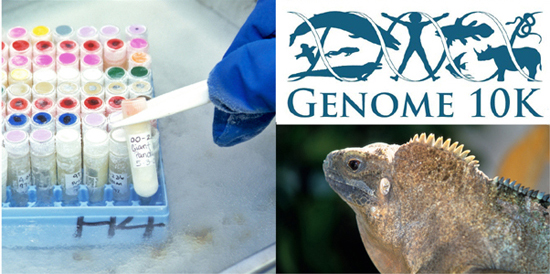
Scientists propose a “genome zoo” of 10,000 vertebrate species
In the most comprehensive study of animal evolution ever attempted, an international consortium of scientists plans to assemble a collection of DNA sequences for 10,000 vertebrate species.
-

Legendary “man-eating” lions of Tsavo likely ate about 35 people–not 135, say scientists
The notorious “man-eating lions of Tsavo” that terrorized a railroad camp in Kenya in 1898 likely consumed about 35 people–far fewer than popular estimates.
-

Lead poisoning threatens a vulnerable albatross population
Populations of Laysan albatross face severe declines due to widespread lead poisoning of chicks unless comprehensive cleanup measures gain momentum, according to a recent study.
-
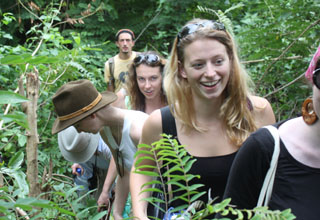
Archaeology course unlocks “silent history” of the slave trade in West Africa
Anthropologist J. Cameron Monroe led UCSC’s first undergraduate archaeological expedition to Benin this past summer.