Science
-
UC Santa Cruz offers new major in environmental sciences
UC Santa Cruz has approved a new interdisciplinary major in environmental sciences leading to a B.S. degree.
-

Biochemist Carrie Partch honored for research on biological clocks
The latest findings from Partch’s lab have resolved a longstanding question about how the timing of our biological clocks is regulated.
-
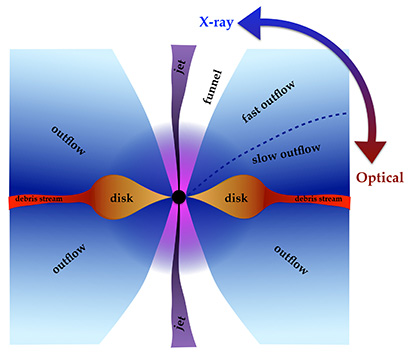
New model explains what we see when a massive black hole devours a star
Theoretical astrophysicists have developed a unified model that explains observations of tidal disruption events, when a black hole swallows a disrupted star.
-
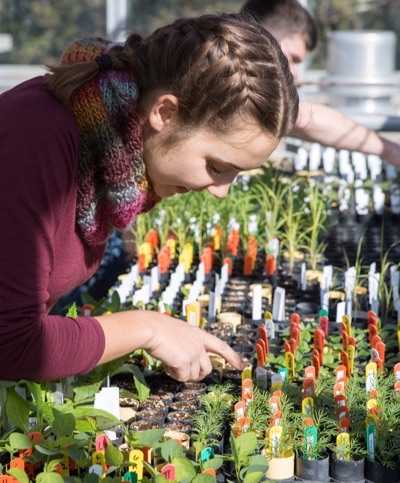
Diverse campus landscapes are ideal outdoor laboratories—and classrooms
UC Santa Cruz is known for its beautiful landscapes, but its meadows, forests, farm fields, and coastal bluffs also support a range of scientific research and hands-on learning opportunities for students.
-

Selective neural connections can be reestablished in retina after injury, study finds
Circuit repair in the retina of adult ground squirrels can recreate the selective neural connections needed for color vision.
-

Biologist Beth Shapiro selected as Howard Hughes Medical Institute investigator
Shapiro’s Paleogenomics Lab at UC Santa Cruz uses ancient DNA to study evolutionary history and the effects of environmental change on species and ecosystems.
-
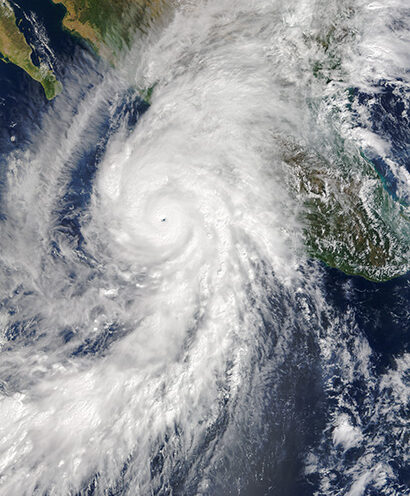
Lightning in the eyewall of a hurricane beamed antimatter toward the ground
The first detection of a downward positron beam from a terrestrial gamma-ray flash was captured by an instrument flown through the eyewall of Hurricane Patricia in 2015.
-
Sue Carter named provost for Rachel Carson College
Professor Sue Carter said her vision for Rachel Carson College is to strengthen its role in supporting students as they seek to create a more sustainable future and make it a place for them to gain skills needed for green careers in which they can develop sustainable innovations to preserve the environment.
-
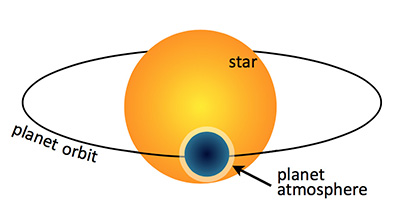
Astronomers find an exoplanet atmosphere free of clouds
An international team of astronomers has detected an exoplanet atmosphere that is free of clouds, marking a pivotal breakthrough in the quest to better understand what lies at the outer reaches of our galaxy.
-

Elkhorn Slough scientist Kerstin Wasson honored as ‘wetland hero’
An adjunct professor at UC Santa Cruz, Wasson will receive the 2018 National Wetlands Award for Scientific Research.
-

NIH grant supports development of a novel drug for stroke treatment
A drug discovery grant is funding the quest by UCSC chemistry professor Ted Holman to bring a new drug treatment for stroke to clinical trials.
-
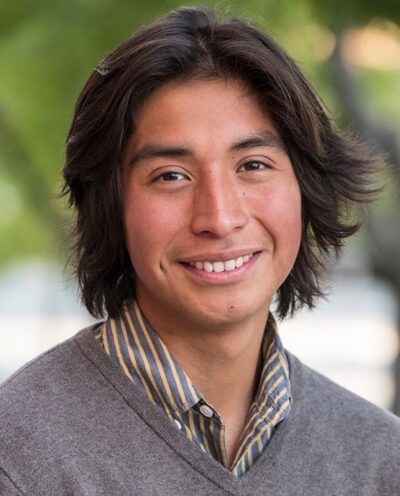
Undergraduate Eric Medina wins $15,000 Strauss Scholarship to reinvigorate Oakes Garden
Eric Medina, a fourth year at UC Santa Cruz double majoring in ecology and evolutionary biology and Latin American and Latino studies, has received a $15,000 public service scholarship to reinvigorate the garden at Oakes College.