Science
-

Waves in Saturn’s rings give precise measurement of planet’s rotation rate
Saturn’s ring system acts as a sensitive seismograph, enabling scientists to measure the giant planet’s vibrations and determine its rotation rate.
-
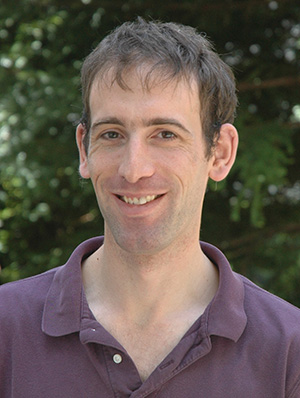
Planetary scientist Francis Nimmo honored by Royal Astronomical Society
The Royal Astronomical Society (RAS) has awarded the 2019 Harold Jeffreys Lectureship to Francis Nimmo, professor of Earth and planetary science at UC Santa Cruz.
-

In Memoriam: Arnold Klemola (1931–2019)
Arnold Klemola, a long-time staff researcher at UC Observatories, passed away on January 5, 2019. He was 87.
-
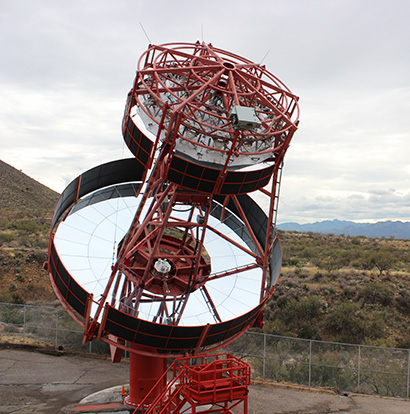
Scientists to inaugurate a new type of gamma ray telescope at Whipple Observatory
The prototype Schwarzschild-Couder Telescope (pSCT) is designed as a pathfinder telescope for the Cherenkov Telescope Array.
-

Idled farmland presents habitat restoration opportunities in San Joaquin Desert
Land no longer suitable for agriculture could be reclaimed as habitat for dozens of endangered species, according to a new analysis.
-

Seed-funding innovation
The UC Santa Cruz Foundation Board of Trustees seeks interesting new projects to fund.
-
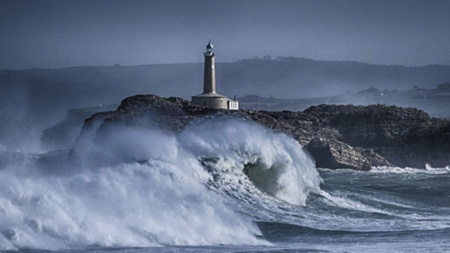
Upper-ocean warming is changing the global wave climate, making waves stronger
The energy in ocean waves has been increasing as a consequence of climate change, according to a new study.
-
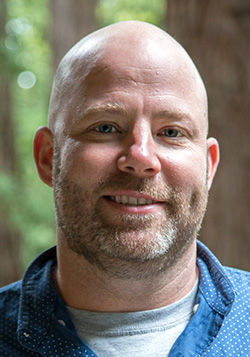
Biologist Jeremy Sanford awarded prestigious $1.85 million grant from NIH
MIRA grant funds Sanford to extend his studies of the mechanisms of RNA processing and RNA-binding proteins, which are involved in inherited diseases and cancer.
-
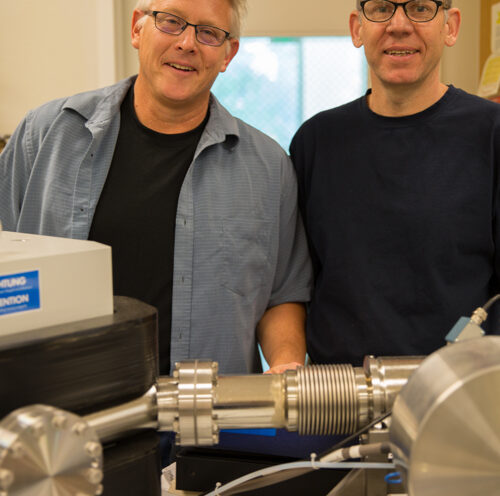
NSF funds innovative stable isotope equipment at UC Santa Cruz
The new equipment will support research across a wide range of disciplines, ranging from oceanography and earth science, paleontology, anthropology, ecology and fundamental biochemical cycle research.
-
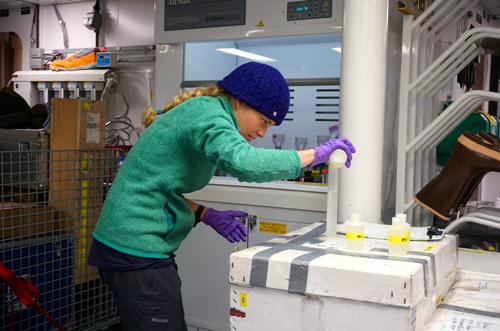
Ocean fertilization by unusual microbes extends to frigid waters of Arctic Ocean
Researchers have documented nitrogen fixation by an unusual type of cyanobacteria in the cold waters of the Bering and Chukchi Seas.
-

The complex history of Earth’s magnetic reversals
UC Santa Cruz geology professor Robert Coe will be presenting his paper, “What We Know and Don’t Know about Reversals” during the upcoming American Geophysical Union (AGU) meeting in Washington, D.C. this December.
-

Biochemist Glenn Millhauser receives Outstanding Faculty Award
The annual award from the Division of Physical and Biological Sciences is the division’s highest honor for faculty achievement, recognizing combined excellence in research, teaching, and service.