Science
-
Genentech Foundation grants support UCSC STEM diversity programs
Three academic support and mentoring programs at UC Santa Cruz have received funding from Genentech’s 2020 Diverse Future of STEM Fund.
-
Astronomer J. Xavier Prochaska honored for top research paper in Science
J. Xavier Prochaska, distinguished professor of astronomy and astrophysics at UC Santa Cruz, and his coauthors of a landmark paper describing a fast radio burst from a massive galaxy have been chosen to receive the prestigious AAAS Newcomb Cleveland Prize.
-
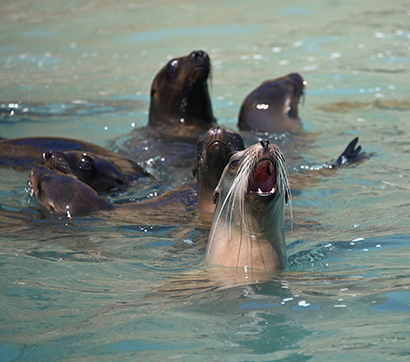
Healthy oceans need healthy soundscapes, say marine scientists
A global team of researchers has documented the pervasive impacts of noise on marine animals and ecosystems and identified actions to return to the soundtrack of the healthy ocean.
-

Meteoric success
Planetary scientist Myriam Telus, a NASA Planetary Science Early Career Award winner, reflects on her journey to UC Santa Cruz to study meteorites: Discovering her passion, seeking out mentors, and finding inspiration in the courage of civil rights movement leaders.
-

Two UCSC astronomers elected Fellows of the American Astronomical Society
Astronomers Raja GuhaThakurta and Garth Illingworth were honored as 2021 AAS Fellows for their extraordinary achievement and service.
-
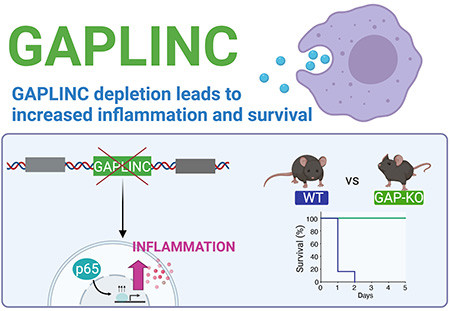
Noncoding RNA has surprising effects on immune response and sepsis, study finds
A long noncoding RNA regulates the expression of inflammatory genes and has a surprising effect on vulnerability to septic shock in mice.
-
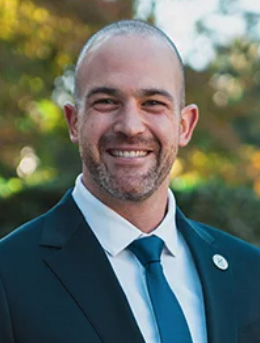
Fellowship program gives UCSC grad policy experience in Sacramento
After earning his Ph.D. in 2020, Jason John will work at the California Natural Resources Agency as a CCST Science Fellow.
-

In Memoriam: Harold Widom (1932–2021)
Harold Widom, Distinguished Professor of Mathematics, passed away on Wednesday, January 20.
-

Seymour Marine Discovery Center offers new marine science virtual expeditions
“Scientists Saving the Oceans” program begins with a behind-the-scenes look at how marine mammal researchers are working to protect dolphins and whales from ocean noise.
-
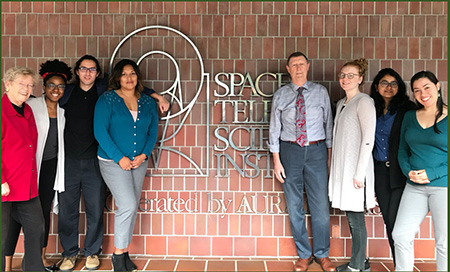
UCSC’s Osterbrock Leadership Program goes national
The National Osterbrock Leadership Program provides experiences and opportunities for astronomy graduate students to develop leadership and management skills.
-

In Memoriam: Claude F. Bernasconi (1939–2021)
The Department of Chemistry and Biochemistry is deeply saddened to announce that Distinguished Professor Claude F. Bernasconi passed away on January 4, 2021, from complications due to COVID-19.
-
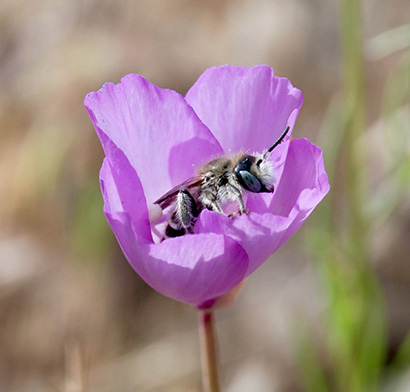
Study of flowers with two types of anthers solves mystery that baffled Darwin
Some flowers use a clever strategy to ensure effective pollination by bees, doling out pollen gradually from two different sets of anthers.