Science
-
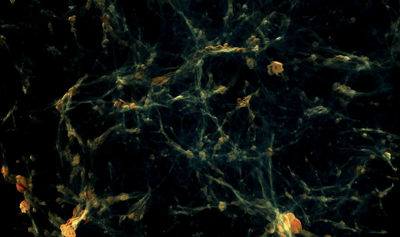
Cosmic dawn occurred 250 to 350 million years after Big Bang
Cosmic dawn, when stars formed for the first time, occurred 250 million to 350 million years after the beginning of the universe, according to a new study.
-
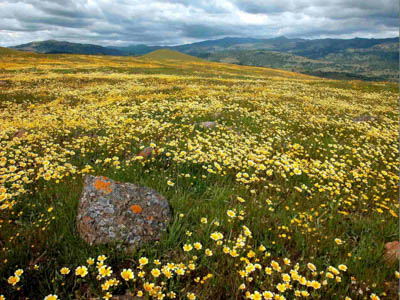
New study shows how loss of drought-sensitive species could affect health of California grasslands
At a grassland site near San Jose, scientists studied experimental research plots to determine what might happen if the plants that ecologists expect to be hit hardest by drought actually disappeared.
-
Searching for answers in the cosmos
Alumna Olivia Ross, winner of this year’s prestigious Steck Award, took on the daunting quest of trying to find primordial black holes. Her faculty mentor calls this young, tireless scientist a “one-in-a-generation gem.”
-
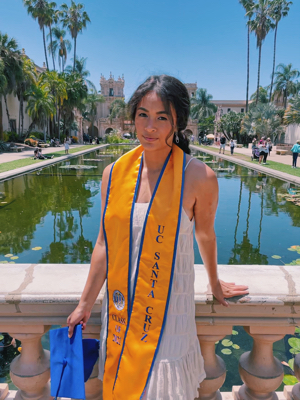
Work in social justice pushes recent grad toward career in medicine
Isabella Bullock realized she wanted to be a physician assistant after UC Santa Cruz courses began to reveal how socioeconomic status and race factor into one’s health.
-
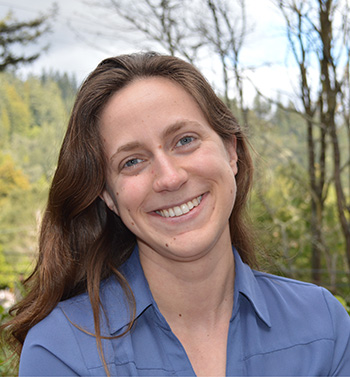
Hydrologist Margaret Zimmer wins NSF CAREER Award
Margaret Zimmer, assistant professor of Earth and planetary sciences, has received an award from the National Science Foundation to support her research on the role of Earth’s subsurface in regulating the water cycle.
-

Dialogues, collaborations, and the success of ‘slow science’
With funding from the Henry Luce Foundation, the new Southeast Asian Coastal Interactions Initiative takes a methodical approach to worldwide social and environmental challenges
-
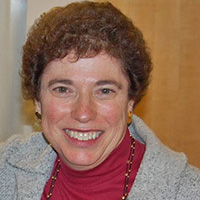
Claire Max to retire as director of UC Observatories
Claire Max, director of the University of California Observatories (UCO) and the Bachmann professor of astronomy and astrophysics at UC Santa Cruz, will retire at the end of June.
-
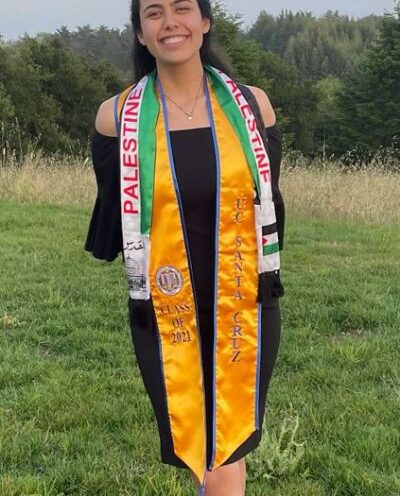
Nabeela Ariqat
Nabeela Ariqat, a first-generation college student, hoped for a new beginning at UC Santa Cruz, which she attended in part because “I felt like I could be who I was,” she said.
-

Simayijiang Xirenayi
When Simayijiang “Sherin” Xirenayi left home at age 19, she knew she wanted to study biology. She attended community college and then transferred to UC Santa Cruz, but it wasn’t an easy move. Her life turned a corner when she was asked to meet with a campus adviser.
-

Axions could be the fossil of the universe researchers have been waiting for
A new study suggests finding the hypothetical particles known as axions could mean finding out for the first time what happened in the universe a second after the Big Bang.
-

Snowflake morays can feed on land, swallow prey without water
While most fish need water to feed, the unique anatomy of moray eels gives snowflake morays the ability to grab and swallow prey on land.
-
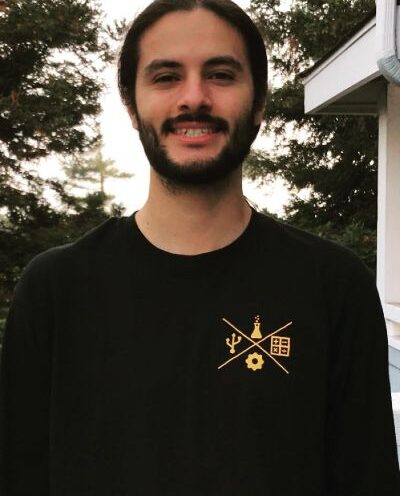
David Sanchez Godinez
David Sanchez Godinez arrived at UC Santa Cruz with a passion for scientific exploration. Taking a full load of science classes and getting hands-on learning honed his scientific knowledge—especially his experience working as an undergraduate researcher.