Science
-

ASPIRE program launches to aid conservation in a changing climate
A new program out of the UC Santa Cruz Genomics Institute involves students in an effort to measure changes in biodiversity and ultimately prevent them.
-

Seismologist Emily Brodsky awarded Nemmers Prize in Earth Sciences
Professor Emily Brodsky has received the 2022 Nemmers Prize in Earth Sciences, awarded by Northwestern University for achievement and work of lasting significance in the field of Earth sciences.
-

Narwhals show physiological disruption in response to seismic survey ship noise
Scientists deployed monitoring devices on narwhals to record heart rates, breathing, and diving behavior during seismic air gun pulses from a ship in the fjords of Greenland.
-
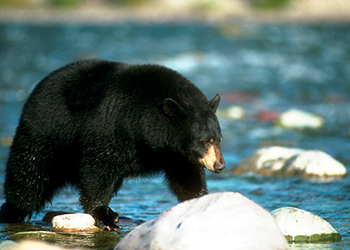
UCSC scholars join researchers statewide on a massive genomic study of California’s biodiversity
The California Conservation Genomics Project (CCGP) is a state-funded initiative with a single goal: to produce the most comprehensive, multispecies genomic dataset ever assembled to help manage regional biodiversity.
-

California approves $5 million to fund diversity in science and technology education
Cal-Bridge Program brings together the three levels of the California higher education system to diversify the California public university faculty and tech workforce.
-

Destruction and recovery of kelp forests driven by changes in sea urchin behavior
A long-term study of kelp forest dynamics on California’s Central Coast highlights the critical role of sea urchin behavior, not just the size of the urchin population.
-
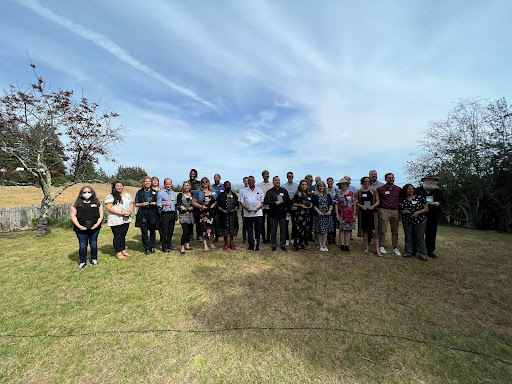
UC Santa Cruz celebrates innovative and dedicated teachers
The Academic Senate’s Committee on Teaching (COT) in collaboration with Chancellor Larive and CP/EVC Kletzer, Cruz celebrated UCSC’s innovative and dedicated teachers with a gathering at the Cowell Provost House in early June.
-
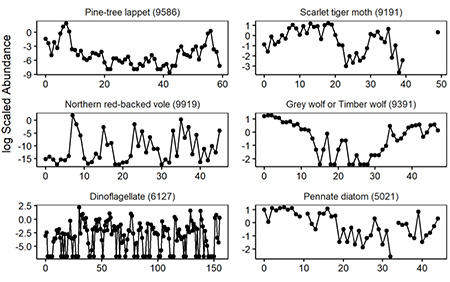
Study finds chaos is more common in ecological systems than previously thought
The idea that chaos is rare in natural populations may be due to methodological and data limitations, rather than the inherent stability of ecosystems.
-
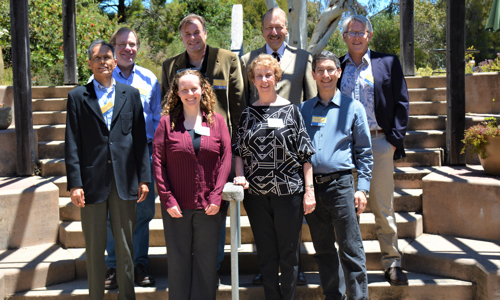
Campus recognizes innovative, dedicated teachers
The Academic Senate’s Committee on Teaching (COT) in collaboration with Chancellor Larive and CP/EVC Kletzer, Cruz celebrated UCSC’s innovative and dedicated teachers with a gathering at the Cowell Provost House in early June.
-

Reefense project aims to meld biology and engineering in novel structures for coastal protection
UCSC scientists are part of a DARPA-funded team to develop innovative solutions for coral reef restoration in Florida and the Caribbean to protect coastal infrastructure.
-

Study shows mangrove and reef restoration yield positive returns on investment for flood protection
A robust analysis demonstrates that nature-based solutions to reduce the damage caused by coastal flooding are cost-effective.
-

Polar bears in Southeast Greenland shed light on the species’ future in a warming Arctic
The most genetically isolated population of polar bears on the planet, they have limited access to sea ice and use ice from Greenland’s glaciers to survive.