Science
-

Thirty-Meter Telescope Project Receives $15 Million from Moore Foundation
UC and Caltech have each received $7.5 million in additional funding from the Gordon and Betty Moore Foundation for the development of the Thirty-Meter Telescope.
-
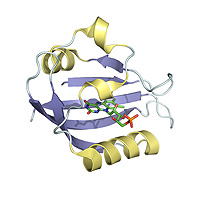
New light-sensing ability discovered in disease-causing bacteria
The bacteria that cause brucellosis can sense light and use the information to regulate their virulence, according to a study by UCSC researchers.
-
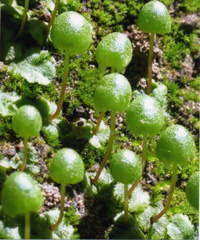
UCSC professor emeritus William Doyle publishes new reference for California botanists
William T. Doyle, professor emeritus of ecology and evolutionary biology, has published a comprehensive reference on the liverworts and hornworts of California.
-

UCSC neuroscientist Yi Zuo wins two new research awards
Yi Zuo’s innovative research on the nervous system has attracted funding from three major foundations since her arrival at UCSC in January.
-
Wobbly polarity is key to preventing magnetic avalanches on disk drives
New research brings models of magnetic avalanches much closer to reality, helping physicists understand both why they happen and why they don’t run out of control, wiping disk drives clean.
-
Influential fisheries ecologist Steven Berkeley dies at age 60
Steven A. Berkeley, an influential fisheries ecologist whose research helped propel the expansion of marine reserves, died at home in Scotts Valley on June 27 after a year-long battle with cancer. He was 60.
-

UC Santa Cruz biologist Hinrich Boeger named Pew Scholar in the Biomedical Sciences
The Pew Charitable Trusts has named Hinrich Boeger, assistant professor of molecular, cell, and developmental biology at the University of California, Santa Cruz, a Pew Scholar in the Biomedical Sciences.
-

Brian Walton, leader of falcon recovery effort, dies at age 55
Brian Walton, whose leadership of the Santa Cruz Predatory Bird Research Group was highlighted by the pivotal role the group played in the restoration of the peregrin falcon on the West Coast, died on June 15 at a Santa Cruz hospital. Walton, who served a
-
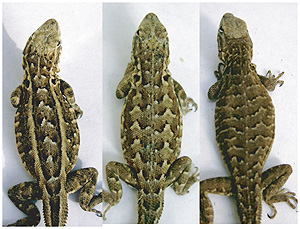
Study shows lizard moms dress their children for success
UCSC researchers have found that female side-blotched lizards are able to induce different color patterns in their offspring in response to social cues, “dressing” their progeny in patterns they will wear for the rest of their lives.
-

State funds stem cell research facility at UC Santa Cruz
The California Institute for Regenerative Medicine (CIRM) has approved a $2.7 million grant to fund a stem cell research facility at UC Santa Cruz.
-
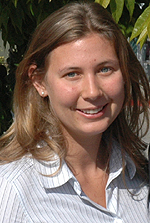
Sutter scholarship will support UCSC health sciences grad in med school
Allison Abresch-Meyer will get some welcome assistance paying her medical school bills thanks to a new scholarship established by the Sutter Maternity & Surgery Center and the Central Coast Alliance for Health to benefit graduates of the health sciences p
-
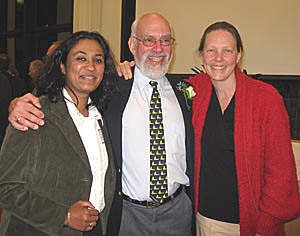
Symposium honors chemistry professor Anthony Fink
Friends, colleagues, and students of chemistry professor Anthony Fink came to campus May 26 to attend a symposium in Fink’s honor. Former grad students and postdoctoral associates traveled from Japan, Mexico, South America, and all over the U.S. to attend