Science
-
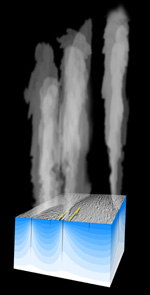
Frictional heating explains plumes on Saturn’s moon Enceladus
Rubbing your hands together on a cold day generates a bit of heat, and the same process of frictional heating may be what powers the geysers jetting out from the surface of Saturn’s moon Enceladus.
-
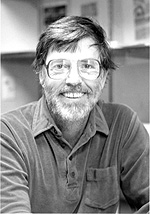
UCSC biologist Robert Edgar elected to National Academy of Sciences
Robert Edgar, professor emeritus of molecular, cell, and developmental biology at UC Santa Cruz has been elected to the National Academy of Sciences in recognition of his distinguished achievements in original research.
-
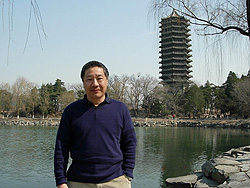
UCSC astronomer Douglas Lin appointed director of Kavli Institute for Astronomy and Astrophysics in China
Douglas Lin, professor of astronomy and astrophysics at UCSC, has been named founding director of the Kavli Institute for Astronomy and Astrophysics (KIAA) at Peking University in Beijing, China.
-
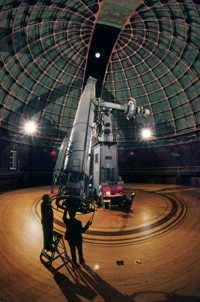
Music and stargazing entice summer visitors to Mt. Hamilton’s Lick Observatory
UC’s Lick Observatory offers its 27th season of evening programs for music lovers and astronomy buffs this summer, featuring concerts, lectures, and opportunities to view the night sky through the observatory’s history-making telescopes atop Mt. Hamilton.
-
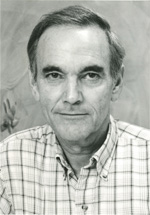
Dickson Emeriti Professorship awarded to Harold Widom
Harold Widom, professor emeritus of mathematics, has been awarded this year’s Edward A. Dickson Emeriti Professorship.
-

Eminent chemist to discuss primordial genetic materials in annual Bunnett Lecture on Friday, May 4
The renowned organic chemist Albert Eschenmoser will give the 2007 Joseph F. Bunnett Research Organic Chemistry Lecture on Friday, May 4.
-

The ‘twilight zone’ holds key to ocean’s role in climate change
Researchers have identified a critical link in the processes that determine the ocean’s ability to absorb and store the carbon dioxide that is accumulating in our atmosphere.
-

Art meets science in campus Earth Day mural project
Ten UCSC art students spent Earth Day weekend creating a mural project at the Thimann Laboratories Greenhouse. The project was organized by Christine Bors, a senior art student and the educational outreach coordinator for the Mary Porter Sesnon Art Gallery. “We had a team of volunteers painting a nature and scientific-themed mural to welcome the…
-
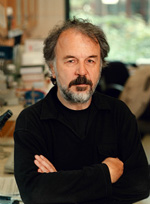
UCSC molecular biologist Harry Noller wins 2007 Gairdner Award
Harry Noller, the Sinsheimer Professor of Molecular Biology at UC Santa Cruz, is among the five winners of the 2007 Gairdner International Awards, one of the most prestigious awards in biomedical science.
-

Seismologists discover complex structure in Tonga mantle wedge
The subduction zones where oceanic plates sink beneath the continents produce volcanic arcs such as those that make up the “rim of fire” around the Pacific Ocean. A new study finds that the structure of the mantle wedge above the subducting plate may be f
-
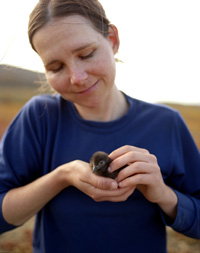
UCSC graduate student’s research leads to environmental victory in Coronado Islands
Graduate student Shaye Wolf’s findings have helped save endangered seabirds from the potentially devastating effects of a liquified natural gas facility planned for a site in Baja California.