Science
-
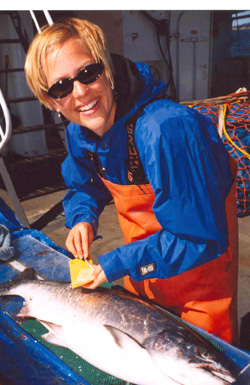
Hatchery fish outnumber wild chinook salmon in troubled fall run
A recent study indicates that wild salmon may account for just 10 percent of California’s fall-run chinook salmon population, while the vast majority of the fish come from hatcheries.
-
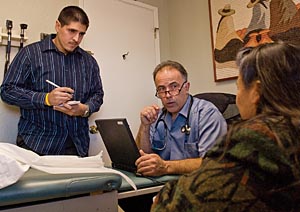
Rx for Health Care: Graduates of UCSC’s innovative health sciences program are good medicine for California’s ailing health-care system
Diego Inzunza grabbed a laptop on his way past the laboratory inside Plazita Medical Clinic, where jaunty Mexican music danced from a large speaker on the counter. Holding the computer open like a clamshell in one hand, the 21-year-old UC Santa Cruz stude
-
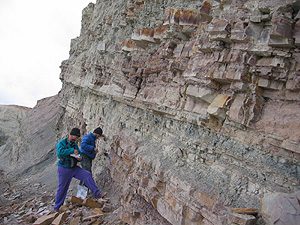
New findings from Tibetan Plateau suggest uplift occurred in stages
New evidence from an eight-year study by UCSC and Chinese researchers indicates that the Tibetan Plateau rose in stages, with uplift occurring first in the central plateau and later in regions to the north and south.
-
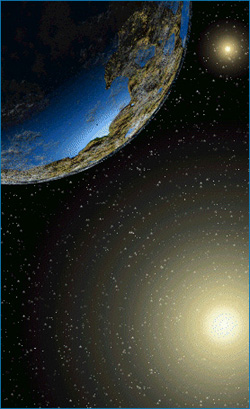
Nearby star should harbor detectable, Earth-like planets
A rocky planet similar to Earth may be orbiting one of our nearest stellar neighbors and could be detected using existing techniques, according to a new study led by UCSC astronomers.
-
Memorial to honor Tony Fink, April 13
Many of you may know that Tony Fink, a distinguished professor of chemistry and biochemistry on our campus, died on Sunday following a yearlong illness. In addition to calling your attention to the passing of this special person, I want to let you know that an event on campus is being planned in his honor.…
-
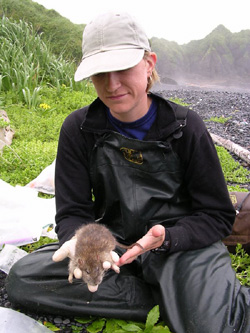
Rats on islands disrupt ecosystems from land to sea, researchers find
The ecological impacts of introduced rats on islands extend far beyond seabird nesting colonies, according to a new UCSC study that provides support for efforts to eradicate rats from the Aleutian Islands.
-
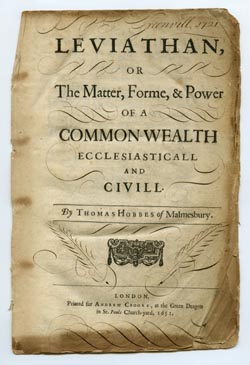
Sciences dean donates 357-year-old book to Library’s Special Collections
Dean of Physical and Biological Sciences Stephen Thorsett has donated a first edition of English philosopher Thomas Hobbes’s famous 1651 book, Leviathan, to the UCSC Library’s Special Collections.
-

Past greenhouse warming events provide clues to what the future may hold
Scientists studying an episode of extreme global warming in Earth’s past are piecing together an increasingly detailed picture of its causes and consequences.
-

Earth scientist James Zachos elected fellow of the American Geophysical Union
James Zachos, professor of Earth and planetary sciences at UCSC, has been elected a fellow of the American Geophysical Union (AGU).
-
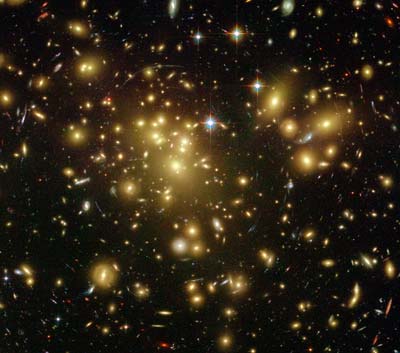
Astronomers find one of the youngest and brightest galaxies in the early universe
NASA’s Hubble and Spitzer space telescopes have uncovered what may be one of the youngest and brightest galaxies ever seen in the middle of the cosmic “dark ages,” just 700 million years after the beginning of our universe.
-
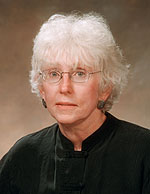
Ocean scientist Mary Silver to give Rachel Louise Carson Lecture at AGU meeting
Mary Silver, professor of ocean sciences at UCSC, has been chosen to give the Rachel Louise Carson Lecture at the Spring American Geophysical Union Joint Assembly in May.
-

Biologist Bruce Lyon’s research featured on cover of Science
Research on lark buntings by UCSC biologist Bruce Lyon and his former graduate student, Alexis Chaine, was featured on the cover of Science.