Science
-

New space telescope reveals entire gamma-ray sky
NASA’s newest observatory, the Gamma-ray Large Area Space Telescope (GLAST), has begun its mission of exploring the universe in high-energy gamma rays using instruments developed by UCSC physicists.
-
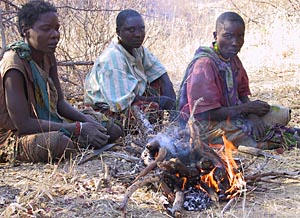
Anthropologist explores plausibility of bulbs and tubers in diet of early human ancestors
Anthropologist Nathaniel J. Dominy painstakingly measured the mechanical properties of nearly 100 plant species across sub-Saharan Africa as part of his investigation of the diet of early human ancestors.
-

Large Hadron Collider set to unveil a new world of particle physics
The field of particle physics is poised to enter unknown territory with the startup of a massive new accelerator–the Large Hadron Collider (LHC)–in Europe this summer.
-
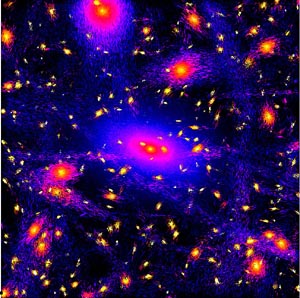
Study shows clumps and streams of dark matter in inner regions of the Milky Way
Using one of the most powerful supercomputers in the world to simulate the halo of dark matter that envelopes our galaxy, researchers found dense clumps and streams of the mysterious stuff lurking in the inner regions of the halo, in the same neighborhood
-
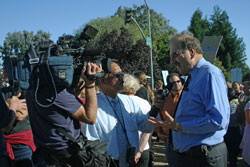
Community shows overwhelming support for UCSC research scientists
More than 200 community and campus members gathered at the UC Santa Cruz entrance Monday afternoon to show their support for scientific research at the university and denounce two recent firebombings targeting UCSC researchers.
-

Educational Partnership Center offers array of summer programs
This summer, many middle and high school students took advantage of a wide variety of academic enrichment programs offered by the UCSC Educational Partnership Center.
-
Two UCSC professors receive prestigious Humboldt Research Awards
The Alexander von Humboldt Foundation has chosen Robert Coe and James Zachos, both professors of Earth and planetary sciences at UC Santa Cruz, to receive Humboldt Research Awards this year.
-
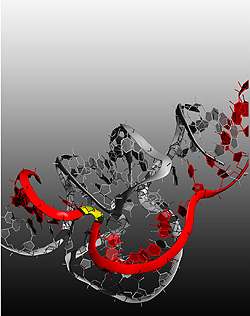
Researchers find new mode of gene regulation in mammals
UCSC researchers have discovered a type of gene regulation never before observed in mammals–a “ribozyme” that controls the activity of an important family of genes in several different species.
-

Gerhard Ringel, professor emeritus of mathematics, dies at age 88
It is with sadness that I inform you of the death of Professor Gerhard Ringel. Gerhard came to UCSC as Professor in 1970. He was one of the world leaders in the fields of Combinatorics and Graph Theory and was much honored for his seminal work including the solution (with J.W.T. Youngs) of the famous…
-
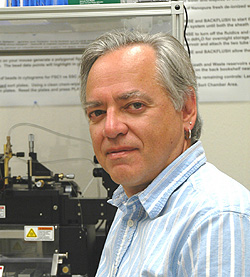
Moore Foundation awards $3.7 million in additional funding for UCSC ocean scientist Jonathan Zehr
The Gordon and Betty Moore Foundation has awarded a four-year, $3.7 million grant to Jonathan Zehr, professor of ocean sciences at UCSC.
-

Higher temperatures helped new strain of West Nile virus spread, study finds
Higher temperatures helped a new strain of West Nile virus invade and spread across North America, according to a new study.
-
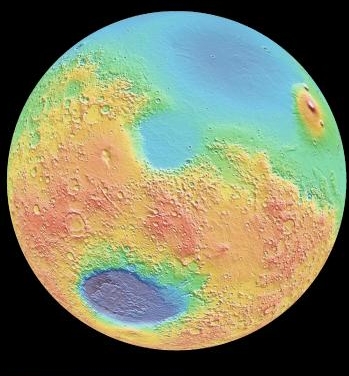
Evidence of massive asteroid impact on Mars supported by computer simulations
The dramatic differences between the northern and southern hemispheres of Mars are the result of a massive asteroid impact, according to studies by UCSC planetary scientists.