Science
-
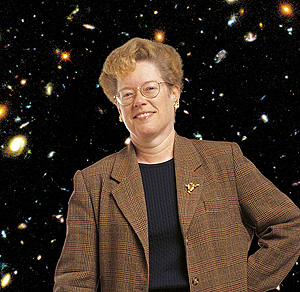
Astronomer Sandra Faber to receive Franklin Institute’s prestigious Bower Award
Astronomer Sandra Faber has been chosen to receive the 2009 Bower Award and Prize for Achievement in Science from the historic Franklin Institute in Philadelphia.
-
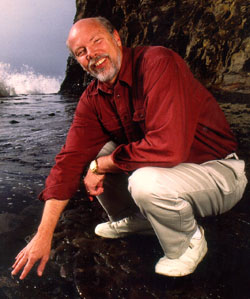
Synthetic biology yields clues to evolution and the origin of life
The efforts of researchers in the field of synthetic biology are yielding clues to the mystery of how life began on Earth.
-
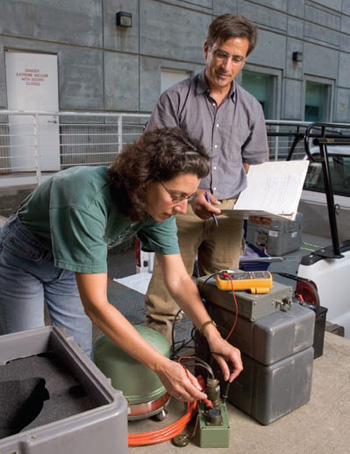
New monitoring stations detect “silent earthquakes” in Costa Rica
After installing a network of monitoring stations in Costa Rica, researchers have detected slow slip events (“silent earthquakes”) along a major fault zone beneath the Nicoya Peninsula.
-
$2.2 million grant approved for program to train stem cell scientists
The governing board of the California Institute for Regenerative Medicine (CIRM) last week approved a $2.2 million grant to UCSC to fund a training program in stem cell research.
-
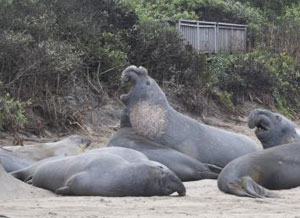
I am elephant seals (and so can you!)
Want to know the truthiness about northern elephant seals? Become a Facebook friend of Stelephant Colbert.
-

Astronomers get a sizzling weather report from a distant planet
Astronomers have observed the intense heating of a distant planet as it swung close to its parent star, providing important clues to the atmospheric properties of the planet.
-
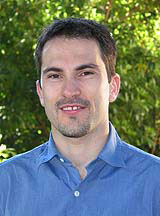
Jack Baskin School of Engineering to establish Keck Center for Nanoscale Optofluidics
UCSC has received a $1.5 million grant from the W. M. Keck Foundation to establish the W. M. Keck Center for Nanoscale Optofluidics.
-
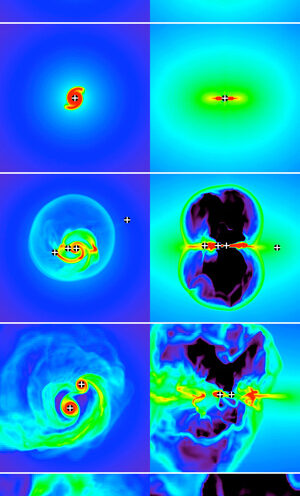
New study resolves mystery of how massive stars form
A study led by astrophysicist Mark Krumholz shows how massive stars can form without blowing away the clouds of gas and dust that feed their growth.
-

Study of disease risk suggests ways to avoid slaughter of Yellowstone bison
Last winter, government agencies killed one third of Yellowstone National Park’s bison herd, but such measures may be unnecessary according to researchers who have assessed the risk of disease transmission from Yellowstone bison to cattle.
-
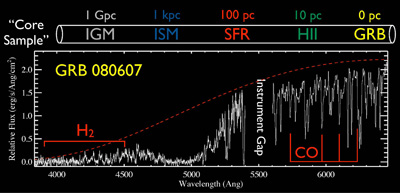
Astronomers use gamma-ray burst to probe star formation in the early universe
The brilliant afterglow of a powerful gamma-ray burst (GRB) has enabled astronomers to probe the star-forming environment of a distant galaxy, resulting in the first detection of molecular gas in a GRB host galaxy.
-

Math professor Alexander Gamburd wins Presidential Early Career Award
Alexander Gamburd, professor of mathematics at UCSC, has won a Presidential Early Career Award for Scientists and Engineers (PECASE), the White House announced today.
-
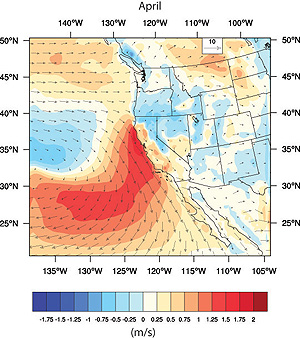
Stronger coastal winds due to climate change may have far-reaching effects
Future increases in wind strength along the California coast may have far-reaching effects, including more intense upwelling of cold water along the coast early in the season, “dead zones” in coastal waters, and increased fire danger in Southern Californi