Science
-

Legendary “man-eating” lions of Tsavo likely ate about 35 people–not 135, say scientists
The notorious “man-eating lions of Tsavo” that terrorized a railroad camp in Kenya in 1898 likely consumed about 35 people–far fewer than popular estimates.
-

Lead poisoning threatens a vulnerable albatross population
Populations of Laysan albatross face severe declines due to widespread lead poisoning of chicks unless comprehensive cleanup measures gain momentum, according to a recent study.
-
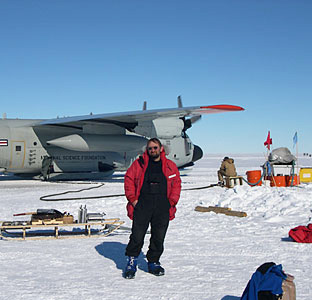
Researchers to study hidden lakes beneath West Antarctic ice sheet
UCSC researchers will drill through a half-mile of ice to penetrate subglacial Lake Whillans and study hidden processes that govern the dynamics of the West Antarctic ice sheet.
-
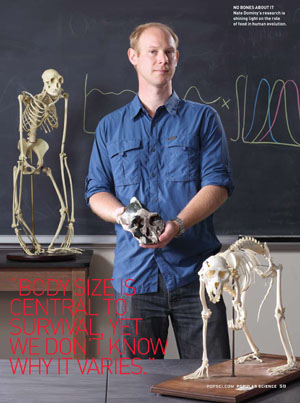
Popular Science taps UCSC anthropologist Nathaniel Dominy for “Brilliant 10” issue
Popular Science names Nathaniel J. Dominy one of this year’s “Brilliant 10” young scientists and researchers.
-
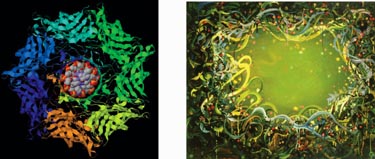
UCSC arts and science faculty collaborate for exhibition at Sesnon Gallery
“Full Disclosure”–an exhibition opening on October 7 at UCSC’s Sesnon Gallery-is built upon the idea of “failure” as a path to learning.
-
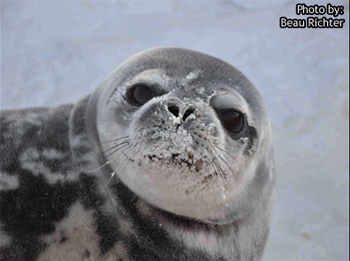
Antarctic expedition studies survival strategies of Weddell seals
Eight years after her last major expedition to Antarctica, biologist Terrie Williams is back on the ice.
-
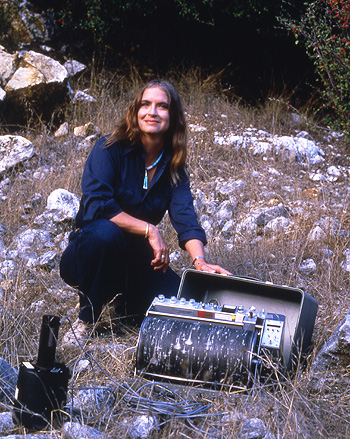
Loma Prieta led to better assessments of earthquake hazards
The 1989 Loma Prieta earthquake was a wakeup call to the Central Coast and San Francisco Bay Area, which had gone decades without a major earthquake. In the 20 years since then, increasingly sophisticated assessments of earthquake hazards have led to a better understanding of the seismic threat in the Bay Area and throughout California.
-
Five faculty members win 2009 NSF CAREER awards
Five UCSC faculty members have won NSF CAREER awards in 2009.
-
Academic program for community college students wins extended NIH funding
A UCSC program that provides an academic bridge for community college students has received a $1.1 million grant from the NIH.
-

Lick Observatory honors Kenneth and Gloria Levy with inaugural James Lick Award
Kenneth and Gloria Levy will receive the James Lick Award in recognition of their generous support for the Automated Planet Finder telescope.
-

Lick Observatory celebrates 50th anniversary of Shane Telescope
For 50 years, the 3-meter Shane Telescope has helped keep Lick Observatory at the forefront of modern astronomy.
-
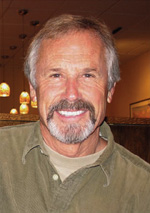
IMS director Gary Griggs and alumna Julie Packard named 2009 California Coastal Heroes
Sunset magazine and the California Coastal Commission have named Gary Griggs and Julie Packard among their 2009 California Coastal Heroes.