Science
-
UCSC ranked among top 20 worldwide in geosciences
In a recent survey of the top institutions in geosciences, UCSC ranked 18th in the world.
-

UCSC researcher’s paper named No. 30 of top 100 science stories for 2009
Discover Magazine has named a UC Santa Cruz evolutionary biologist’s study of human predation and species evolution No. 30 among the top 100 science stories for 2009.
-
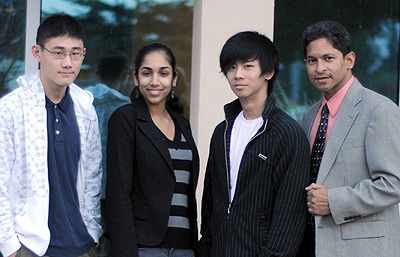
Astronomer Raja Guhathakurta mentors Intel science contest finalist
A student at the Harker School in San Jose has been named a finalist in the Intel Science Talent Search for her project on the Andromeda galaxy carried out under the guidance of UCSC astronomer Puragra (Raja) Guhathakurta.
-
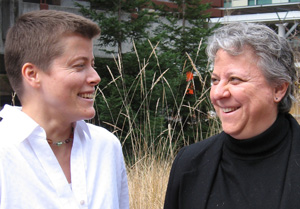
New UCSC training program fosters ethics and justice discourse in science and engineering
This spring, UC Santa Cruz, will launch a unique graduate-level training program funded by a $300,000 grant from the National Science Foundation to cross-train scientists and engineers in humanities and social sciences, and vice versa.
-
UCSC astronomer joins composer Philip Glass to explore music of the universe
UC Santa Cruz Astronomer Gregory Laughlin joins acclaimed composer Philip Glass February 21 in a “Brainwave” discussion at the Rubin Art Museum in New York. Brainwave is a series of 20 sessions this winter and spring that bring together eminent thinkers f
-
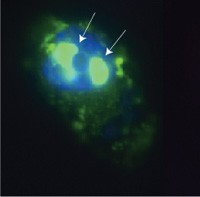
Researchers trace effects of genetic defect in myotonic muscular dystrophy
Research on the genetic defect that causes myotonic muscular dystrophy has revealed that the mutation disrupts an array of metabolic pathways in muscle cells.
-
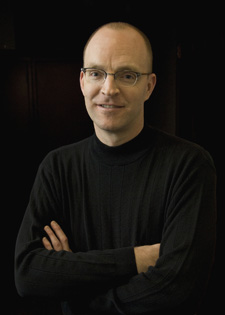
Robert Irion, director of Science Communication Program, wins journalism award
Robert Irion has been awarded the 2010 David N. Schramm award from the American Astronomical Society.
-

7th annual Scholarship Benefit Dinner to support UCSC students–Feb. 6 at Tech Museum in San Jose
UCSC will host its seventh annual Scholarship Benefit Dinner on Saturday, February 6, at the Tech Museum in San Jose.
-
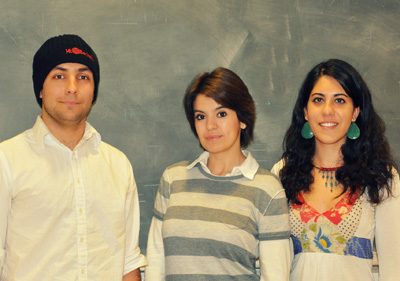
UC Santa Cruz hosts conference for undergraduate women in physics
The Department of Physics is hosting the fifth annual West Coast Conference for Undergraduate Women in Physics from January 15 to 17.
-
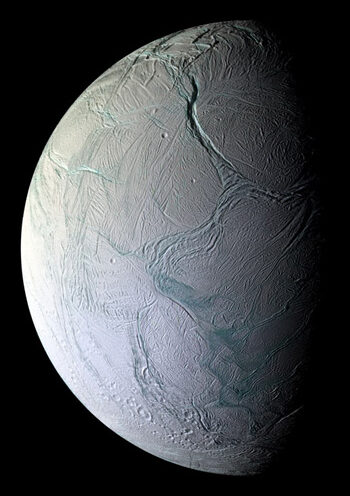
Cassini data show Enceladus in motion
Blobs of warm ice that periodically rise to the surface and churn the icy crust on Saturn’s moon Enceladus explain the quirky heat behavior and intriguing surface of the moon’s south polar region.
-

New tidal streams found in Andromeda reveal history of galactic mergers
Astronomers have identified two new tidal streams in the Andromeda galaxy, the remnants of dwarf galaxies consumed by our large galactic neighbor.
-
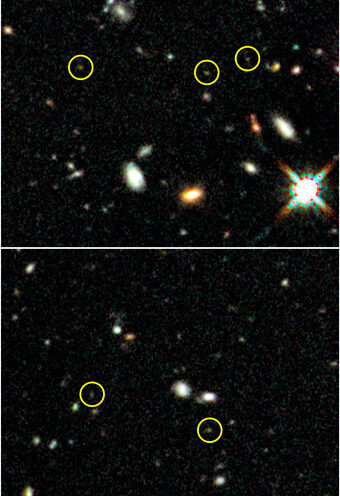
Hubble reaches “undiscovered country” of primeval galaxies
NASA’s Hubble Space Telescope has broken the distance limit for galaxies and uncovered a primordial population of compact and ultra-blue galaxies that have never been seen before.