Science
-
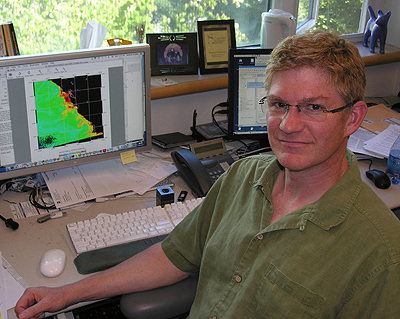
UCSC leads $4 million NOAA project to monitor harmful algal blooms
Scientists are launching a major effort to understand the conditions leading to blooms of toxic algae along the California coast.
-
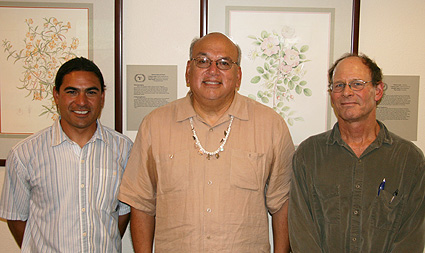
Arboretum celebrates partnership with Amah Mutsun tribe
The Arboretum and the Amah Mutsun tribe are working together on a project that highlights native plants traditionally used by the Mutsun people.
-

UCSC fundraisers honored at Silicon Valley Philanthropy Day
Two UCSC fundraising teams will be recognized by the Silicon Valley Chapter of the Association of Fundraising Professionals.
-
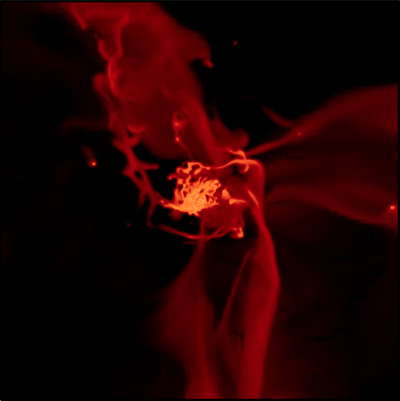
Astronomers find clouds of primordial gas from the early universe
For the first time, astronomers have found pristine clouds of the primordial gas that formed in the first few minutes after the Big Bang.
-

Ancient lunar dynamo may explain magnetized moon rocks
A novel mechanism that could have generated a magnetic field on the moon early in its history may explain the presence of magnetized rocks on the lunar surface.
-
Fermi telescope adds surprising new pulsars to growing collection
Scientists using NASA’s Fermi telescope have discovered nine new gamma-ray pulsars and a surprisingly powerful millisecond pulsar.
-

UCSC Arboretum holds Dried Flower and Succulent Wreath Sale Nov. 12 and 13
Wonderful holiday decorations and gifts will be available from the UCSC Arboretum at the Dried Flower and Succulent Wreath Sale on November 12 and 13.
-

UCSC cholera biofilm team wins Deloitte QB3 Award for Innovation
A team of UC Santa Cruz researchers working to find new drugs to fight cholera has won a $10,000 Award for Innovation
-
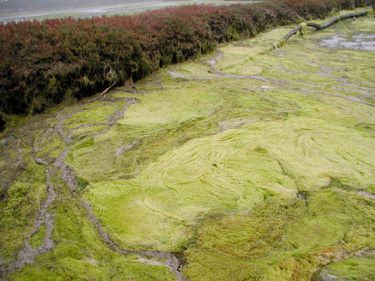
Excess nutrients threaten Elkhorn Slough ecosystem
A new study documents the effects of high nutrient levels in Elkhorn Slough, especially where water control structures limit tidal exchange.
-
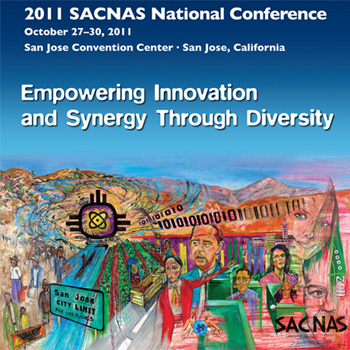
UCSC sponsors SACNAS national conference in San Jose, October 27-30
UCSC is supporting the efforts of the Society for the Advancement of Chicanos and Native Americans in Science.
-

Galaxy mergers not the trigger for most black hole feeding frenzies
A survey of distant galaxies shows that galaxy mergers are not responsible for most active galactic nuclei.
-

UCSC team makes final round of QB3 Award for Innovation contest
A UCSC research team is among five finalists competing for online votes to win a $10,000 innovation prize.