Science
-
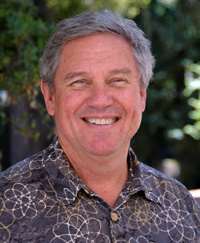
UC Santa Cruz astronomer Jerry Nelson to receive 2012 Franklin Medal
The Franklin Institute in Philadelphia has announced that Jerry Nelson, professor of astronomy and astrophysics, will receive the 2012 Benjamin Franklin Medal in Electrical Engineering.
-

Do you use “vocal fry?” It’s the most popular story on ScienceNOW, ever
Science communication student Marissa Fessenden’s article about “vocal fry” is the most popular story ever published on Science magazine’s online news site.
-
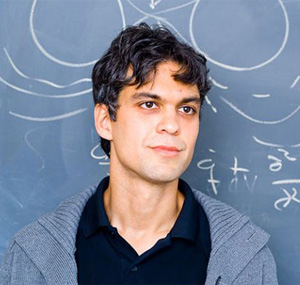
Astrophysicist Enrico Ramirez-Ruiz named to Silicon Valley’s ’40 Under 40′
Astrophysicist Enrico Ramirez-Ruiz is among 40 “rising stars” in Silicon Valley recognized by the Silicon Valley/San Jose Business Journal.
-
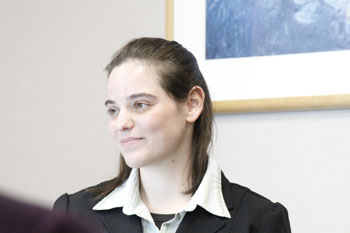
State Assemblymember Bill Monning meets with UCSC health sciences interns
Three UCSC human biology/health sciences program interns spoke in detail about their experiences during an informal meeting with state Assemblymember Bill Monning, chair of the Assembly Health Committee.
-
Ocean scientist Tom Guilderson wins E. O. Lawrence Award
The U.S. Department of Energy has awarded the 2011 E. O. Lawrence Award in Biological and Environmental Sciences to ocean scientist Tom Guilderson.
-
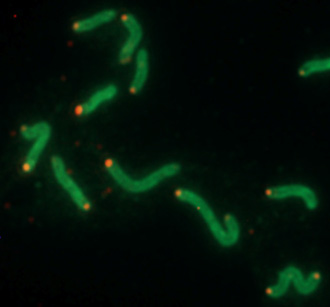
Ulcer-causing bacteria tamed by defect in cell-targeting ability
Without the ability to swim to their targets in the stomach, ulcer-causing bacteria do not cause the inflammation of the stomach lining that leads to ulcers and stomach cancer.
-
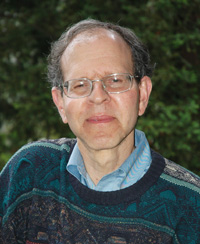
Physicist Michael Dine receives Outstanding Faculty Award
Michael Dine, distinguished professor and chair of physics, has received the 2010-11 Outstanding Faculty Award from the Division of Physical and Biological Sciences.
-
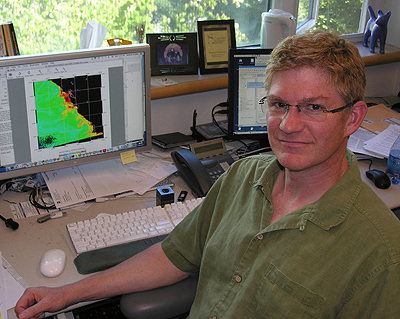
UCSC leads $4 million NOAA project to monitor harmful algal blooms
Scientists are launching a major effort to understand the conditions leading to blooms of toxic algae along the California coast.
-
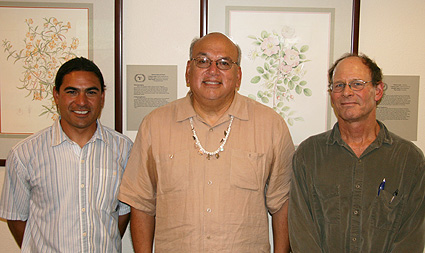
Arboretum celebrates partnership with Amah Mutsun tribe
The Arboretum and the Amah Mutsun tribe are working together on a project that highlights native plants traditionally used by the Mutsun people.
-

UCSC fundraisers honored at Silicon Valley Philanthropy Day
Two UCSC fundraising teams will be recognized by the Silicon Valley Chapter of the Association of Fundraising Professionals.
-
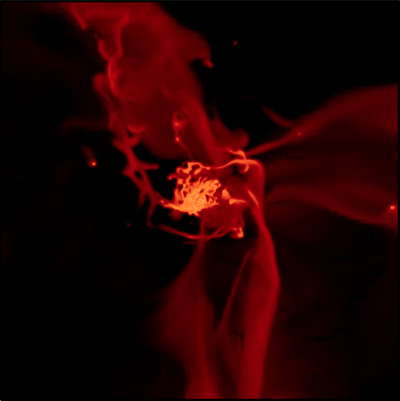
Astronomers find clouds of primordial gas from the early universe
For the first time, astronomers have found pristine clouds of the primordial gas that formed in the first few minutes after the Big Bang.