Science
-

CO2 at work during last global ‘hot spell’ but hardly alone
UC Santa Cruz ocean sciences professor Christina Ravelo is part of an international team that is using ocean floor sediment samples to compile data on past periods of global warming in order to understand today’s climate changes.
-

Sea lion defies theory and keeps the beat
Scientists trained a sea lion to bob her head in time with rhythmic sounds, the first example of beat keeping in a non-human mammal.
-
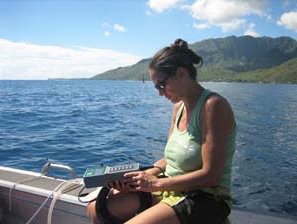
Marine scientist Adina Paytan receives prestigious international award
IMS researcher Adina Paytan has been awarded the Excellence Award of the Werner Petersen Foundation.
-

Alumni Weekend: Reliving memories, making new ones
Excitement is building for UCSC’s premiere alumni event, April 26-28, which is packed with reunions, celebrations, receptions, and opportunities.
-
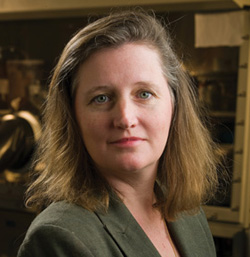
Physicist Sue Carter to lead APS energy research group
Physicist Sue Carter has been named chair elect of the American Physical Society’s group on Energy Research and Applications.
-
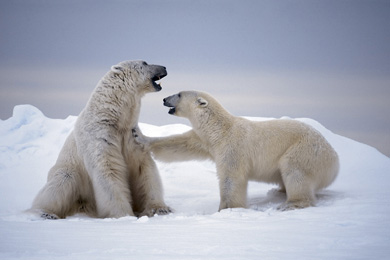
DNA study clarifies relationship between polar bears and brown bears
A new genetic study of polar bears and brown bears upends prevailing ideas about the evolutionary history of the two species.
-

International collaboration to investigate disappearing reptiles and amphibians
UCSC biologist Barry Sinervo leads NSF-funded project to study the effects of climate change on plants and animals around the world.
-

Bacteria may protect against disease caused by stomach infection
Stomach microbes influence whether H. pylori infection causes disease, researchers find.
-
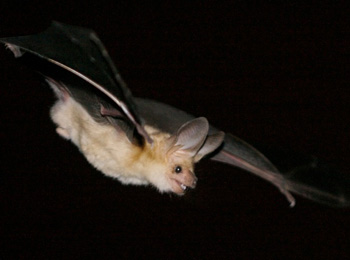
Bats not bothered by forest fires, study finds
Scientists found that bats are resilient to high-severity fire, and some species may even benefit from the effects of fire on the landscape.
-

UCSC alumna Kathy Sullivan named acting administrator for NOAA
The National Oceanic and Atmospheric Administration (NOAA) has appointed UCSC alumna Kathryn Sullivan to serve as acting administrator for NOAA.
-

Coastal Commission funds projects at UCSC Arboretum and Seymour Center
The California Coastal Commission has awarded grants to fund two coastal restoration and education projects at UCSC.
-

Student research project attracts European partners and NSF funding
Research on Mediterranean seagrass leads to international collaboration and a grant to extend students’ findings.