Science
-

Uncommon People / Juan Ledesma: Persistence and faith
Juan Ledesma, the son of agriculture laborers, arrived in Santa Cruz from Hartnell Junior College with a $25,000 S-STEM scholarship from the National Science Foundation, and a love for physics and medicine.
-

Mathematics lecturer Richard Mitchell wins teaching award
Richard Mitchell, a lecturer in mathematics, has received an Excellence in Teaching Award from the Phi Beta Kappa Northern California Association.
-

Distant blazar is a high-energy astrophysics puzzle
New observations of a blazar show that it is the most distant known source of very high-energy gamma rays.
-
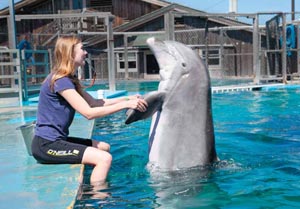
Dream job
A student writes about her experience caring for, and learning from, UCSC’s marine mammal “animal ambassadors”
-
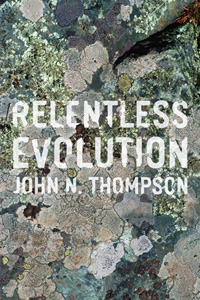
New book explores relentless evolution in a constantly changing world
In his new book, biologist John Thompson argues that species must evolve constantly or they will not persist.
-

Ecologist Mark Carr to give Ricketts Memorial Lecture at sanctuary symposium
Marine ecologist Mark Carr will give the Ricketts Memorial Lecture at the Monterey Bay National Marine Sanctuary’s annual symposium.
-

Boogie-woogie sea lion goes viral
The American people are going ga-ga for Ronan the beat-keeping sea lion, who has been featured on “Weekend Edition Saturday” on National Public Radio, and as the answer to a question on the NPR news quiz show “Wait Wait … Don’t Tell Me.”
-
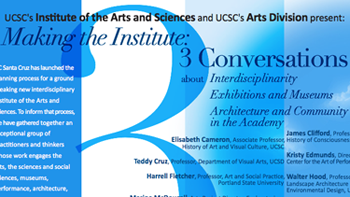
Arts Division public event to help shape new Institute of Arts and Sciences
The UCSC Arts Division will present a day-long public event to help plan a groundbreaking new interdisciplinary Institute of the Arts and Sciences on Friday, April 26.
-

UCSC Arboretum holds annual Spring Plant Sale on Saturday, April 20
This year’s spring plant sale will feature some of the newest treasures from the UCSC Arboretum.
-

CO2 at work during last global ‘hot spell’ but hardly alone
UC Santa Cruz ocean sciences professor Christina Ravelo is part of an international team that is using ocean floor sediment samples to compile data on past periods of global warming in order to understand today’s climate changes.
-

Sea lion defies theory and keeps the beat
Scientists trained a sea lion to bob her head in time with rhythmic sounds, the first example of beat keeping in a non-human mammal.
-
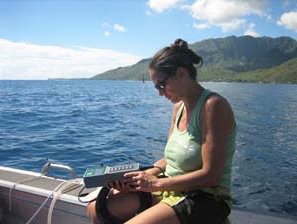
Marine scientist Adina Paytan receives prestigious international award
IMS researcher Adina Paytan has been awarded the Excellence Award of the Werner Petersen Foundation.