Science
-

Paul Koch honored as a Fellow of the California Academy of Sciences
Paul Koch, dean of physical and biological sciences, has been named a Fellow of the California Academy of Sciences
-
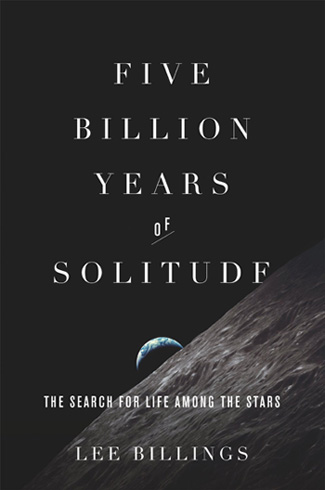
UCSC astronomers featured in new book about planet hunters
Several UCSC astronomers feature prominently in a new book about the search for habitable planets beyond our solar system.
-

New device harnesses sun and sewage to produce hydrogen fuel
A device that uses sunlight and wastewater to produce hydrogen gas could provide sustainable energy and treat wastewater.
-
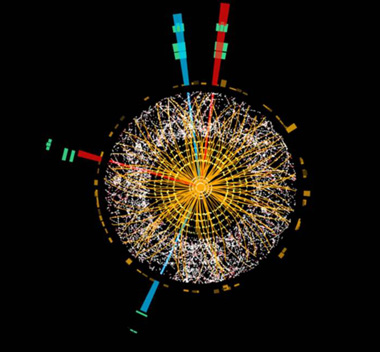
UCSC scientists applaud Nobel Prize for Higgs discovery
UCSC physicists played a significant role in advancing and confirming the theory that earned this year’s Nobel Prize in physics.
-
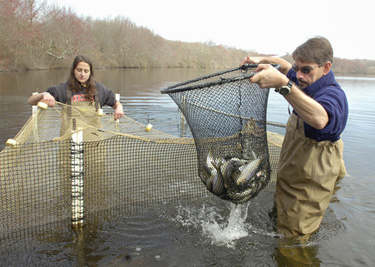
Genetic study of river herring populations identifies conservation priorities
Analysis of river herring populations along the U.S. east coast has identified distinct genetic stocks, providing crucial guidance for management and conservation.
-

Astronomers observe distant galaxy powered by primordial cosmic fuel
Astronomers have detected cold streams of primordial hydrogen gas left over from the big bang fueling a distant star-forming galaxy.
-
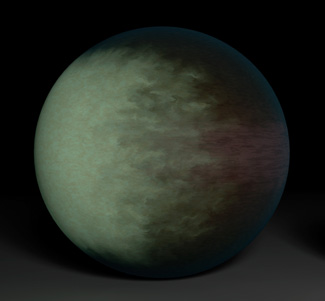
Astronomers find patchy clouds on exotic world
Astronomers have created the first cloud map of a planet beyond our solar system, a sizzling, Jupiter-like world known as Kepler-7b.
-
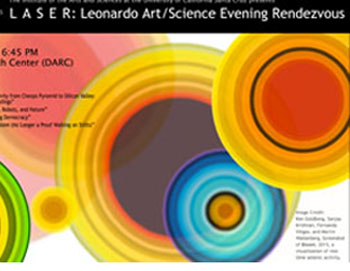
Institute to present inaugural Leonardo Art/Science Evening, Oct. 8
On Tuesday, October 8, UCSC’s Institute of the Arts and Sciences will present the campus’s inaugural LASER event, hosting an evening of speakers who will lay the foundation for a new UCSC series by speaking about the intertwining of art and science.
-
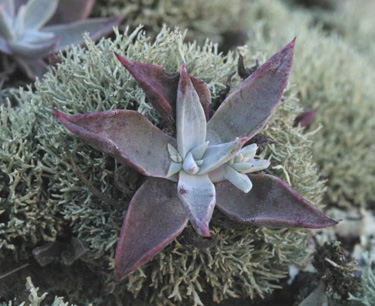
Seeds from UCSC Arboretum may help threatened species in aftermath of recent fire
Arboretum experts help with recovery of a threatened plant species after a fire burned its entire habitat.
-

Seismologists puzzle over largest deep earthquake ever recorded
A magnitude 8.3 earthquake that struck deep beneath the Sea of Okhotsk on May 24 was the largest deep earthquake ever recorded.
-

UCSC research funding tops $130 million for 2012-13
UCSC researchers attracted $132.5 million in external grants and contracts to the campus in the 2012-13 fiscal year.
-

California’s sea otter numbers continue slow climb
California sea otter numbers are up, according to the latest population survey led by federal, state, and UCSC scientists.