Ocean Sciences
-
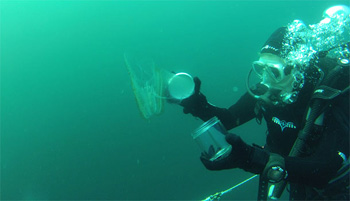
Ocean sciences grad student Meghan Powers featured in UC research profile
Graduate student Meghan Powers dives into her work to study bioluminescent marine life.
-
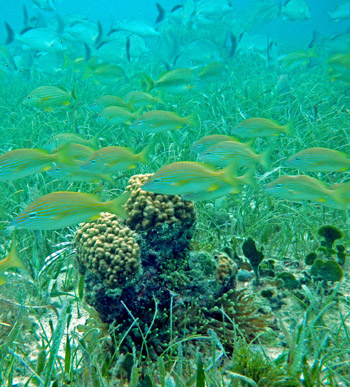
Submarine springs reveal how coral reefs respond to ocean acidification
Ocean acidification due to rising carbon dioxide levels will reduce the density of coral skeletons, making coral reefs more vulnerable to disruption and erosion.
-

Boogie-woogie sea lion goes viral
The American people are going ga-ga for Ronan the beat-keeping sea lion, who has been featured on “Weekend Edition Saturday” on National Public Radio, and as the answer to a question on the NPR news quiz show “Wait Wait … Don’t Tell Me.”
-

CO2 at work during last global ‘hot spell’ but hardly alone
UC Santa Cruz ocean sciences professor Christina Ravelo is part of an international team that is using ocean floor sediment samples to compile data on past periods of global warming in order to understand today’s climate changes.
-

Sea lion defies theory and keeps the beat
Scientists trained a sea lion to bob her head in time with rhythmic sounds, the first example of beat keeping in a non-human mammal.
-
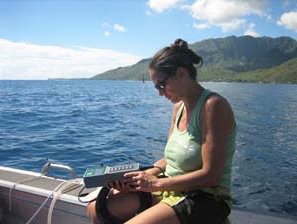
Marine scientist Adina Paytan receives prestigious international award
IMS researcher Adina Paytan has been awarded the Excellence Award of the Werner Petersen Foundation.
-
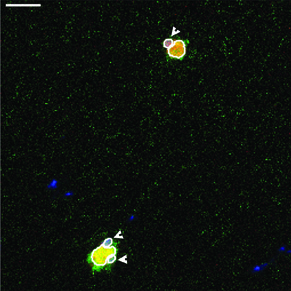
Unusual symbiosis discovered in marine microorganisms
Tiny single-celled algae and nitrogen-fixing bacteria exchange carbon and nitrogen in a mutually beneficial relationship that helps fertilize the oceans.
-

Schlanger Fellowship supports research on Arctic climate change
Ocean sciences graduate student Karla Knudson has been awarded a 2012-2013 Schlanger Ocean Drilling Fellowship.
-

Ocean scientist Raphael Kudela to co-chair national committee on harmful algae
The National Harmful Algal Bloom Committee has elected ocean scientist Raphael Kudela as co-chair.
-

Past climate change linked to ancient alteration of seawater chemistry
A new study by scientists at the University of Toronto and the University of California, Santa Cruz suggests that changes in world ocean chemistry is one potential cause of the cooling trend of the past 45 million years.
-
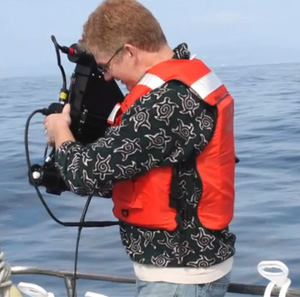
Coastal ecosystems research project wins NASA Honor Award
The Coastal and Ocean Airborne Sensor Testbed project, involving UCSC and NASA scientists, has received a NASA Honor Award.
-
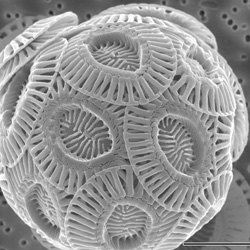
Climate more sensitive to carbon dioxide now than in past epochs
New evidence from the geologic record contrasts with today’s close coupling of climate and atmospheric carbon dioxide