Earth & Planetary Sciences
-
Hidden workshop turns out complex equipment for UCSC scientists
Born tinkerers, two ‘old-school’ UCSC machinists take rough sketches and turn them into ‘works of art.’
-

Paul Koch honored as a Fellow of the California Academy of Sciences
Paul Koch, dean of physical and biological sciences, has been named a Fellow of the California Academy of Sciences
-

Seismologists puzzle over largest deep earthquake ever recorded
A magnitude 8.3 earthquake that struck deep beneath the Sea of Okhotsk on May 24 was the largest deep earthquake ever recorded.
-

New Cassini data from Titan indicate a rigid, weathered ice shell
An analysis of gravity and topography data from Saturn’s largest moon, Titan, has revealed unexpected features of the moon’s outer ice shell.
-

UCSC alumna Kathy Sullivan nominated to lead NOAA
President Obama has nominated UCSC alumna Kathryn Sullivan to serve as Under Secretary of Commerce for Oceans and Atmosphere.
-

UCSC acquires powerful new astrophysics supercomputer system
State-of-the-art computer systems have been instrumental in making UCSC one of the world’s leading centers for computational astrophysics and planetary science.
-

Earth scientist Casey Moore elected fellow of the American Geophysical Union
AGU fellows are a select group of distinguished scientists who have made exceptional scientific contributions in the field of Earth science.
-

Geothermal power facility induces earthquakes, study finds
Seismologists found a strong correlation between seismic activity and operations for production of geothermal power.
-

Seafloor research expedition features live online video feed
Hydrogeologist Andrew Fisher is leading an expedition to explore fluid flow and microbial habitats deep within the ocean crust.
-
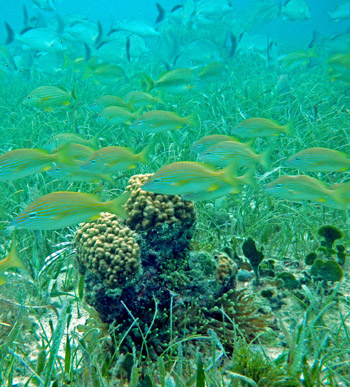
Submarine springs reveal how coral reefs respond to ocean acidification
Ocean acidification due to rising carbon dioxide levels will reduce the density of coral skeletons, making coral reefs more vulnerable to disruption and erosion.
-
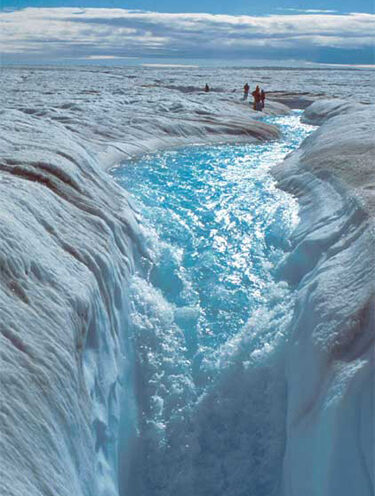
Major study assesses sea level changes due to ice sheet losses
Improved satellite measurements and computer simulations of ice sheets are creating a more accurate picture of the current and future rise in global sea level.