Coastal Science & Policy
-
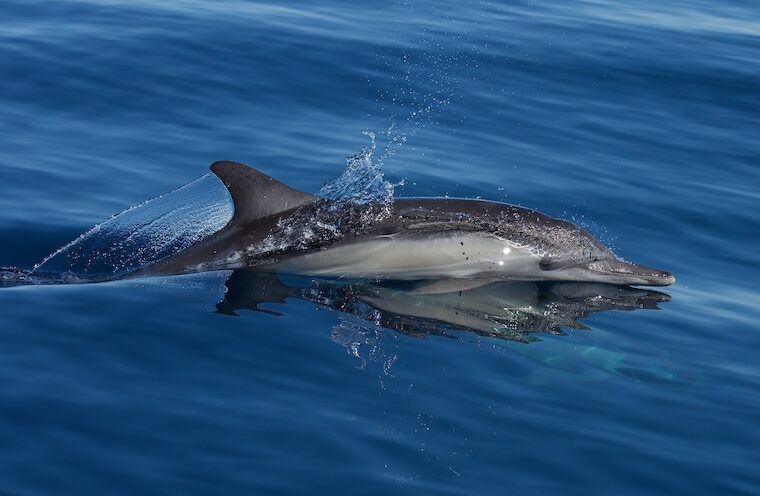
Dolphins sense military sonar at much lower levels than regulators predict
For the first time ever, a team including several UC Santa Cruz scientists have directly measured the behavioral responses of some of the most common marine mammals to military sonar. And the finding that surprised them most was that these animals were sensitive to the sounds at much lower levels than previously predicted.
-

New book California Catastrophes challenges coastal communities to confront reality
It’s no secret that Californians live with the reality of earthquakes, landslides, wildfires, and other natural disasters. This confronts those who choose to stay, and the many who move here, with the equally ominous question: What can we do about it?
-
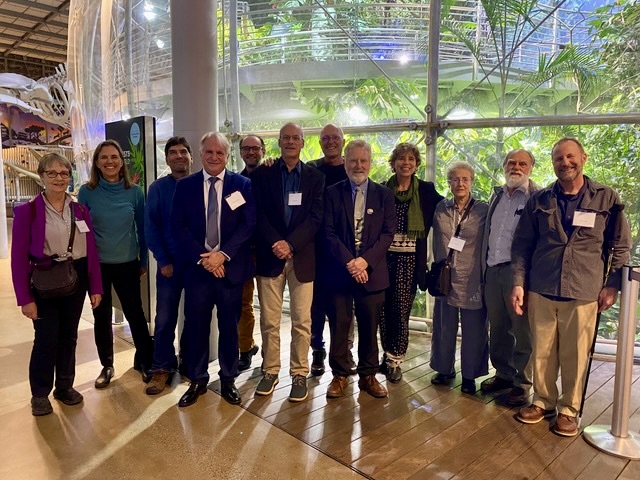
California Academy of Sciences Honors Dan Costa with Fellows Medal
The California Academy of Sciences presented UC Santa Cruz’s Dan Costa, distinguished professor of ecology and evolutionary biology, with its highest honor at an awards ceremony on October 15.
-

Understanding landslides: a new model for predicting motion
Along coastal California, the possibility of earthquakes and landslides are commonly prefaced by the phrase, “not if, but when.” This precarious reality is now a bit more predictable thanks to researchers at UC Santa Cruz and The University of Texas at Austin, who found that conditions known to cause slip along fault lines deep underground…
-
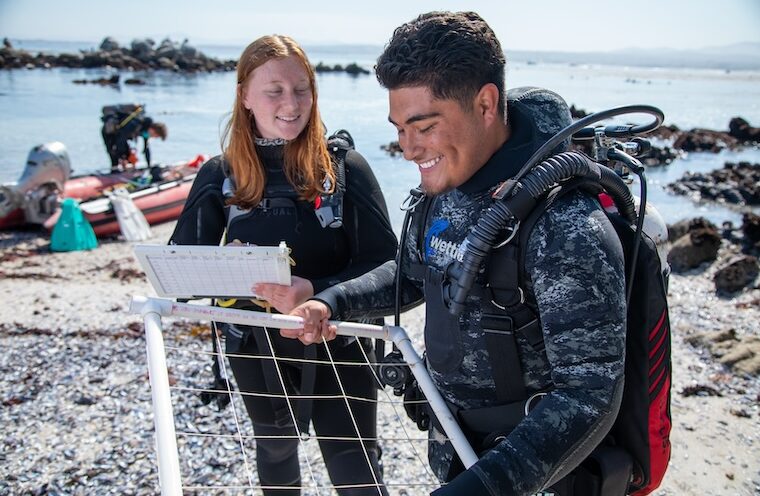
Science Division debuts ‘degree-defining experiences’ drawing on UC Santa Cruz’s unique strengths
The Science Division has received a $1 million donation to begin a major new program on “degree-defining experiences.” The program will pilot 17 projects across campus that aim to profoundly inspire undergraduate students and fill them with the kind of optimism that forever changes how they see their time at UC Santa Cruz and their…
-
Genomics Institute provides seed funds for six multidisciplinary projects
The Genomics Institute has awarded grants of up to $50,000 to six multidisciplinary research projects in the inaugural year of its seed funding program
-

Global warming is happening, but not statistically ‘surging,’ new study finds
The new study, published on October 14 in the journal Nature Communications Earth & Environment, confirms the broad consensus that the planet is getting warmer, but at a statistically steady rate—not at a sufficiently accelerated rate that could be statistically defined as a surge.
-
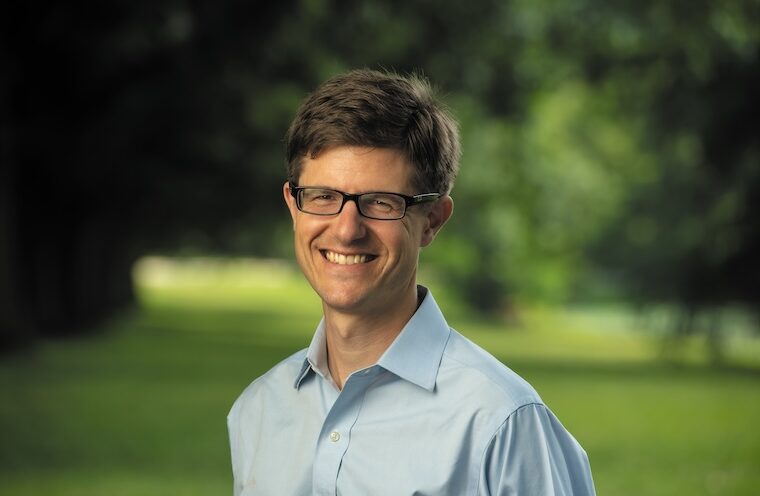
New policy essay: subsidies’ hidden costs for the environment
Government subsidies for business practices and processes should be approached with caution, even when they seem to be environmentally friendly, a team that includes a UC Santa Cruz researcher concludes in this week’s “Policy Forum” in the journal Science.
-
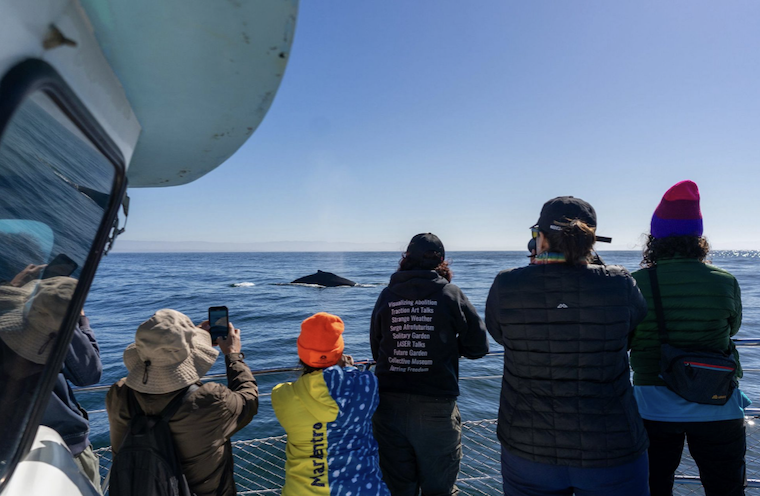
“An Aesthetics of Resilience” fosters interdisciplinary conversations and research
Commencing last fall, An Aesthetics of Resilience is a collaborative research initiative between UC Santa Cruz’s Institute of the Arts and Sciences (IAS) and Friedlaender Lab that creatively addresses shared experiences of vulnerability in the face of ongoing climate crises.
-
Center for Coastal Climate Resilience to co-host event at New York Climate Week
UC Santa Cruz Center for Coastal Climate Resilience (CCCR) and California Ocean Science Trust will be co-hosting an event at New York Climate Week on policy and finance tools to accelerate nature-based solutions for climate adaptation.
-
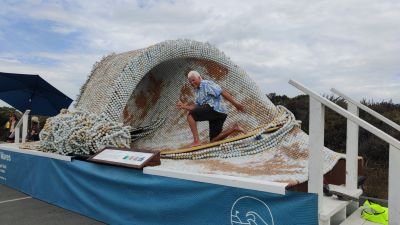
Learn how to protect our oceans at Blue Innovation Day on Oct. 6
UC Santa Cruz’s Innovation & Business Engagement Hub is partnering with Santa Cruz Works on Blue Innovation Day 2024, an event featuring activities and exhibits from companies, artists, small businesses, non-profits, and researchers who are committed to combating the water and ocean challenges exacerbated by climate change.
-

UC Santa Cruz research will harness advanced AI to better measure, predict climate-change impacts
Two UC Santa Cruz research projects designed to leverage advanced forms of artificial intelligence to improve how scientists measure and predict the effects of climate change have won funding from a $20 million investment by the National Science Foundation.