Coastal Science & Policy
-
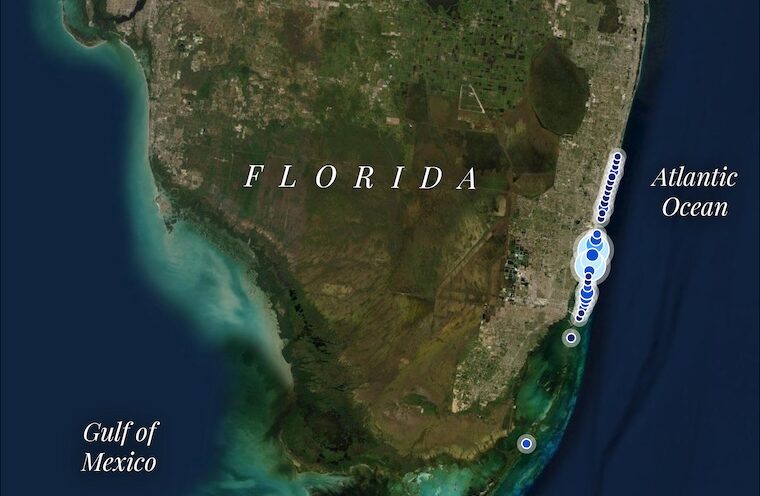
Coral-reef restoration can be cost-effective for saving lives, money
A new study co-led by the Center for Coastal Climate Resilience (CCCR) at UC Santa Cruz shows coral reef restoration in Florida and Puerto Rico could save thousands of lives and prevent hundreds of millions of dollars in damage and economic interruption each year.
-

Honoring UCSC’s 2024 Alumni Awards recipients
Six alumni were honored on Oct. 25 at the Alumni Awards Celebration dinner. Learn more about each recipient and watch their video feature.
-
Scientists collaborate on immersive technology to address climate challenges
The UC Santa Cruz Center for Coastal Climate Resilience (CCCR) and a team of scientists and science communicators at UC San Diego have developed an initiative focused on immersive technology that uses advanced hardware and software to simulate environments and experiences.
-
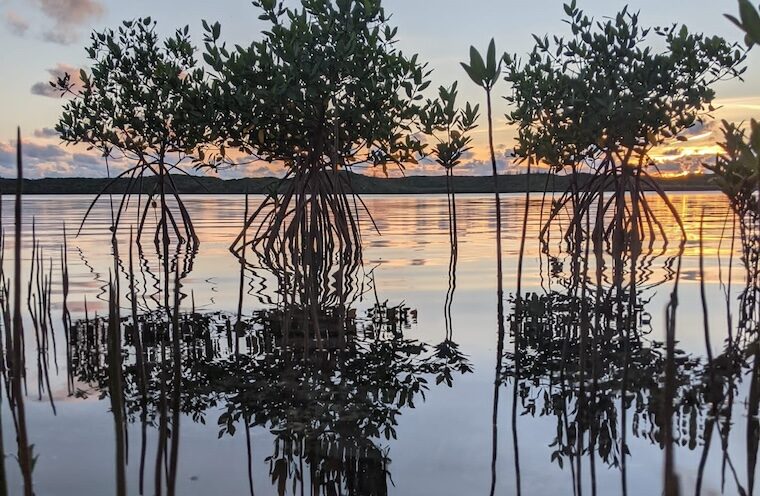
Mangroves save $855 billion in flood protection globally, new study shows
Mangroves have been shown to provide $855 billion in flood protection services worldwide, according to a new study from the Center for Coastal Climate Resilience at UC Santa Cruz. The research is featured in the World Bank’s 2024 edition of The Changing Wealth of Nations.
-

Genomics Institute faculty and staff help create non-profit to center Indigenous Knowledge while accelerating conservation genomics research
Several current and former UC Santa Cruz faculty and staff have joined with leading experts in the field of conservation genomics to launch Wise Ancestors, a non-profit centering Indigenous Peoples and Local Communities as co-creators of biodiversity conservation projects
-

UC Santa Cruz, Monterey Bay Aquarium lead collaboration on kelp conservation
In May 2024, UC Santa Cruz and the Monterey Bay Aquarium convened a workshop aimed at bridging the gap between scientific research and the practical application of evolutionary resilience concepts for kelp.
-
Professor J. Xavier Prochaska to deliver December 4 Kraw Lecture
The Kraw Lecture Series aims to help audiences better understand the big picture behind scientific research at UC Santa Cruz and the broader trends at play. This tradition continues with the December 4 talk on how artificial intelligence (AI) is accelerating the scientific pursuit.
-
24 in 2024: list of most highly cited researchers includes UC Santa Cruz scientists and engineers
In a notable recognition of scholarly achievement, 24 scientists and engineers from UC Santa Cruz have earned a spot on the 2024 Highly Cited Researchers list, recently unveiled by Clarivate.
-

2024 iGEM team’s foundational science project tackles infant formula affordability
The 2024 UC Santa Cruz iGEM team won a silver medal at the international Jamboree for a project focused on addressing the high cost of infant formula through a foundational synthetic biology approach.
-
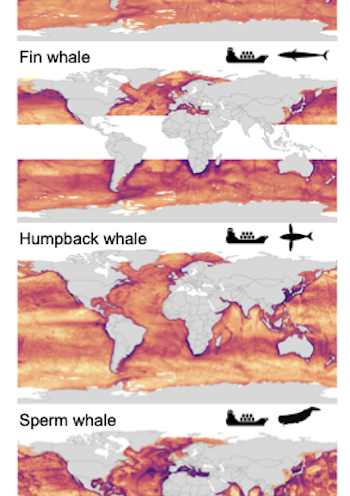
Fewer than 7% of global hotspots for whale-ship collisions have protection measures in place
A UC Santa Cruz scientist who specializes in research at the intersection of big data and marine-life conservation has contributed to a new study that shows the vast majority of “hotspots” where ships collide with whales in the world’s oceans lack protections for the majestic giants.
-

$7.5 million awarded to UC Santa Cruz to support leadership in salmon-recovery science
UC Santa Cruz has received nearly $7.5 million from the National Oceanic and Atmospheric Association (NOAA) to vault scientific research on imperiled Pacific salmon populations into one of the nation’s most powerful collaborations between the agency and academia to save the vital species.
-
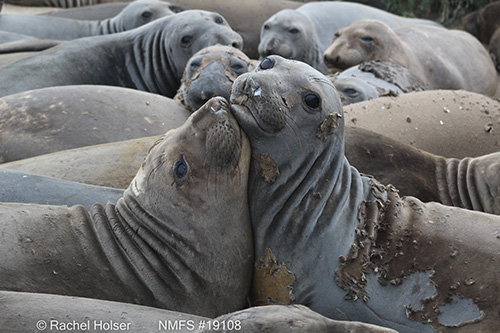
How researchers can maximize biological insights using animal-tracking devices
Biologgers allow us to see with unprecedented precision how animals move and behave in the wild. But that’s only part of the picture, according to a UC Santa Cruz ecologist renowned for using biologging data to tell the deeper story about the lives of marine mammals in a changing world.