Coastal Science & Policy
-

Gift from botanist Jean Langenheim establishes Endowed Chair in Plant Ecology and Evolution
UCSC has appointed Ingrid Parker, associate professor of ecology and evolutionary biology, to the newly established Jean H. Langenheim Endowed Chair in Plant Ecology and Evolution.
-

Small-scale fishing in Mexico rivals industrial fisheries in accidental turtle deaths
New research shows that a small-scale Mexican fishery–operated by hand from small open boats–can kill as many critically endangered loggerhead sea turtles as all of the industrial fishing fleets in the North Pacific Ocean put together.
-
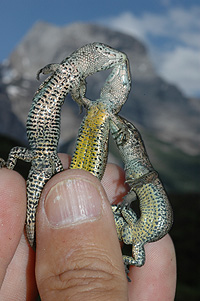
Three-way mating game of North American lizard found in distant European relative
New findings suggest “rock-paper-scissors” dynamic may be a fundamental evolutionary pattern among social animals.
-
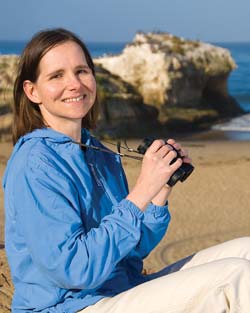
Beyond the Ivory Tower: The work of three graduate students at UCSC is protecting threatened species around the globe
At UC Santa Cruz, graduate student research is not just about earning a degree. In every field of advanced study, UCSC attracts graduate students who are eager to acquire the knowledge and skills they need to find solutions to global challenges.
-
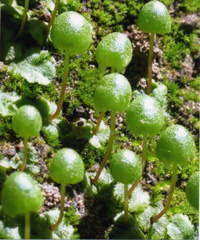
UCSC professor emeritus William Doyle publishes new reference for California botanists
William T. Doyle, professor emeritus of ecology and evolutionary biology, has published a comprehensive reference on the liverworts and hornworts of California.
-
Influential fisheries ecologist Steven Berkeley dies at age 60
Steven A. Berkeley, an influential fisheries ecologist whose research helped propel the expansion of marine reserves, died at home in Scotts Valley on June 27 after a year-long battle with cancer. He was 60.
-
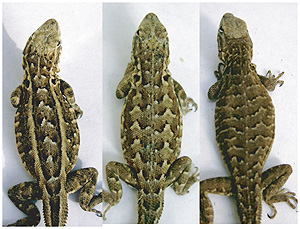
Study shows lizard moms dress their children for success
UCSC researchers have found that female side-blotched lizards are able to induce different color patterns in their offspring in response to social cues, “dressing” their progeny in patterns they will wear for the rest of their lives.
-

Scientists reconstruct prehistoric behavior and ecology of northern fur seals
A team of researchers has documented major changes in the behavior, ecology, and geographic range of the northern fur seal over the past 1,500 years using a combination of techniques from archaeology, biochemistry, and ecology.
-
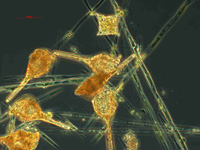
Large blooms of toxic algae in Monterey Bay are affecting marine animals
Researchers have detected large blooms of toxin-producing algae in Monterey Bay that appear to be poisoning marine mammals and seabirds.
-

The ‘twilight zone’ holds key to ocean’s role in climate change
Researchers have identified a critical link in the processes that determine the ocean’s ability to absorb and store the carbon dioxide that is accumulating in our atmosphere.
-

Art meets science in campus Earth Day mural project
Ten UCSC art students spent Earth Day weekend creating a mural project at the Thimann Laboratories Greenhouse. The project was organized by Christine Bors, a senior art student and the educational outreach coordinator for the Mary Porter Sesnon Art Gallery. “We had a team of volunteers painting a nature and scientific-themed mural to welcome the…
-
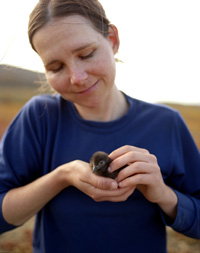
UCSC graduate student’s research leads to environmental victory in Coronado Islands
Graduate student Shaye Wolf’s findings have helped save endangered seabirds from the potentially devastating effects of a liquified natural gas facility planned for a site in Baja California.