Coastal Science & Policy
-

Symposium celebrates influential career of biologist Burney Le Boeuf
Colleagues and former students of biologist Burney Le Boeuf gathered to celebrate his career.
-
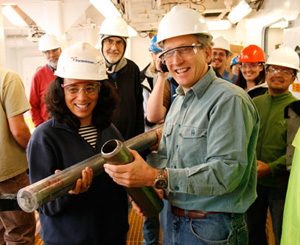
Bering Sea was ice-free and full of life during last warm period, study finds
Deep sediment cores retrieved from the Bering Sea floor indicate that the region was ice-free all year and biological productivity was high during the last major warm period in Earth’s climate history.
-

Life thrives in porous rock deep beneath the seafloor, scientists say
Researchers have found compelling evidence for an extensive biological community living in porous rock deep beneath the seafloor.
-
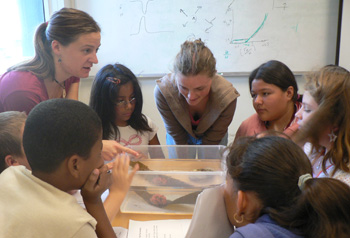
UCSC researcher teaches young scientists to engage with the public
Marine scientist Adina Paytan considers science education and public outreach to be just as important as her research.
-
Iron stimulates blooms of toxin-producing algae in open ocean, study finds
The new findings, reported this week in the Proceedings of the National Academy of Sciences, add to concerns about proposals to use iron fertilization of the oceans as a way to combat global warming.
-
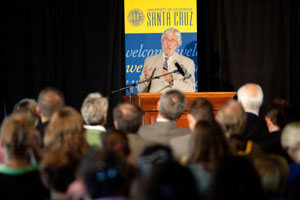
Jean-Michel Cousteau: ‘I am convinced we can change’
Ocean environmentalist Cousteau expresses both concern and hope for the future of the world’s oceans in a discussion of the BP oil spill with alum and NPR science correspondent Richard Harris
-

Four faculty members inducted into American Academy of Arts & Sciences
Four UCSC faculty members were inducted into the American Academy of Arts and Sciences at a ceremony on October 9.
-

Elephant seals improve maps of Antarctic seafloor
Oceanographers are using data collected by elephant seals to improve their map of the seafloor on Antarctica’s continental shelf.
-
Seymour Center presents lecture on Gulf oil spill on Sunday, October 17
Mike Beck, lead marine scientist for the Nature Conservancy and a research associate at UCSC, will discuss the Gulf oil spill in a public lecture at the Seymour Center on October 17.
-

Family ties bind desert lizards in social groups
UCSC researchers have found that a species of lizard in the Mojave Desert lives in family groups and shows patterns of social behavior more commonly associated with mammals and birds.
-
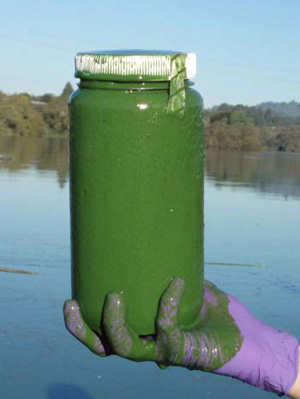
Sea otter deaths linked to toxin from freshwater bacteria
A potent toxin produced by bright-green blooms of freshwater bacteria has been flowing into the ocean and poisoning sea otters.
-
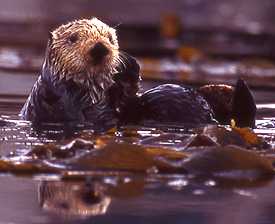
California sea otter numbers drop again
After a decade of steady recovery, the southern sea otter is in decline for the second year in a row, according to the latest population survey by USGS and UCSC researchers.