Coastal Science & Policy
-
Thanks for the sediment
Kimberley Kanani Bitterwolf won this year’s campuswide Grad Slam competition by taking a daunting topic — our planet’s climate history—and boiling it down to three entertaining minutes.
-

Marine researchers say recent sea star wasting disease epidemic defies prediction
Some sea star communities on the west coast could recover, but marine scientists still can’t pinpoint the environmental factors behind the unprecedented disease outbreak.
-
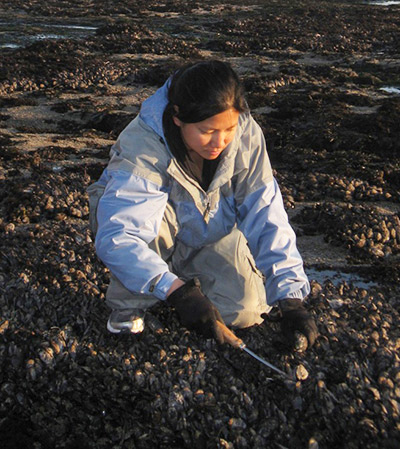
Four kinds of algal toxins found in San Francisco Bay shellfish
Researchers monitoring San Francisco Bay for algal toxins have found a surprising array of different toxins in the water and in mussels collected from the bay.
-
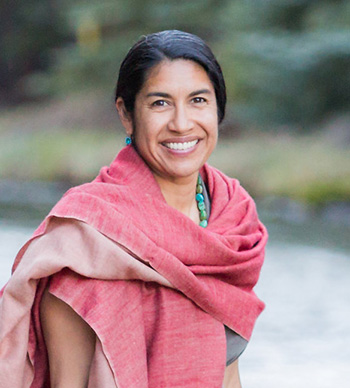
Ecologist Erika Zavaleta elected Fellow of the Ecological Society of America
Zavaleta was honored in recognition of her contributions to the science of ecology.
-

Tracking data reveal the secret lives of marine animals
Seals, whales, sharks, turtles, seabirds, and other marine vertebrates show similar patterns of movement in marine environments.
-

Polar bears finding it harder to catch enough seals to meet energy demands
As climate change alters their environment a growing number of polar bears are unable to catch enough fat-rich prey to meet their energy needs.
-
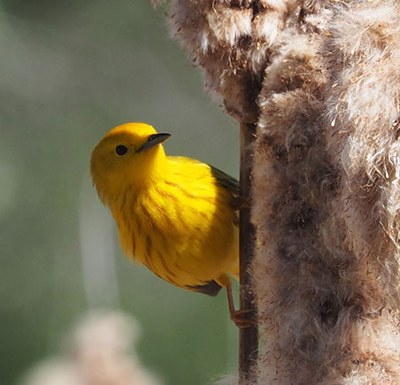
How birds’ genes influence adaptation to climate change
Biologists involved in the Bird Genoscape Project are racing against time to find out the potential for adaptation in vulnerable populations of birds.
-
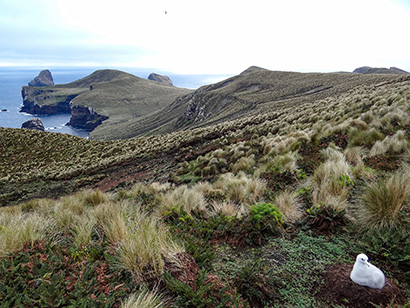
Want to save 41 percent of the planet’s highly threatened vertebrates? Work on islands
A new study has mapped the world’s most vulnerable island species and identified invasive species as a key threat to their survival.
-
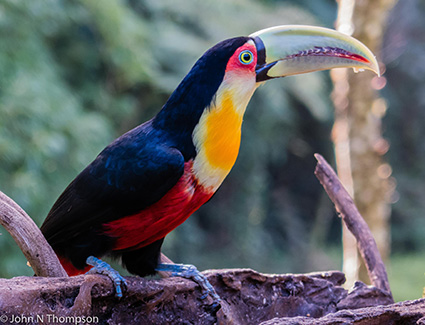
Understanding the coevolving web of life as a network
A new study exploring how mutualistic species coevolve suggests rapid environmental change can destabilize networks of interacting species.
-

Into the heart of a frozen continent
Antarctica has a hold on James McClintock (biology, ’78, Cowell), who has made 15 journeys to this unforgiving place. His research has included studies on ocean acidification, the effects of climate change on marine life, and the discovery of chemicals contained in seaweed and sponges.
-

UC Santa Cruz to dedicate new Coastal Biology building on October 21
The newest building on UCSC’s vibrant Coastal Science Campus is now home to the Department of Ecology and Evolutionary Biology.
-
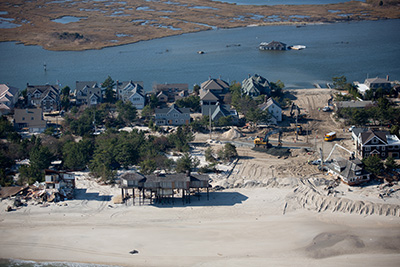
Coastal wetlands dramatically reduce property losses during hurricanes
A new scientific study reports that coastal wetlands significantly reduce annual flood losses and catastrophic damages from storms.