Coastal Science & Policy
-
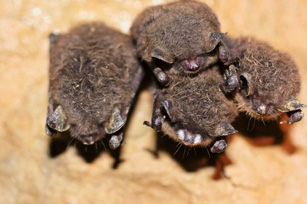
Fat bats withstand the effects of white-nose syndrome, study finds
New findings explain how some populations of little brown bats are persisting, even after initial population declines caused by the debilitating fungal disease.
-

Grad student Sara Gonzalez wins policy award from Ecological Society of America
Sara Gonzalez, a Ph.D. student in ecology and evolutionary biology, is among the recipients of the Katherine S. McCarter Graduate Student Policy Awards from the Ecological Society of America.
-
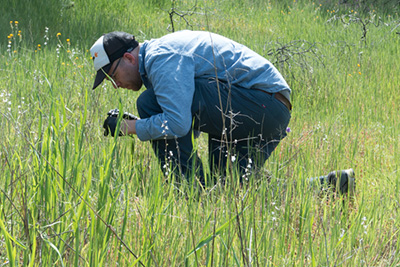
Diverse scents of woodland star wildflowers driven by coevolution with pollinators
Scientists found a surprising diversity of floral scent compounds produced by different species of woodland stars and even by populations of the same species in different locations.
-
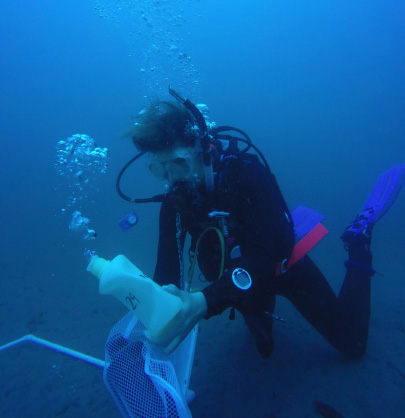
Study of brine discharge from desalination plant finds good news and bad news
Brine discharged from the Carlsbad Desalination Plant raises offshore salinity levels more than permitted, but researchers found no direct local impacts on sea life.
-

Idled farmland presents habitat restoration opportunities in San Joaquin Desert
Land no longer suitable for agriculture could be reclaimed as habitat for dozens of endangered species, according to a new analysis.
-
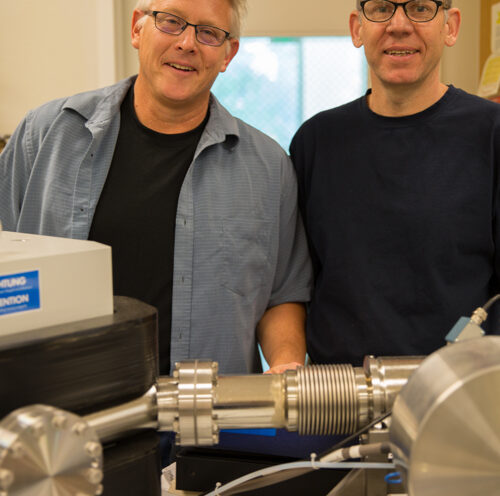
NSF funds innovative stable isotope equipment at UC Santa Cruz
The new equipment will support research across a wide range of disciplines, ranging from oceanography and earth science, paleontology, anthropology, ecology and fundamental biochemical cycle research.
-

Ocean fertilization by unusual microbes extends to frigid waters of Arctic Ocean
Researchers have documented nitrogen fixation by an unusual type of cyanobacteria in the cold waters of the Bering and Chukchi Seas.
-
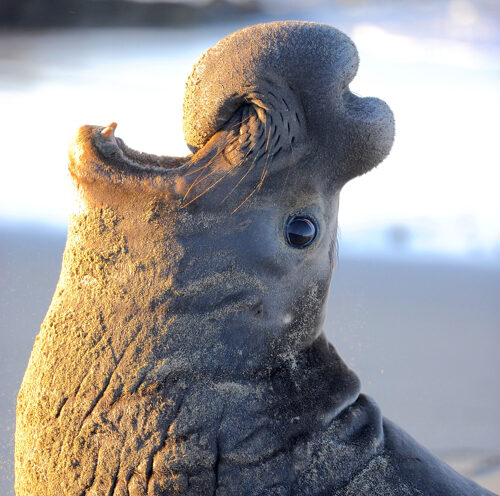
Environmental, social changes shift how elephant seals communicate
UC Santa Cruz Ph.D. candidate Caroline Casey retraced biologist Burney Le Boeuf’s scientific footsteps and discovered the seals’ threat calls no longer had geographic distinctions. Instead, as the northern elephant seal population had increased, the males’ calls had grown more individualized and complex.
-

Ocean scientist Jonathan Zehr elected 2018 AAAS Fellow
Jonathan Zehr, professor of ocean sciences at UC Santa Cruz, has been awarded the distinction of AAAS Fellow by the American Association for the Advancement of Science (AAAS).
-
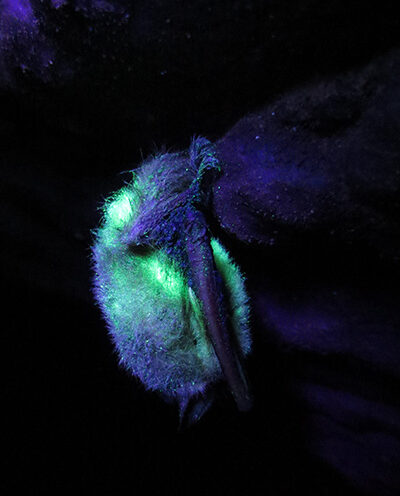
Study reveals importance of ‘cryptic connections’ in disease transmission
Innovative study of fungal disease in bats quantifies unseen interactions that play a key role in the spread of disease through populations and between species.
-
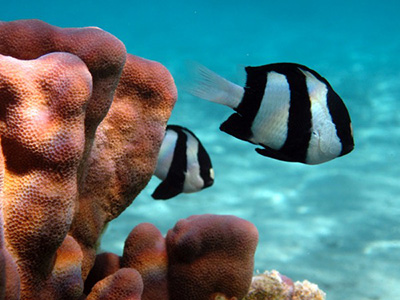
Escape responses of coral reef fish obey simple behavioral rules
Loom-sensitive neural circuits characterized in previous lab studies are shown to underlie complex evasive behaviors observed in a natural environment.
-
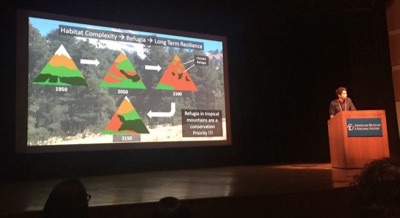
ENVS doctoral candidate Paulo Quadri takes top honors for NYC talk
Paulo Quadri, a doctoral candidate in environmental studies, was recognized for giving one of the three best talks during the American Museum of Natural History’s annual Student Conference on Conservation Science.