Coastal Science & Policy
-

When humans disturb marine mammals, it’s hard to know the long-term impact
Scientists are developing new tools to determine when short-term changes in behavior caused by human activities have biological significance for protected populations.
-

Fostering diversity, equity, and inclusion in ocean sciences
Oceans Sciences DEI and Anti-Racism fund raises awareness about diversity in the geosciences and helps graduate students from disadvantaged backgrounds succeed in the field.
-

Study takes unprecedented peek into life of 17,000-year-old mammoth
An international research team has retraced the astonishing lifetime journey of an Arctic woolly mammoth that roamed the Alaska landscape 17,000 years ago.
-

Fostering anti-racism in ecology, evolution, and conservation biology
A UCSC team has assembled a toolkit of resources for academic departments to use in addressing issues of diversity, equity, and inclusion.
-
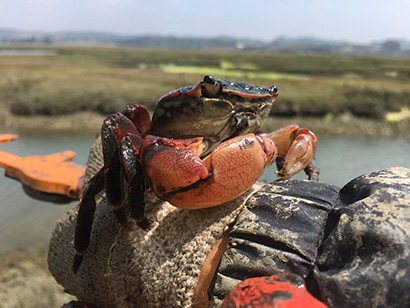
Salt marsh resilience compromised by crabs along tidal creek edges
A long-term study in Elkhorn Slough revealed the impact of superabundant crabs on salt marsh vegetation and the vulnerability of tidal creek banks to erosion.
-
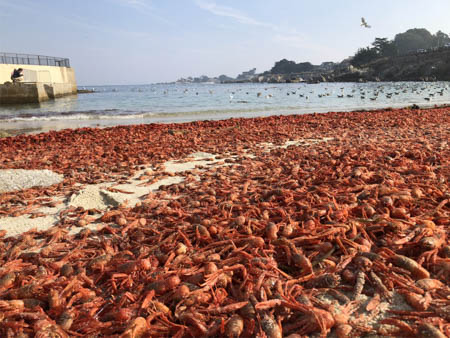
Unusual currents explain mysterious red crab strandings
New findings suggest that abnormal ocean currents cause the occasional appearance of pelagic red crabs outside their native range.
-
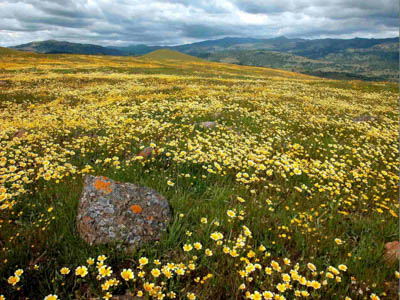
New study shows how loss of drought-sensitive species could affect health of California grasslands
At a grassland site near San Jose, scientists studied experimental research plots to determine what might happen if the plants that ecologists expect to be hit hardest by drought actually disappeared.
-
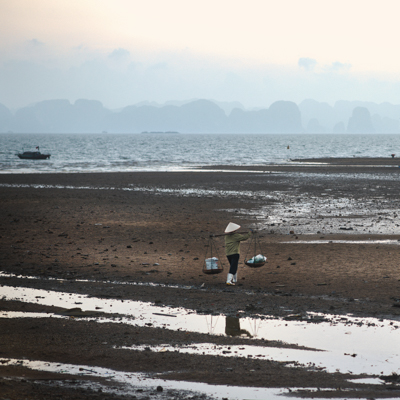
Dialogues, collaborations, and the success of ‘slow science’
With funding from the Henry Luce Foundation, the new Southeast Asian Coastal Interactions Initiative takes a methodical approach to worldwide social and environmental challenges
-

Snowflake morays can feed on land, swallow prey without water
While most fish need water to feed, the unique anatomy of moray eels gives snowflake morays the ability to grab and swallow prey on land.
-

Biologist Roxanne Beltran wins funding from Beckman Young Investigator Program
New project aims to provide the first large-scale recordings of sound in the open ocean, using elephant seals as a platform for a novel acoustic recorder.
-

Dead zones formed repeatedly in North Pacific during warm climates, study finds
Over the past 1.2 million years, marine life was repeatedly extinguished in low-oxygen ‘dead zones’ in the North Pacific Ocean during warm interglacial climates.
-
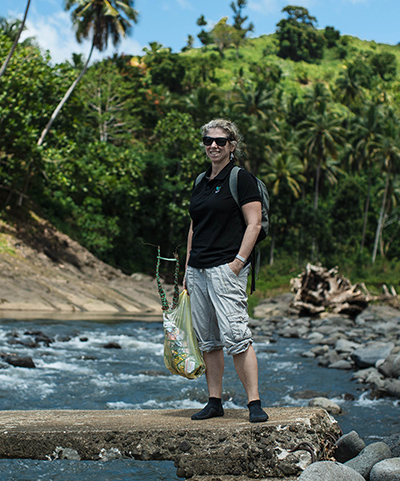
Found in translation
Marine scientist Stacy Jupiter, the 2020 Alumni Achievement Award winner, translates science and analysis in ways that inspire people to change behaviors.