Science
-

‘Science is a human endeavor’: astrophysicist uses art to connect Black and brown kids to the STEM fields
So begins a chapter about our closest star in Painting the Cosmos, a recent book by UC Santa Cruz astrophysicist Dr. Nia Imara. The book blends science and art in an ode to the diversity of the cosmos. While touching on astronomical tidbits, such as the fact that scientists measure the rate of the sun’s…
-
Trump’s new ‘gold standard’ rule will destroy American science as we know it
UC Santa Cruz Nobel laureate Carol Grieder co-authored this opinion piece stating that the administration’s new executive order will allow political appointees to undermine research they oppose, paving the way for state-controlled science.
-
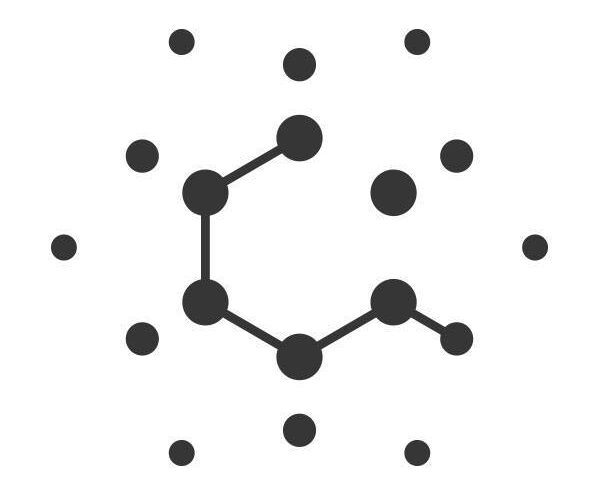
Singularities in Space-Time Prove Hard to Kill
The world of Bousso’s new theorem still departs from our universe in notable ways. For mathematical convenience, he assumed that there’s an unlimited variety of particles — an unrealistic assumption that makes some physicists wonder whether this third layer matches reality (with its 17 or so known particles) any better than the second layer does.…
-

San Jose City Hall falcon brings rat back to nest, raising poisoning fears for chicks
“They were fighting over it,” said Zeka Glucs, director of the UC Santa Cruz Predatory Bird Research Group, which works with the City of San Jose to monitor and study the City Hall falcons. But peregrines rarely catch rats, raising fears that the rodent had been poisoned and the young falcons may have ingested toxic…
-
Santa Cruz wharf collapse: Plans take shape for rebuilding as summer beach season begins
The wharf has more than 4,400 wooden pilings, made of Douglas Fir. They are pounded roughly 20 feet into the ocean bottom, and city crews replace several dozen each year. But piers come and go. There have been five others back to the mid-1800s in that area, noted Gary Griggs, a distinguished professor of Earth…
-

The Pacific Coast Highway, a Mythic Route Always in Need of Repair
Gary Griggs, a professor of earth and planetary sciences at the University of California, Santa Cruz, who has advised on a major repair to the route, said that he doubted the highway would ever again be open in its entirety for an extended period. “Attaining stability is impossible,” he said.
-

Vitamin D may slow a process related to aging, new study suggests
Carol Greider, a professor at the University of California, Santa Cruz who won the 2009 Nobel Prize in physiology or medicine for her discovery of telomerase, an enzyme that protects telomeres from shortening, said that she was skeptical of the new study’s findings.
-

How do clownfish survive a heat wave? By shrinking themselves down
Many animals around the world are getting smaller, says Alexa Fredston, a quantitative ecologist at University of California, Santa Cruz, who wasn’t involved in the study. … By measuring individual fish, “the results paint a fascinating and complex picture of how individual animals respond to a prolonged marine heat wave,” Fredston says.
-
The Coyotes of San Francisco
“Did they walk over the Golden Gate Bridge?” asked Christine Wilkinson, a carnivore ecologist at the University of California, Santa Cruz. “That’s my top theory.” Once the first coyotes returned to the city, she said, they probably howled to attract others to follow. “Coyotes will be where they want to be,” Wilkinson said.
-

As Coastline Erodes, One California City Considers ‘Retreat Now’
“We overall are much better at spending recovery money — that is, addressing issues after disasters — than we are at spending hazard mitigation,” said Michael Beck, director of the Center for Coastal Climate Resilience at the University of California, Santa Cruz. On the East Coast, the predominant strategy for protecting shorelines has been to…
-

Intelligence on Earth Evolved Independently at Least Twice
“One of the reasons I kind of like these papers is that they really highlight a lot of differences,” said Bradley Colquitt, a molecular neuroscientist at UC Santa Cruz. “It allows you to say: What are the different neural solutions that these organisms have come up with to solve similar problems of living in a…
-

Our moon may have once been as hellish as Jupiter’s super volcanic moon Io
“The moon gets sort of confused,” planetary scientist Francis Nimmo, of the University of California, Santa Cruz, told Space.com. “It doesn’t know exactly what orbit it should be adopting, and so it can develop kind of a weird orbit.”