Science
-

Volcano Worlds Might Be the First Exomoons Found by Astronomers
Co-author on the new study, postdoctoral researcher Athira Unni of the University of California, Santa Cruz, released measurements of the movement of sodium around WASP-49b, citing the rapid velocity around the system as a clue toward the origin being a volcanic satellite rather than stellar eruptions or other astrophysical sources.
-

An Earthling’s guide to planet hunting
Earth’s turbulent atmosphere makes it hard to detect new planets from the ground. UC Santa Cruz astronomer Rebecca Jensen-Clem is working out how to find them anyway.
-

DNA from rum-soaked fishes chronicles century of environmental change
By comparing DNA in historic specimens with that in modern fish populations, researchers discovered that fishes grew scarcer and their genetic diversity declined. That’s worrisome, says Malin Pinsky of the University of California, Santa Cruz, because “genetic diversity provides the raw material for adaptation to novel conditions. Less genetic diversity means less ability to adapt…
-

Gary Griggs, Our Ocean Backyard | Trump’s climate change denial continues
Distinguished professor of Earth and Planetary Sciences Gary Griggs wrote an opinion article about the impacts of Trump Administration policies related to climate change and renewable energy.
-

As Federal Government Retreats, A Private Fund to Save Sea Otters Steps in
“Adding sea otters completely changes the configuration of the food web and that has profound consequences for the structure of the nearshore ecosystem,” says Tim Tinker, an independent sea otter scientist who does research for the University of California at Santa Cruz. The Sea Otter Fund is financing Tinker’s work, recruiting him to model restoration…
-

California may be at high risk of ‘supershear’ earthquakes. Scientists fear we’re not ready
Past large supershear earthquakes have occurred on shearing faults that are long, straight and shallow, said Thorne Lay, a distinguished professor of earth and planetary sciences at UC Santa Cruz. The San Andreas fits this description.
-

After deadly year for whales in Calif., new map offers a lifeline
“I hope this new platform can demystify the scientific data we collected, making it accessible for people who are interested in whales and biology,” said Ari Friedlaender, a UC Santa Cruz ecologist who tagged many of the featured whales. “It’s great if it also brings people closer to the animals, helping foster empathy and responsibility.”
-
Tracey Weiss, Our Ocean Backyard | NEXTies: Earth & Sea celebrates Santa Cruz changemakers
Professor Andrew Fisher won the “Brainwave Award” for his groundbreaking hydrological research on urban flooding, saltwater intrusion and freshwater supply in the Pajaro River Valley. Darryl Wong and Gage Dayton of the Center for Agroecology won the “Big Idea Award” for their work on UC Santa Cruz’s recent land acquisition that strengthens conservation, sustainable agriculture…
-
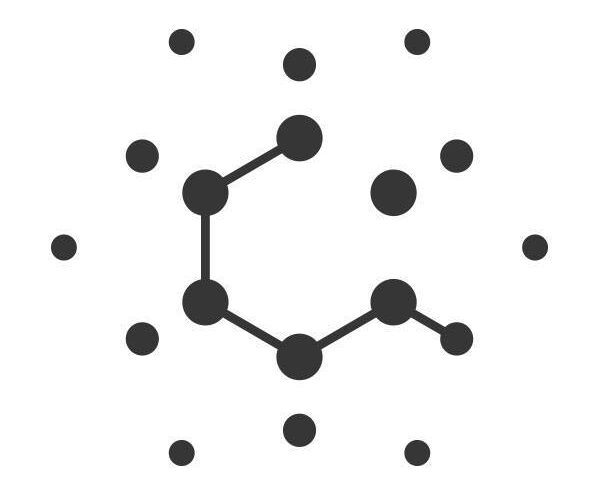
New Math Revives Geometry’s Oldest Problems
That was the case until the mathematicians Kirsten Wickelgren and Jesse Kass, associate professor at UC Santa Cruz, came to a sudden realization: that enumerative geometry might provide the exact kind of deep insights that Hilbert had hoped for.
-

San Jose: $197 million project completed to improve flood protection along south San Francisco Bay shoreline
“We’ve built megacities of the world on coasts,” said Gary Griggs, a distinguished professor of earth sciences at UC Santa Cruz, in 2022 when the Alviso project broke ground. “We didn’t think of sea level rise 100 years ago, and now we are having to pay the price.”
-

Lasers, fiber optics and tiny vibrations tease a way to warn about earthquakes
Emily Brodsky, a professor of earth sciences at the University of California, Santa Cruz, who was not involved in the research, said “earthquake early warning could be dramatically improved tomorrow” if scientists are able to broker widespread access to existing telecommunication networks. Additional coverage in SFGate.
-
Earthquakes Release Energy Mostly Through Heat, Not Ground Shaking
A new laboratory study in AGU Advances finds that shaking accounts for only 1 to 8 percent of the energy released in an earthquake, while up to a whopping 98 percent of that energy dissipates as heat. One advantage of the work is that it used a new technique measures the alignment of magnetic minerals…