Science
-

Tracey Weiss, Our Ocean Backyard | NEXTies: Earth & Sea celebrates Santa Cruz changemakers
Professor Andrew Fisher won the “Brainwave Award” for his groundbreaking hydrological research on urban flooding, saltwater intrusion and freshwater supply in the Pajaro River Valley. Darryl Wong and Gage Dayton of the Center for Agroecology won the “Big Idea Award” for their work on UC Santa Cruz’s recent land acquisition that strengthens conservation, sustainable agriculture…
-
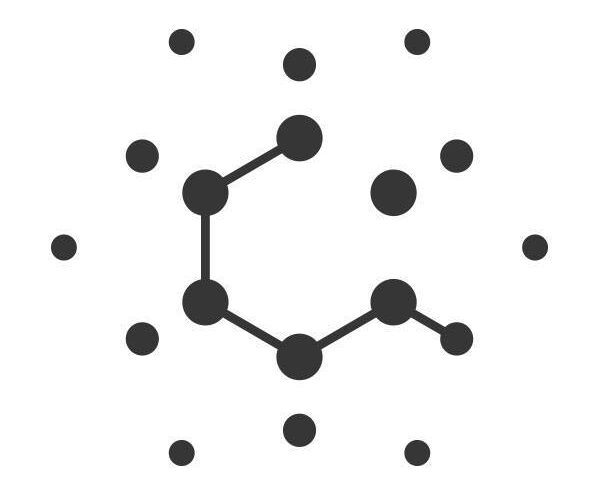
New Math Revives Geometry’s Oldest Problems
That was the case until the mathematicians Kirsten Wickelgren and Jesse Kass, associate professor at UC Santa Cruz, came to a sudden realization: that enumerative geometry might provide the exact kind of deep insights that Hilbert had hoped for.
-

San Jose: $197 million project completed to improve flood protection along south San Francisco Bay shoreline
“We’ve built megacities of the world on coasts,” said Gary Griggs, a distinguished professor of earth sciences at UC Santa Cruz, in 2022 when the Alviso project broke ground. “We didn’t think of sea level rise 100 years ago, and now we are having to pay the price.”
-

Lasers, fiber optics and tiny vibrations tease a way to warn about earthquakes
Emily Brodsky, a professor of earth sciences at the University of California, Santa Cruz, who was not involved in the research, said “earthquake early warning could be dramatically improved tomorrow” if scientists are able to broker widespread access to existing telecommunication networks. Additional coverage in SFGate.
-

Earthquakes Release Energy Mostly Through Heat, Not Ground Shaking
A new laboratory study in AGU Advances finds that shaking accounts for only 1 to 8 percent of the energy released in an earthquake, while up to a whopping 98 percent of that energy dissipates as heat. One advantage of the work is that it used a new technique measures the alignment of magnetic minerals…
-

Caltrans to reopen Highway 1 at Regent’s Slide in Monterey County in March 2026
Professor Gary Griggs estimates that large slides on Highway 1 in Big Sur each cost some $50 million to fix, and proposes a toll for motorists to travel the stretch of highway. Caltrans estimates the total cost of repairing Regent’s Slide at $82 million.
-

‘The Blob’ marine heat wave now spans an area the size of the US
Rachel Holser, a scientist at UC Santa Cruz who studies the California Current ecosystem, explained to SFGATE what scientists call the “blob” is a phenomenon best understood as a series of “distinct” heat waves. It first appeared from 2013 to 2015, followed by a second iteration in 2019, with each defined by its own conditions.
-

An interstellar object is passing through our solar system. This UC program says to stay calm and carry on
One of those scientists who you can shadow is Raja GuhaThakurta, faculty director of UC Santa Cruz’s department of Creating Equity in STEAM. For GuhaThakurta, who started the Shadow the Scientists program in 2020, the hysteria around the alien spaceship — or artifact — theory is not only misguided. “This kind of sensationalism ends up ultimately… causing…
-

California lawmaker proposes $23 billion bond measure to fund scientific research
Support for the legislation also came from John MacMillan, a professor at UC Santa Cruz. New approaches and datasets to help treat childhood cancer are made at his institution. Additionally, his university researches climate change and builds tools to combat a warming planet. Like others, his university also has faced impacts from federal cuts. “SB…
-

Climate change is driving fish stocks from countries’ waters to the high seas: Study
A new study found that more than half of the world’s straddling stocks will shift across the maritime borders between exclusive economic zones and the high seas by 2050. “It’s an important issue and an important paper that I think should make anyone concerned about fisheries or the seafood on their plate sit up and…
-

Brightest fast radio burst ever detected could help solve an enduring cosmic mystery
Prior to the Outrigger telescopes’ capability to triangulate a fast radio burst to its source, “it was like talking to someone on the phone and not knowing what city or state they were calling from,” said study coauthor Bryan Gaensler, dean of the University of California, Santa Cruz science division. Also covered by Gizmodo.
-

Steam Worlds Have Atmospheres Like a Sweltering Sauna, Made Entirely of Hot Water Vapor
“The interiors of planets are natural ‘laboratories’ for studying conditions that are difficult to reproduce in a university laboratory on Earth. What we learn could have unforeseen applications we haven’t even considered. The water worlds are especially exotic in this sense,” said co-author Natalie Batalha, a professor of astronomy and astrophysics at the University of…