Earth & Space
UC Santa Cruz receives California Department of Fish and Wildlife funding to assess health of state’s streams
A $2.2 million grant will scale a pioneering environmental DNA-based index, adding a broad biodiversity assessment tool that benefits statewide management of vital freshwater ecosystems
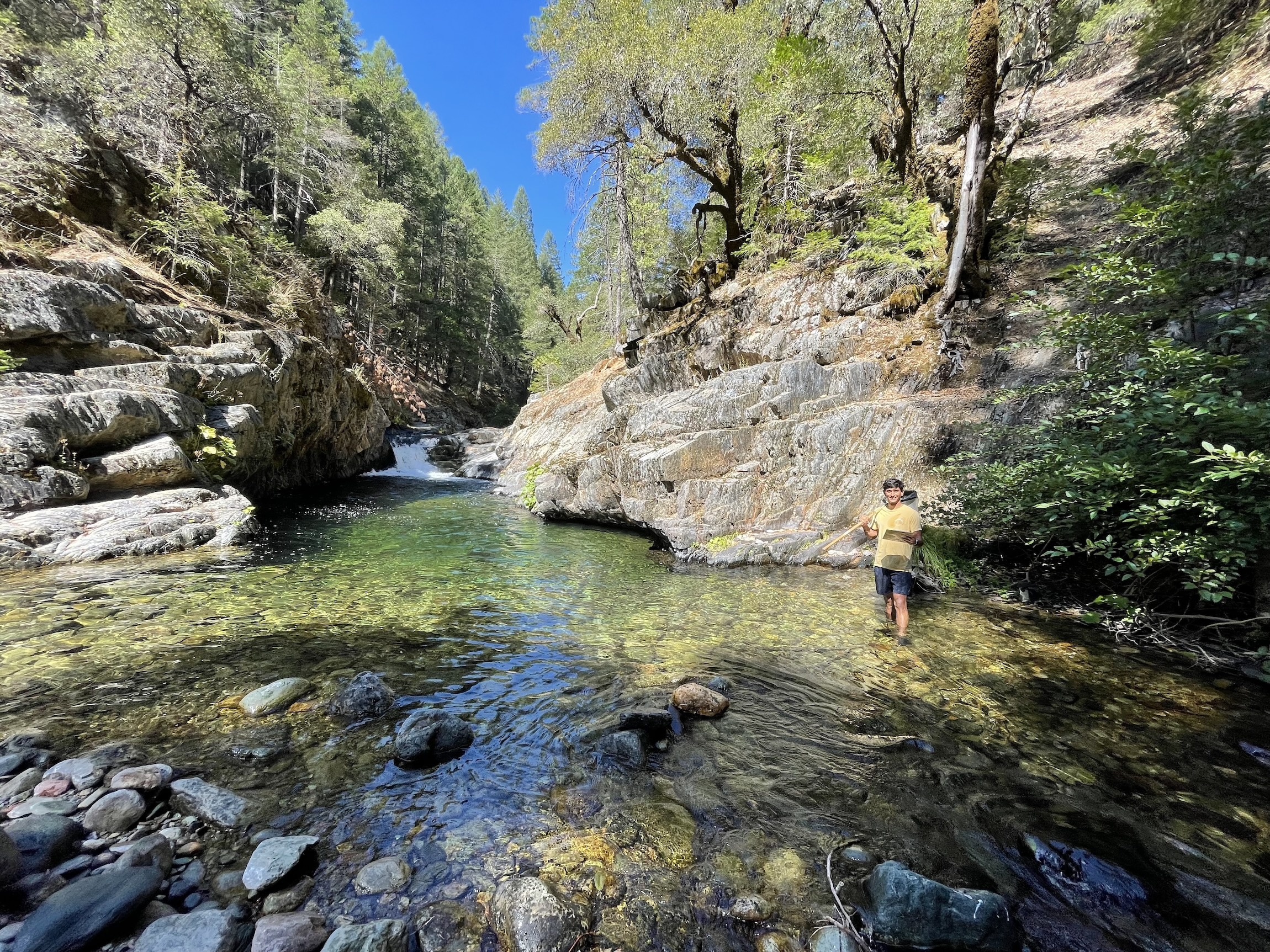
CALeDNA technician Ajith Seresinghe samples Pauley Creek, monitored by the Sierra Streams Institute, in Tahoe National Forest.
Photo by Emma Walker
Key takeaways
- The project will use environmental DNA (eDNA)—traces of genetic material left behind by organisms—to understand the health of streams throughout California and assess impacts from land use and climate change.
- This work will combine advanced machine learning and geospatial data with the on-the-ground efforts of hundreds of volunteer community scientists.
- The project will launch an open-source, low-cost cloud platform so that Indigenous tribes, land managers, watershed groups, and local agencies have the tools to evaluate stream conditions and monitor biodiversity.
Healthy watersheds support wildlife, recreation, and clean water for communities across California. From a public-health standpoint, we need to know if a river or stream is safe to swim or fish in. From the lens of wildlife support, in addition to being clean, a healthy aquatic habitat must sustain a whole food web.
Knowing a stream’s health also indicates how resilient it is to adversities such as wildfires, land-use changes and agricultural runoff. When stream health is compromised, the potential consequences are dire: from a community’s loss of recreational options or a food source, to the rapid collapse of an ecosystem that evolved over millennia.
California invests in work to monitor ecosystems and to understand the range of pressures on them, as well as opportunities to maintain or restore them. For example, through its Cannabis Restoration Grant Program, the California Department of Fish and Wildlife (CDFW) funds innovative research and projects that help support and protect California’s natural resources in areas affected by cannabis cultivation—such as initiatives that help scientists and land managers better detect impacts and guide restoration.
Now, researchers at the University of California, Santa Cruz, have been awarded a $2.2 million grant from the program for a project based on a rising and effective monitoring tool: environmental DNA (eDNA). With the CDFW grant funding, UC Santa Cruz researchers will lead a project to extend their genomics-based biodiversity-monitoring platform to create an eDNA-based stream-health index.
The project will help provide faster monitoring and a clearer, more comprehensive picture of biodiversity conditions across California watersheds and help scientists and resource managers better prioritize restoration and conservation actions in the state’s freshwater ecosystems.
The California Environmental DNA (CALeDNA) program will build upon the state’s traditional stream-health assessments with the speed, precision, and lower-cost processes of genomics, coupled with powerful bioinformatics brought by a California-based startup that spun out of UC Santa Cruz called eDNA Explorer. This approach can halve the time needed to go from field sampling through lab processing, data analyses, and translation of results to useful information, potentially lowering the cost of stream evaluation to hundreds of dollars.
Screening the Golden State’s health
The project’s leaders liken the extraction and analysis of eDNA from California’s streams to a blood test for a routine screening—to gain insights into what’s coursing through the system and get a quick and clear picture of health.
“We are very grateful to have the chance to bring in AI, geospatial data, historical data—as well as both established and totally novel eDNA assays—all together to make a next generation complementary tool for environmental health assessment for California streams,” said CALeDNA Director Rachel Meyer.
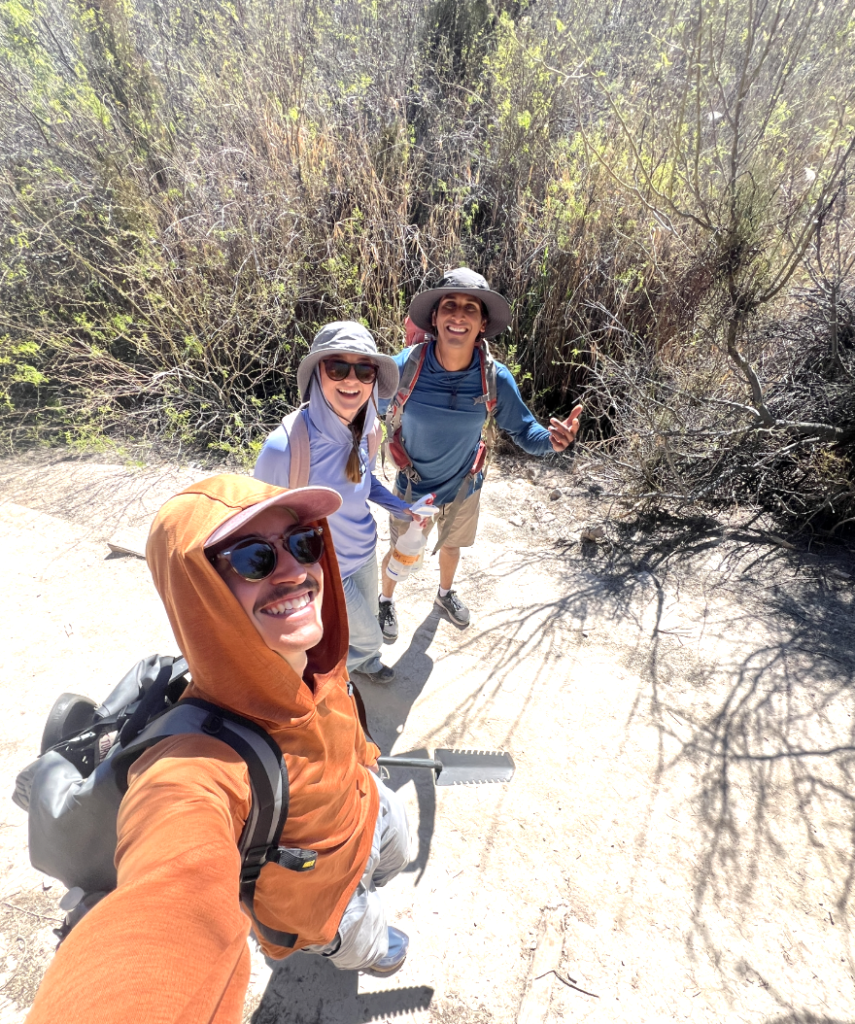
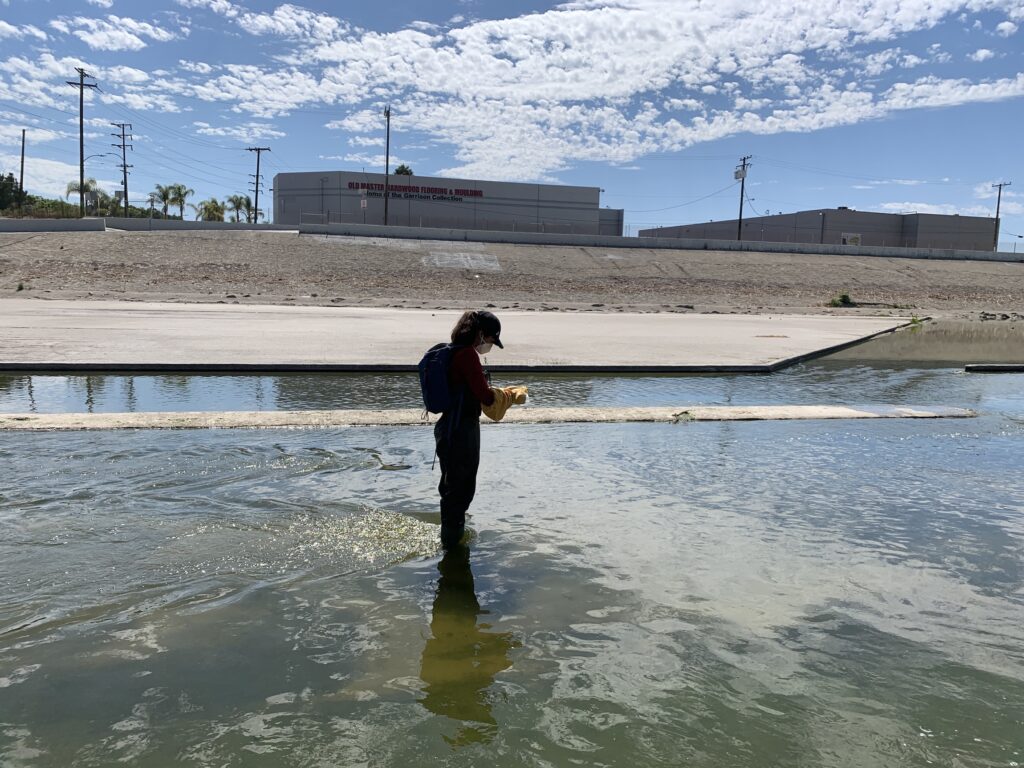
To build the dataset for the index, the team will collect 2,400 samples from over 400 streams across 50 watersheds throughout California between May and September of this year. Many of those samples will be collected by trained volunteers participating in this community science effort. These “community scientists” will go out into the field with standardized eDNA collection training and, ideally, a desire to improve biodiversity monitoring to better understand how our environment is altered by factors such as land use and a changing climate.
“A stream is a system. We understand streams best through the elements we can see, like insects, fish and vegetation. With eDNA we finally get to ask questions about the microbial world beneath as well,” said CALeDNA Chief Scientist Jen Quick-Cleveland.
Meyer and Quick-Cleveland run CALeDNA and are the principal investigators of the project to build the California Stream Health Index. They say the index will help identify new early signs of ecological decline, allowing land managers and regulators to respond before impacts become severe.
Other key collaborators in the project are the Southern California Coastal Water Research Project and the California State Water Resources Control Board, which have decades of experience developing and applying several other stream health scoring methods. Together, the teams will see how the different methods complement each other. The resulting index must be compared with and, to some extent, calibrated, against existing stream-assessment tools and other environmental data. Through this process, the research team aims to ensure the index produces reliable and comparable results across California’s diverse watersheds.
Harnessing advanced technology
Advanced laboratory methods and machine learning tools will be used by researchers to scour for millions of eDNA sequences and identify thousands of biodiversity patterns, then link those to environmental stressors. Through all stages of development, the index and supporting tools will be vetted by agencies, Indigenous tribes, conservation practitioners, researchers, and land managers. One key area of engagement is on the different lenses index users may want to explore to define stream health. The project will produce standardized sampling protocols, open-source analytical tools, and a cloud-based platform that will allow users to calculate stream health indexes from different lenses, and explore biodiversity data as a whole.
While all steps will be made open-source, a cloud-based platform is critical to make this intuitive for the diverse people who want this stream assessment. eDNA Explorer will inject computational power and user-friendly software to package the stream-health index into web tools that make the data accessible, transparent, engaging, and understandable.
“Water is life. California’s wildlife, water quality, and communities depend on our ability to do solid stream management,” said Julie Stanford, eDNA Explorer’s chief executive officer. “This project will bring in many perspectives to create a multifaceted index that describes stream health. We’re excited to talk to as many people as possible.”
The research team will follow a multi-phase process over three years that includes statewide data collection, development and testing of candidate indexes, scientific review with end users, and the release of final tools and protocols. Community engagement will also help ensure the index and resulting tools are practical and useful for the wide range of organizations working to protect California’s waterways.
“Ultimately, the project aims to establish a reliable and affordable method for assessing stream conditions across the state,” said CDFW Environmental Program Manager Alexandria Turner, “that can be adopted widely and provide important data to help California better safeguard its freshwater biodiversity and watershed health for future generations.”