Arts & Culture
New initiative will immerse learners worldwide in Indigenous forms of scientific inquiry, understanding
‘Shadow Indigenous Worlds’ will use an educational model pioneered at UC Santa Cruz that allows students anywhere to closely observe and converse with scientists over Zoom as they conduct research in real time
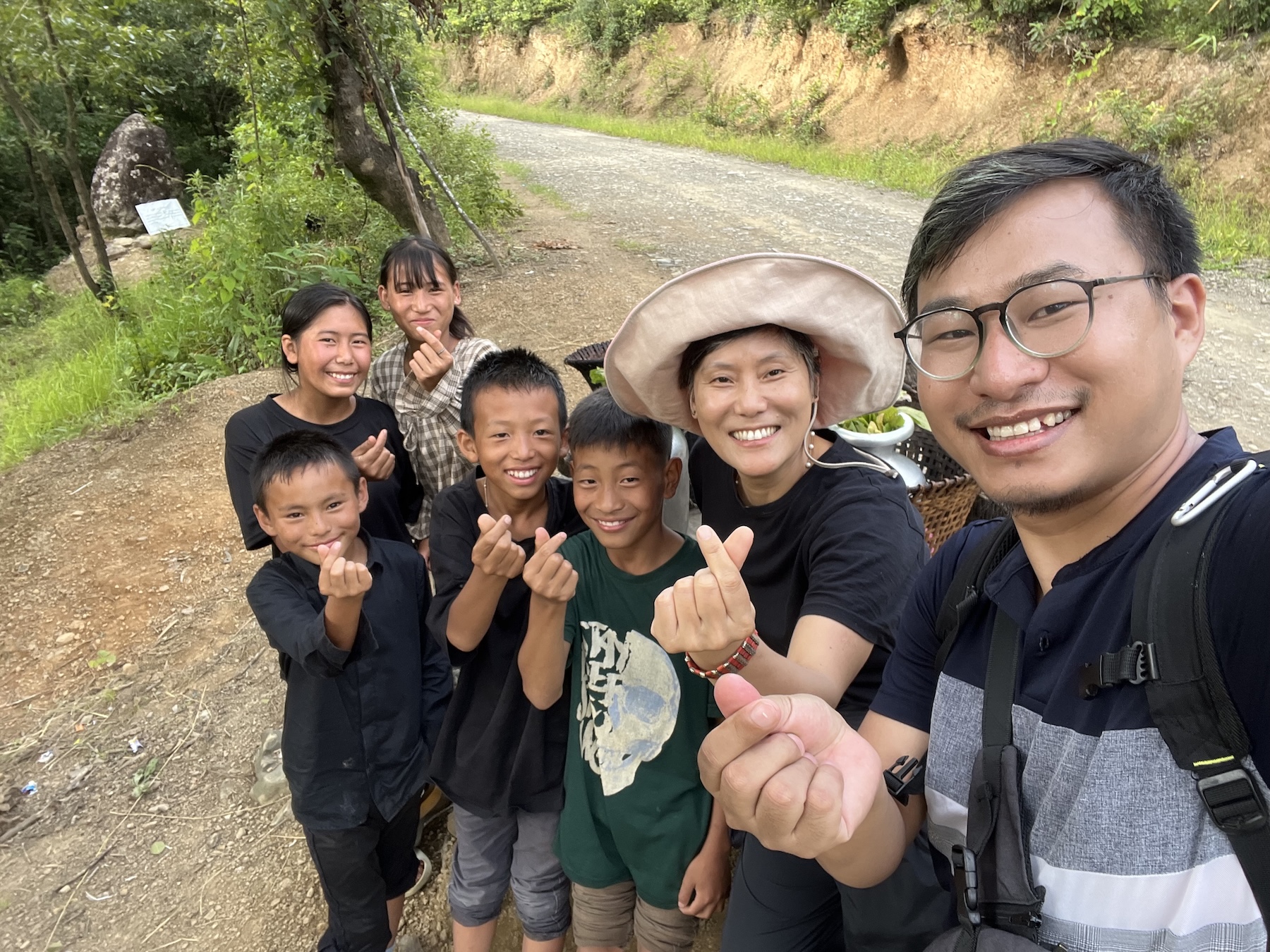
Anthropology professor Dolly Kikon, second from right, with geologist Neivikhotoso Chaya making heart gestures with children from Makhel Village in India during the filming of Kikon's documentary, A Sacred Place.
Photo by Neivikhotso Chaya
On Monday, May 4, faculty from the physical and social sciences debuted a student-focused program that highlights Indigenous worldviews of inquiry. The evening kickoff event for the Shadow Indigenous Worlds (SIW) program was held in the Communication Building’s media theater and laid out the vision for a global initiative to connect native researchers, practitioners, and artists with learners around the world virtually over Zoom.
The event, free and open to the public, presented a screening of A Sacred Place, a documentary directed by Naga anthropologist Dolly Kikon. The film explores the themes of Indigenous ecology and geological history through the lens of oral histories and interviews with intergenerational Indigenous storytellers.
Following the screening, SIW founders Professor Kikon and astronomy Professor Puragra “Raja” GuhaThakurta discussed their vision for the program in what was billed as a hybrid kickoff event—allowing for both in-person and online participation.
The new initiative is modeled after the successful Shadow the Scientists program, which demystifies the research process for the public by hosting real-time virtual learning experiences over Zoom that provide students of all ages around the world with rare, behind-the-scenes access to professionals as they conduct research and related work in science, technology, engineering, art, or mathematics.
SIW will focus on the intersections of Indigeneity and storytelling across the academy, highlighting the contributions of Indigenous worldviews of inquiry and voices. “I consider SIW as an important initiative that centers Indigenous voices and scholarship,” said Kikon, director of the Center for South Asian Studies (CSAS) at UC Santa Cruz. “As communities who continue to experience colonial violence and dispossession across continents, I see myself as a facilitator to highlight actions that speak of human dignity, courage and a shared humanity.”
The vision of SIW is not to draw distinctions about Indigenous knowledge and visions as different from others, Kikon noted. Instead, it is to showcase how the toxic and violent logics of one group of human beings as superior to others have polarized and led to the dehumanization of human beings. “Today, the most vulnerable social groups remain invisible and continue to be dehumanized,” Kikon said. “I believe Indigenous philosophies and understandings about sustainability and shared humanity are an offering during these dark times.”
‘We are here’
For GuhaThakurta, the urgency of this work is captured in a simple but profound phrase he often hears from his Indigenous colleagues. “’We are here’ is a phrase I hear a lot,” GuhaThakurta explained. “We’re not something of the past. We are something of the present. We have survived and have even thrived, in some instances, in spite of all odds.”
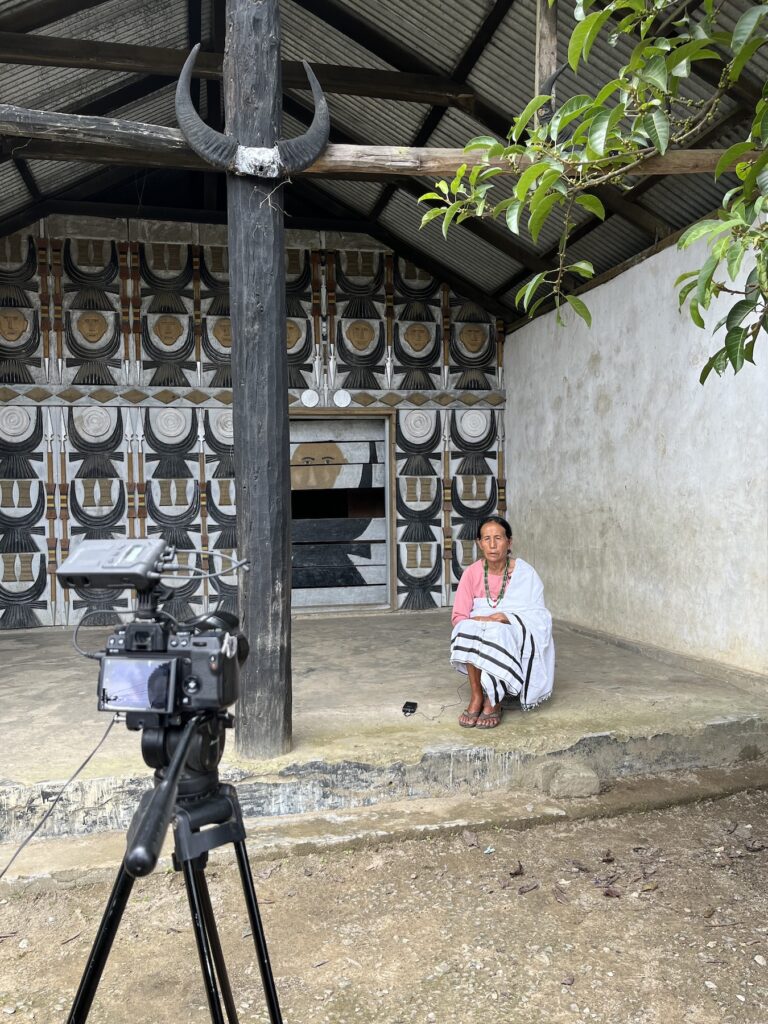
Through SIW, he and Kikon aspire to more prominently spotlight Indigeneity in the modern world and show that the work of Native researchers—and their ancestral knowledge—is still relevant and impactful.
‘Two-eyed seeing’
SIW seeks to move beyond traditional Western academic frameworks by embracing “two-eyed seeing,” a concept framed by Mi’kmaq elders that GuhaThakurta was introduced to by his Indigenous colleagues. This approach involves looking at the world with one eye through the lens of Western knowledge and with the other eye through the lens of Indigenous knowledge, and using both eyes for the benefit of all.
A global, student-focused mission
Though rooted at UC Santa Cruz and hosted by CREST, SIW is intended to be global in scope. The program will use Zoom to allow audience members to “shadow” Indigenous educators, thinkers, and visionaries at work in the field, studio, or classroom. By prioritizing conversations and collective learning, SIW aims to facilitate critical thinking about contemporary societies and the celestial worlds.
“There isn’t enough of a spotlight being cast on Indigenous work,” GuhaThakurta said, noting that while UC Santa Cruz is known for its land acknowledgments, the initiative seeks to create a more robust, active engagement. “There’s very little ‘two-eyed seeing’ out there. It’s still sort of a niche concept.”
Kikon added, “As communities that experienced genocide and colonial occupation, our survival and lessons highlight how we are open to letting the light come in, even as we walk with our deep wounds. In that context, SIW is grounded on the art of peacebuilding and curiosity.”
The Shadow Indigenous Worlds initiative is supported by CSAS, the American Indian Resource Center, and Indigenous Faculty Network. As the initiative grows, sessions will be archived as YouTube videos on a dedicated SIW channel linked from CREST’s website—ensuring that these Indigenous worldviews remain accessible to all.