Climate & Sustainability
New method to raise investment funds for projects that restore coastal wetlands for climate adaptation
Center for Coastal Climate Resilience partners with The Nature Conservancy and others on a first-of-its-kind tool to drive private and public investment in adaptation built by nature
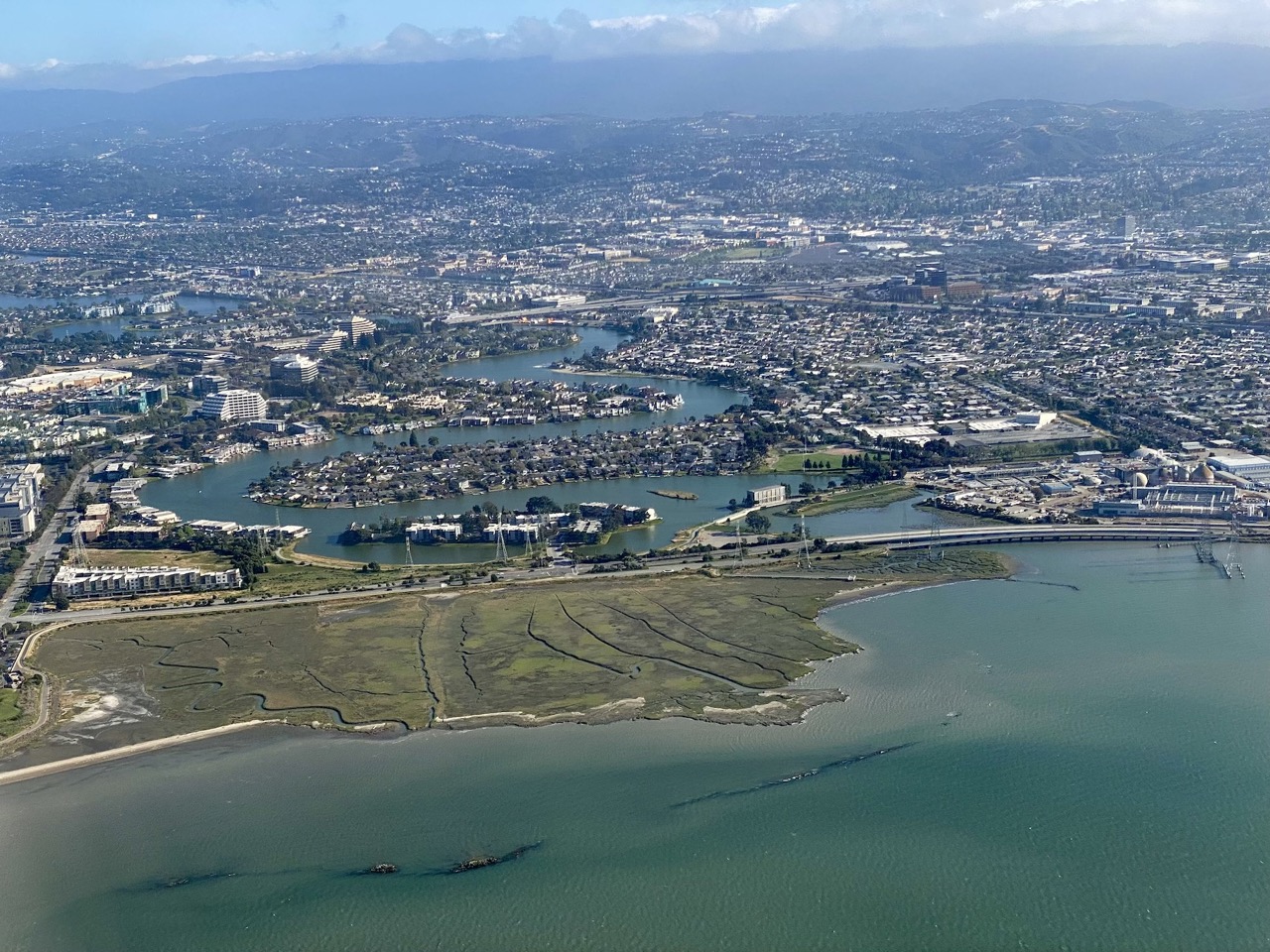
An aerial view of marshes on Bair Island in San Francisco Bay in front of the low-lying homes and businesses of the Redwood Shores community.
Photo by Megan Kelso
Press Contact
Key takeaways
- Researchers have launched an innovative process for turning natural flood protection into a certifiable investment. By quantifying the exact dollar value of storm protection provided by wetlands, this new methodology creates “Coastal Resilience Assets” that can be sold to private and public investors.
- This tool aims to close the global funding gap for coastal protection. In addition to the new investment framework, the team released a web-based calculator to help project developers worldwide estimate the financial value of mangrove conservation in the face of increasing storm risks.
- The program shifts how climate adaptation is funded, by moving away from traditional debt. This standardized approach creates a clear pathway for businesses and governments to proactively invest in nature-based solutions that protect property and lives.
The Center for Coastal Climate Resilience (CCCR) at the University of California, Santa Cruz, has partnered with The Nature Conservancy to develop a new tool for funding wetland conservation and restoration projects through verifiable “Coastal Resilience Assets.” The value of these assets are based on the storm and flood protection benefits that the wetlands provide.
Wetlands play an extremely valuable role in storm protection. For example, mangroves reduced storm damages from Hurricane Ian by more than $4.1 billion; and in San Francisco Bay, the value of some marshes that serve as flood protection infrastructure exceeds $350,000 per acre.
“This is a first-of-its kind method that creates certifiable investment opportunities for nature-based adaptation projects,” said CCCR Director Michael W. Beck. “If you’re interested in investing in projects that help reduce climate risk to people and nature, these assets create that certifiable opportunity.”
Stefanie Simpson, Climate Resilience Senior Manager at The Nature Conservancy, added: “Now, we finally have a standardized way to measure that protection and express it in economic and social terms that planners, investors, and governments can use to inform smarter decisions.”
Verified standard for ‘Resilience Credits’
The Methodology for Coastal Resilience Benefits from Restoration and Protection of Mangroves and Tidal Marshes was evaluated and published by Verra, a nonprofit corporation that builds standards for activities such as reducing deforestation, improving agricultural practices, and addressing plastic waste. Verra manages the world’s leading voluntary carbon-markets program, the Verified Carbon Standard Program.
For the developers of wetland restoration and protection projects, the methodology provides a clear, robust, and standardized pathway to quantify flood risk reduction benefits. For asset buyers, these credits offer a strategic opportunity to invest in reducing exposure to climate hazards while advancing resilience and supporting sustainable development.
An example project would be the restoration of salt marshes in front of a coastal community. The project benefits in flood reduction would be quantified and then certified by Verra. With this methodology, the project developer would have a creditable way to value the wetland project for investors.
Breaking climate adaptation’s debt cycle
“Until now, adaptation has been funded almost entirely by debt, which is why we don’t see much of it. These new tools create an opportunity to invest proactively in nature to help reduce climate risks to people and property,” Beck explained.
“This approach uses engineering methods to quantify the impacts of conservation and restoration projects on property value protected from flooding, providing a clear and tangible use case for asset buyers,” added former CCCR fellow Siddharth Narayan, now a professor of coastal studies at East Carolina University.
The coast is home to most of the global population, and these communities face increasing socioeconomic costs from storms. “Nature-based solutions have long been undersold because we lacked the tools to prove their value,” said Borja G. Reguero, a professor in the UC Santa Cruz Coastal Science and Policy Program. “This methodology helps close this gap by showing what they can be worth to a homeowner, a business, or a city facing the next major storm.”
Scaling resilience with data tools
CCCR has also published a web-based calculator for assessing the verifiable asset value of mangrove conservation and restoration projects around the world. The Verra methodology includes an approach for project developers to measure these benefits themselves or rely on published estimates of global mangrove benefits (“deemed estimates”).
“California has been a global leader in creating mitigation markets that reduce climate risks to future people and property,” Beck said. “These adaptation credits are a first step in our leadership to create assets and markets for projects that reduce the climate risks that are already hurting coastal communities.”
This methodology was developed by UC Santa Cruz, The Nature Conservancy, TerraCarbon, IH Cantabria, and East Carolina University’s Coastal Studies Institute, and was funded by the Center for Coastal Climate Resilience and AXA XL.