Arts & Culture
Alumna Gillian Welch brings Dead-driven Acoustic Reckoning show to Quarry Amphitheater
A packed Quarry Amphitheater was filled with fresh interpretations of songs from across the Grateful Dead’s vast catalogue with audience members singing, dancing and cheering along
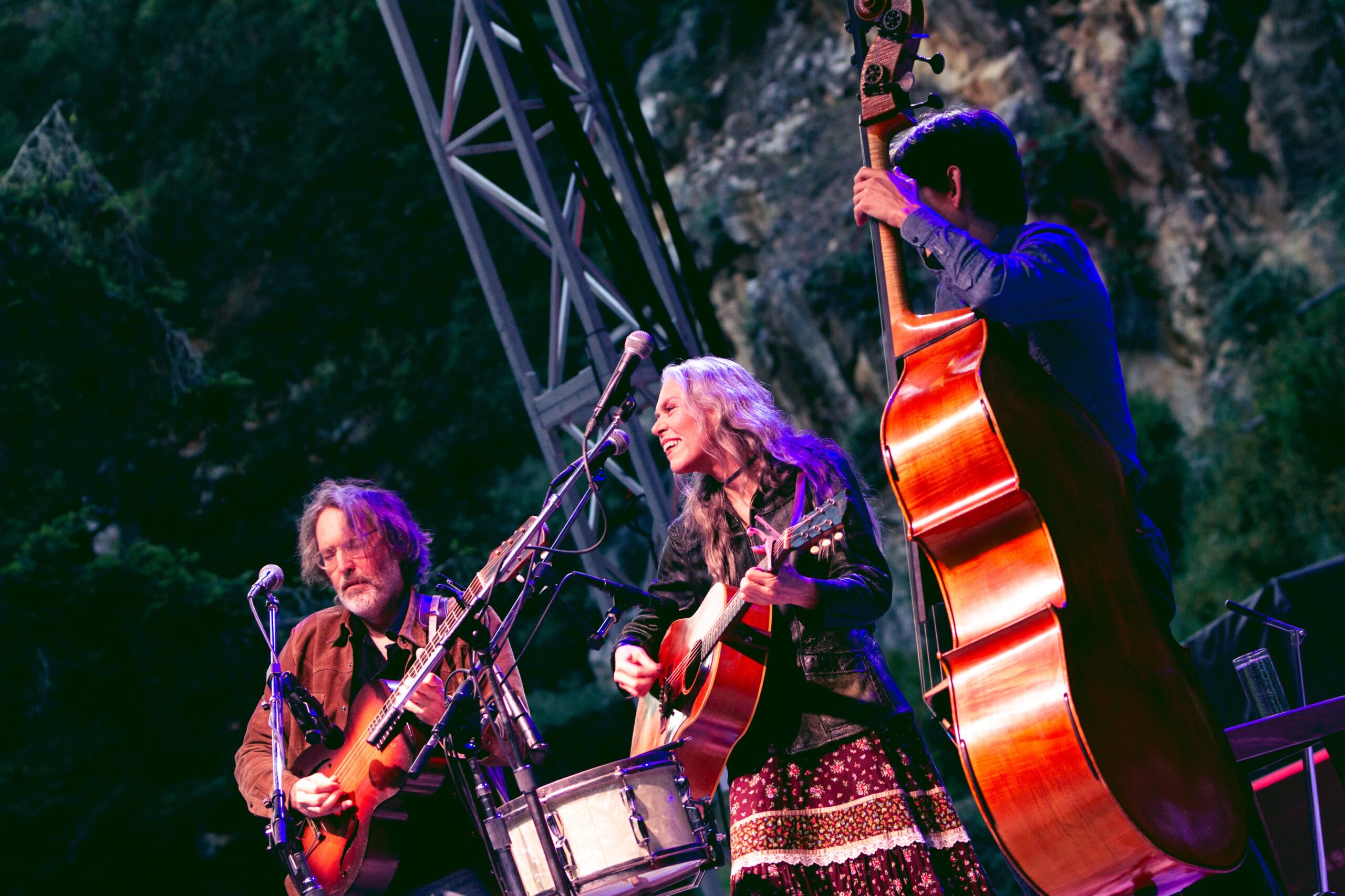
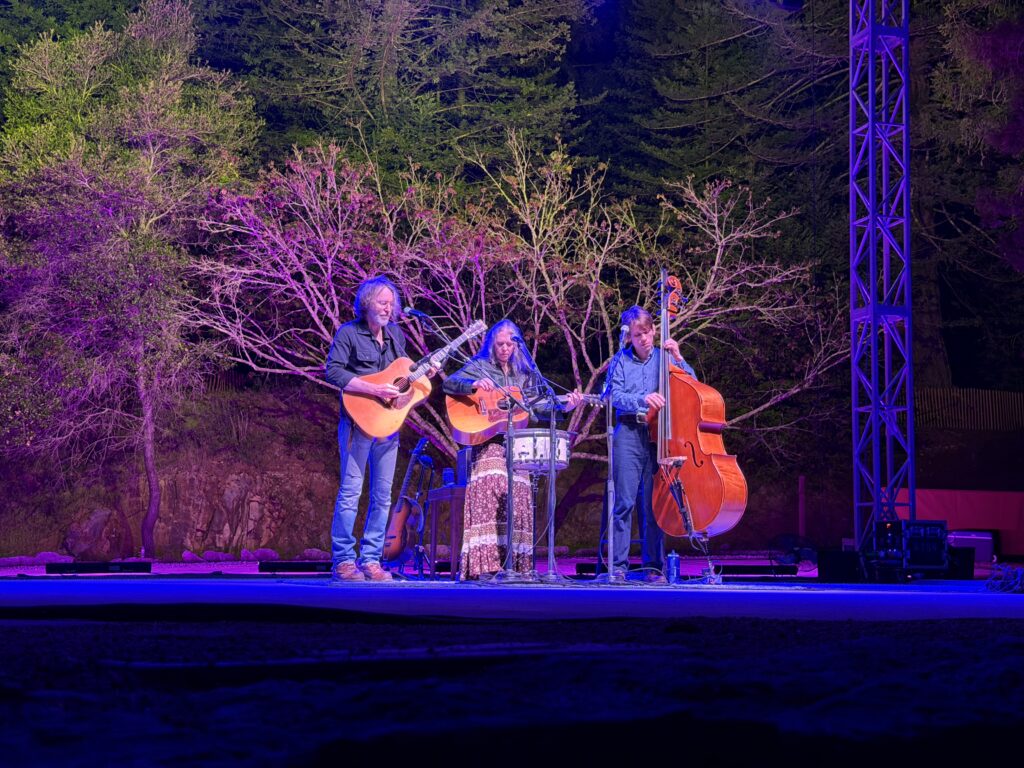
Gillian Welch performs in the Quarry Amphitheater with guitarist David Rawlings and bassist Paul Kowert. (Photo by Rocio Salvatierra)
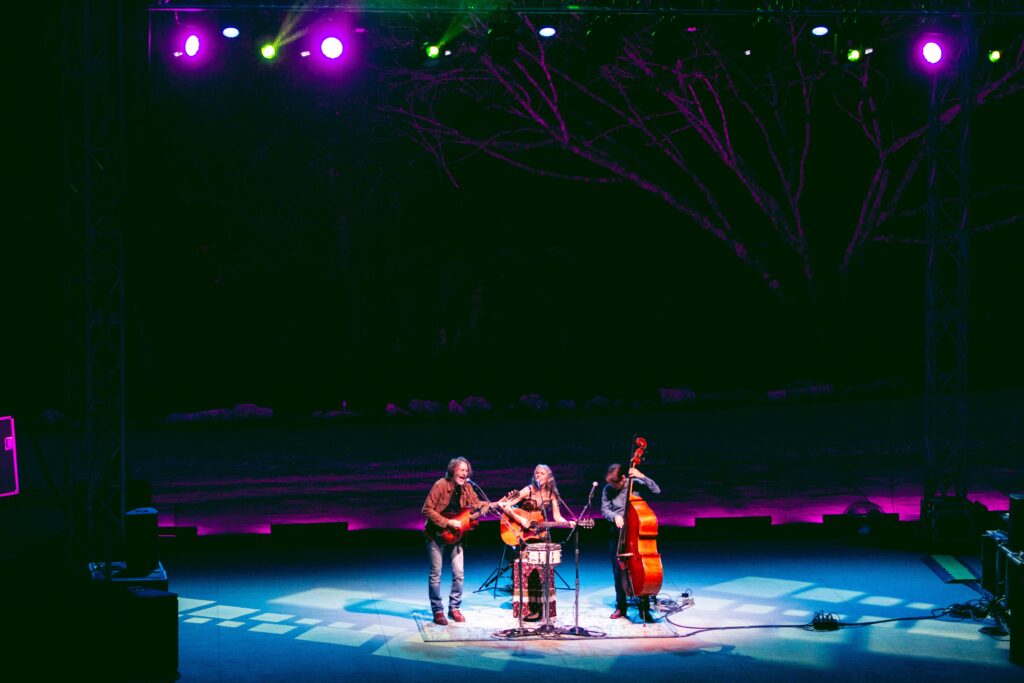
Alumna Gillian Welch, guitarist David Rawlings, and bassist Paul Kowert brought their celebration of the Grateful Dead to the UC Santa Cruz Quarry Amphitheater Sunday night, stunning the crowd with a 24-song setlist that ranged from folk and country blues to sprawling interwoven musical journeys that defined the band.
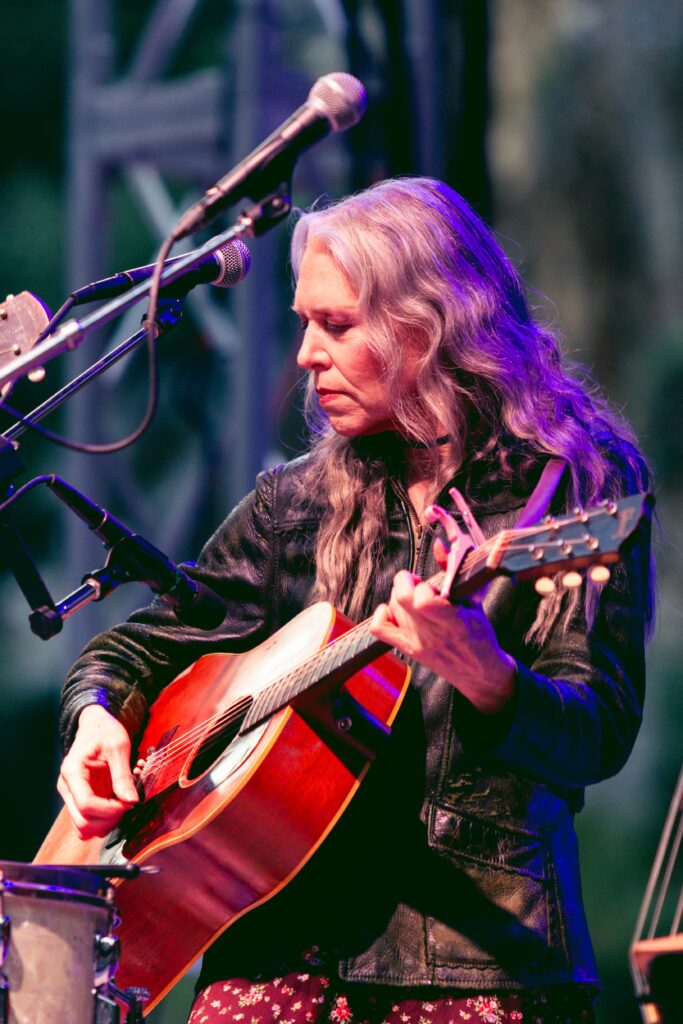
“What an incredible night we had at the Quarry! The amphitheater is nestled in amongst the redwoods high on the UCSC campus, my old stomping grounds,” Welch posted on Instagram on Monday. “The way the community has turned out for these Acoustic Reckoning shows has moved me beyond words.”
While Santa Cruz has long been a regular stop on a Welch tour, this marked her first performance on campus since she began writing and recording songs that are both singular, yet also have become part of the Americana canon.
Welch and Rawlings announced their Acoustic Reckoning tour in February, coinciding with the 45th anniversary of the Grateful Dead’s double live album Reckoning. The musical celebration was also announced a month after the death of Grateful Dead guitarist Bob Weir, who co-founded the band in 1965 with Jerry Garcia, Phil Lesh, Bill Kreutzmann, and Ron “Pigpen” McKernan.
The album’s songs anchor the setlist, though the trio has pulled in other classics, including “Friend of the Devil,” “Brokedown Palace,” “Candyman,” and others.
The Dead—with an official discography spanning more than 200 albums, the majority from live concert recordings—disbanded after Garcia’s death in 1995, though their influence continues to ripple through generations. Up until his death, Weir toured with Dead and Company, bringing the band’s music to a new generation.
Welch, who graduated in 1990 with a degree in fine art, chronicled her time in Santa Cruz—the Pogonip, the ’89 Earthquake, playing bass under a psuedonym—in the song “Wrecking Ball” from 2003’s Soul Journey, singing in the refrain she was “just a little Deadhead, who is watching.”
In a recent interview with Bitter Southerner, Welch talked extensively about her formative time at UC Santa Cruz and her appreciation of the Dead, including the first show she attended. (In a full circle moment, a fan let Welch know one of her ticket requests is among the Dead’s archive, which was donated to UC Santa Cruz in 2008.)
In addition to the Dead, Welch was exposed to the high, lonesome harmonies of the Stanley Brothers, a musical epiphany that affirmed her plan to pursue music after graduation.
“[It was] just a little edgier, just a little harder, so bare boned, so primal. It seemed out of time, and yet for all time,” she said in 2016.
After UC Santa Cruz, she enrolled at Berklee College of Music where she met Rawlings, who has been her longtime musical collaborator. The two moved to Nashville, developing their own musical style, while also writing songs like “Orphan Girl,” which in 1995 was recorded by Emmylou Harris.
With Rawlings, she’s gone on to record some of the same folk and blues songs the Dead played—“The Monkey and Engineer,” by Jesse Fuller, and “Oh Babe It Ain’t No Lie,” by Elizabeth Cotten.
Just as the sun was starting to set in the Quarry, the crowd erupted in cheers and applause as the trio took the stage. They launched into “Deal,” “Brown-eyed Women” and “Dire Wolf,” pausing only to ask that a fog machine be turned off.
“I think we’re hazy enough without it,” Rawlings said.
Welch and Rawlings kept the focus on the music, offering smiles and thanks, before moving on to the next song.
While the show was built around the iconic sound of Welch and Rawlings, they branched into the improvisational landscape that made the Dead a legendary live act, with Rawlings solos echoing the emptiness of space, the fury of frustration, and the ecstasy of freedom.
The trio flashed smiles at one another as they explored the songs, seeking fresh expressions and landing guitar and bass solos that spiraled out and landed as another verse started.
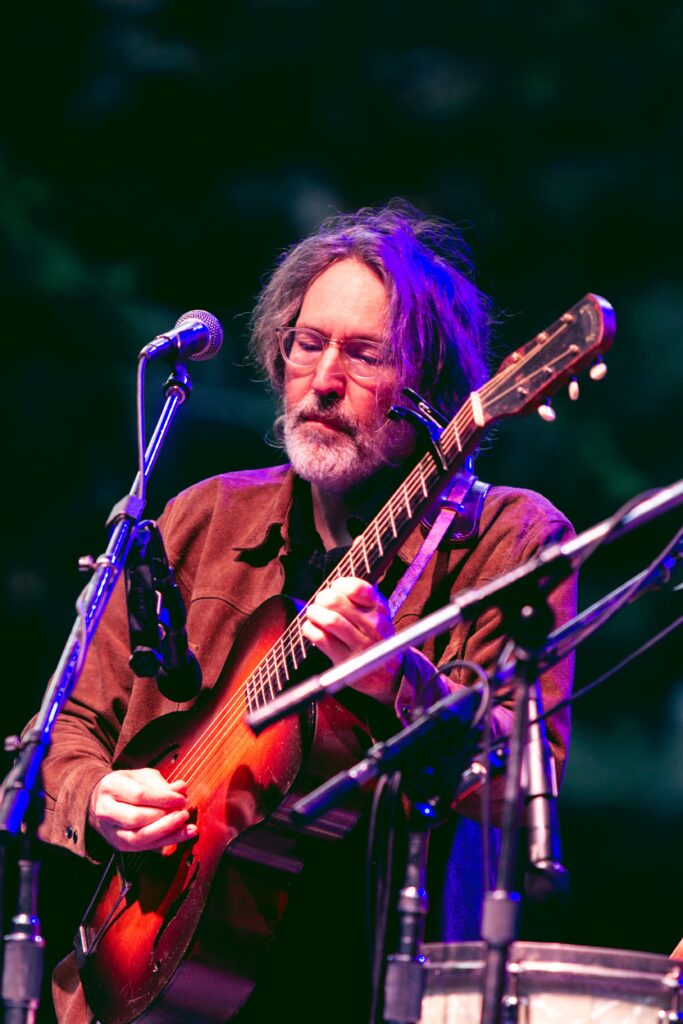
As the trio finished “Cold Rain and Snow” near the end of the second set, Rawlings stepped back, setting his 1935 Epiphone Olympic in a guitar stand and picking up a 1943 Martin D-28 that had been brought on stage during the intermission.
Welch let the audience know they had a special treat in store.
“It’s Jerry’s guitar,” she said as Rawling stepped back to the microphone before picking out the opening doo-be-doo-bu-dum melody from “Ripple.” The audience sang along: “If my words did glow/with the gold of sunshine.”
The band returned for a five-song encore, which included Buddy Holly’s chunky and chugging “Not Fade Away.”
As the encore was wrapping up, Welch said the person who took her to her first Grateful Dead show was in the audience.
“I just want to say one thing—thanks, man.”
First set: Deal, Brown-Eyed Women, Dire Wolf, Oh, Babe It Ain’t No Lie, Candyman, Loser, Jack-a-Roe, It Must Have Been the Roses, New Speedway Boogie, Friend of the Devil, Cassidy, Bird Song
Second set: Bertha, Been All Around This World, Candyman, Deep Elem Blues, Brokedown Palace, Cumberland Blues, Cold Rain and Snow, Ripple
Encore: Black Peter, High Time, St. Stephen/Not Fade Away/St. Stephen, Morning Dew, Sugaree