Campus News
New oral history chronicles life and legacy of sociologist John Brown Childs
The oral history traces a life shaped by what Childs has called the “two mighty currents” of his heritage.
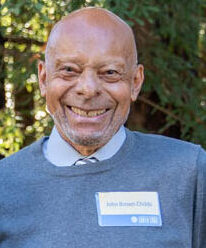
A newly published oral history documents the life, scholarship, and community engagement of Distinguished Professor Emeritus of Sociology John Brown Childs, whose work has centered on peacemaking, justice, and what he describes as “transcommunal cooperation.”
The oral history traces a life shaped by what Childs has called the “two mighty currents” of his heritage. He is of African-Madagascan and Native American descent and is an enrolled member of the Masachoosut (Big Hills) community of Indigenous People. It also reflects his experiences on the frontlines of the civil rights movement in the 1960s, which helped define his lifelong commitment to social transformation.
Over the course of his career at UC Santa Cruz, where he taught for more than 20 years before retiring in 2009, Childs developed a body of scholarship focused on bridging cultural and political divides and has remained active in projects across campus. His work emphasizes building relationships across communities through mutual respect and shared understanding, themes he explores in his book Transcommunality: From the Politics of Conversion to the Ethics of Respect.
Throughout his career, Childs has been deeply engaged in community-based work. In partnership with Barrios Unidos, he has spent more than two decades teaching at Soledad Prison, where he works with the Cemanahuac One-World Cultural Group, a diverse community of incarcerated men.To mark the publication, the University Library will host a public conversation on April 2 with Childs and oral historian Cameron Vanderscoff. The event is also available online. Learn more.