Campus News
Meet this historian of alien worlds
With equations and simulations, astronomer Ruth Murray-Clay is working to understand how distant planets form, evolve and could offer conditions to support life.
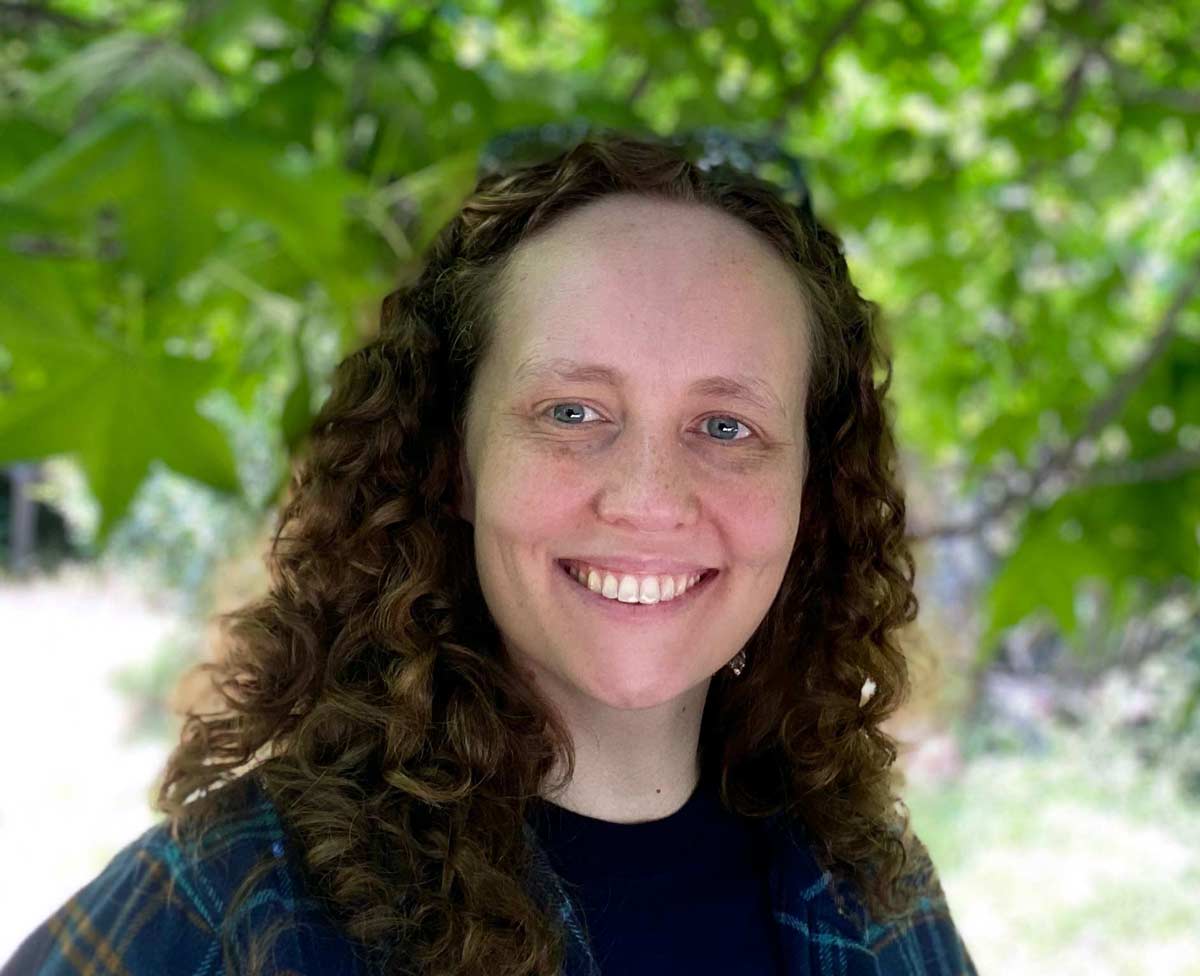
Ruth Murray-Clay
Thanks to theorists like Ruth Murray-Clay, astronomers are decoding how distant planets form, evolve, and maybe even host life.
When Ruth Murray-Clay entered graduate school, only a handful of astronomers focused on studying exoplanets: far-flung planets that orbit stars light-years out of our reach. Back then, astronomers looked down on the seemingly simple mechanics of these planetary systems because “it’s not as physics-y,” Murray-Clay said.
Now, about one third of astronomers dedicate their careers to studying those unseen worlds. Many of those astronomers reside at the University of California, Santa Cruz’s world-leading astrobiology program, where they tackle some of humankind’s most deep-seeded questions: Are we alone in the universe? Is life in the cosmos inevitable? How does a planet become a living world?
Rather than peering through a telescope to discover conditions for life, Murray-Clay applies theories to answer such questions.
When presented with a peculiar planetary system — like ones with mysterious plumes of dust — Murray-Clay’s goal is to understand how it came to be. She begins by roughly sketching the system’s history, estimating different physical processes through mathematical equations until she begins to match the current picture. Then, she and her graduate students attempt to paint the scene in more detail by creating a computer simulation of the planet’s existence through time, hoping that the end result matches what astronomers observe today.
As theorists continue unraveling the history of these uncharted worlds, Murray-Clay sees a future in which the discovery of new life isn’t just possible, but inevitable. The discovery is unlikely to arise from a single chance observation, however, but rather clues put together over time. As astronomers gradually rule out which planet formation histories are ordinary in our universe, eventually, the planets that are unique enough to host life will stand out more. “It’s a long path to finding life,” Murray-Clay said. “But I’m a patient person, and I think that the fun is in the journey.”
How did you become interested in exoplanet research?
I always liked astronomy since I was a kid. I had no idea it was a career path, but I did love Star Trek The Next Generation — I always watched it, every week. So in college, I remember that in my freshman year, I called my mother, and I said, “I’m doing this thing that came totally out of left field. I’m going to do astronomy.” And she said, “No surprises here.” She sent me a picture of me with my space camp t-shirt.
I went to graduate school, and at the time, planets were not a hot thing in astronomy. Right now, it’s about a third of the field, but at that time, it was not at all. In fact, it was looked down on a little bit. But I had a great physicist advisor. He was very good at thinking about problems. What was great about thinking about planets at that time — and amazingly still is, even after 20 years — is that there are a lot of basic problems. We just don’t know what’s going on even at a fundamental level. And that’s something that really attracted me to the field. And I’m so glad it did, because it turned out to be an amazing field to be working in as a theorist.
How are your goals as a theorist different from other types of astronomers?
I’m primarily motivated by looking at a particular star in the sky and wondering what kind of planetary system it has. We know that most, if not all, stars in the sky have planetary systems, and they have a wide variety of configurations. We know even just from our solar system that there’s a wide variety of planets that you can make. When we look at what sets apart a planet like Earth, it’s a variety of chemical and physical characteristics that arose as a result of how its host star formed.
What a planetary system is like depends on its history. It’s not like a fundamental particle where it is what it is. It’s a complicated system that has grown over a complicated history.
If we just took a telescope and saw a signature of life — even if the data was unambiguous and it was a beautiful detection of some gas that should be coming from life — I don’t think we would feel confident that we had found life. There are so many other ways of getting all of those different kinds of signatures. What we need to do is really understand what all of the planetary systems that have no life on them look like. And then when we see deviations from that — when we see oddballs — then we’ll feel much more confident that it’s coming from life.
What’s the process of unraveling a planet’s history?
I try to find an observational mystery — something that we don’t understand in the observations — and then think about what kind of physical processes might create that. I do a lot of writing on a piece of paper, really just estimating roughly if one physical process or another was dominating the system. Hopefully one of them starts to make more sense. Then I, or one of my students, will write some code to make a simulation to do a better job of testing whether that physical process works.
What’s one planetary mystery you’ve been solving lately?
My graduate student, Arcelia Hermosillo Ruiz, has been working on this really fun debris disk system. Debris disks are what planetary systems look like when planets are not forming. The gas disk around a star is gone, but they’re still pretty young. Arcelia likes to call them teenage systems. They have a lot going on — particularly a lot of debris from what we call planetesimals. They collide and make a lot of dust. Dust glitters in the sun because it has a big surface area compared to its mass. It scatters light from the star really easily.
There’s this funky one where we see puffs of dust periodically being pushed out from the star, so Arcelia and I were trying to figure out what was going on. We think a planet goes around, kicks up dust, and it’s pushed out by the stellar wind. We did some rough calculations on the board, less rough on the computer, then a big simulation. She made fake observations of her simulation and they match pretty well with the real observational data we have.
What’s another project you’re working on?
We have a big program in my group working on atmospheric escape, where extreme ultraviolet photons will heat the upper atmosphere of a planet and energize particles enough so they escape the atmosphere. Something similar happens on Earth, too — our thermosphere, which is toward the top of our atmosphere, is 1000 Kelvin, because it’s heated by the extreme ultraviolet radiation from the sun.
But if a planet gets even closer to a star, it can get dramatically hotter. That creates a lot more energy, which can drive an outflow of the atmosphere.
Ethan Schreyer, a postdoctoral scholar in my lab, put together a model of this tail of gas that’s flowing out from the atmosphere to understand how we might observe that with Hubble. Another graduate student working with me, Madelyn Broome, is working on a really fast code for computing escaping atmospheres with different elements. She’s just finished a big, long coding effort, and now we’re using her code to figure out whether we can explain other atmospheric observations that have not previously been explained.
What are you excited about for the future of planetary sciences?
With the Vera C. Rubin Observatory coming online, there’s going to be a big boom in our understanding of solar system dynamics. And the Nancy Grace Roman Telescope will give us populations of planets that haven’t been seen before, especially giant planets farther out from their star. What makes our science exciting is the new observations. At a certain point, you need to have looked and seen something new. I’m a theorist, but you can’t make progress as a theorist if you don’t have the new observations coming in for you to question.
I think we really are on the way to being able to find life on other planets, which is pretty amazing. When I was in graduate school, that didn’t seem so feasible to me. But so much progress has been made that it’s no longer a pipe dream.