Earth & Space
Historic Lick Observatory closes to public following significant wind damage
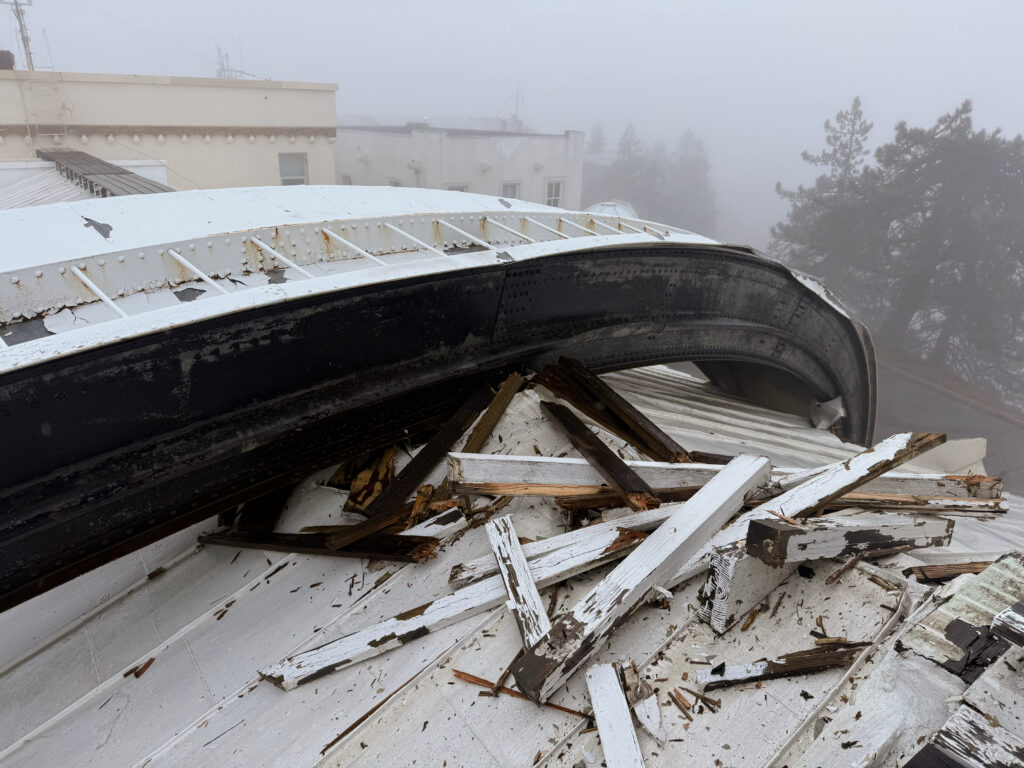
Early on Thursday, Dec. 25, severe winds gusting up to 114 miles per hour tore loose half of the shutter on the 140-year old 36-inch Great Refractor dome. No one was injured.

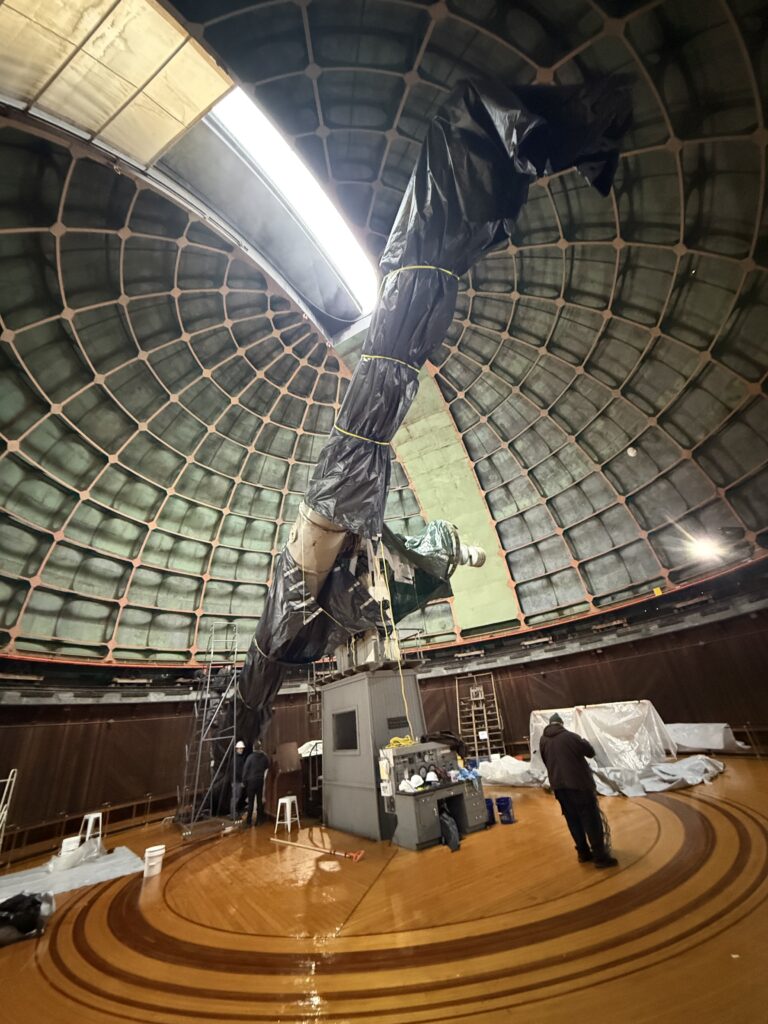
The multi-ton shutter section fell outward onto the roof of the Great Hall, crushing several structural beams. The Great Refractor telescope was not damaged during the incident, but its precision lenses and electrical systems could now be vulnerable to rain.
Press Contact
Update: Crews removed the shutter piece from the Great Hall on Dec. 27 and crews are working to cover the open dome slit to prevent water and wind from getting in the dome. Work continues in the attic of the Main Building to assess and fix the water damage. Read more.
Lick Observatory is temporarily closed to the public, following a windstorm that caused significant damage to the University of California research facility.
Early on Thursday, Dec. 25, severe winds gusting up to 114 miles per hour tore loose half of the shutter on the 140-year old 36-inch Great Refractor dome. No one was injured.
The multi-ton shutter section fell outward onto the roof of the Great Hall, crushing several structural beams. The Great Refractor telescope was not damaged during the incident, but its precision lenses and electrical systems could now be vulnerable to rain.
After discovering the damage, Lick Observatory staff took immediate steps to protect the historic facility.
“The Great Refractor is an amazing and beautiful machine,” said Bruce Macintosh. “Seeing it damaged like this is heartbreaking.”
Other more modern research telescopes on the mountain were not directly damaged and will continue with scientific operation. However, prioritizing safety, the university is temporarily closing the whole observatory to visitors until assessments are completed and the building is confirmed to be structurally sound.
Staff members are continuing to focus on stabilizing the building, preventing further damage, planning what will be needed for facility restoration, and determining when it will be ready for the public.
“This was a frightening moment for our staff,” said Matthew Shetrone, UCO Deputy Director. “They sheltered together through the storm, and when it finally broke, everyone was safe, but the spiritual core of our observatory had been damaged. What followed was a remarkable response by staff to protect the telescope and stabilize the site.”
“Restoring the dome will be a long process, measured in months, not weeks. But we know why this work matters, and we are committed to bringing people back to the experience of awe that the Great Refractor has inspired for generations.”
For further updates, check the Lick Observatory website. If the public would like to contribute to Lick Observatory’s mission of Research, Technology Development, Education, and Outreach, they may make a gift online.
Background
Lick Observatory is located on Mt. Hamilton near San Jose. Since 1888, the Observatory has made University of California leaders in astronomy. A generous donation by San Francisco millionaire James Lick enabled the construction of the 36” (diameter) Great Refractor, the most powerful telescope in the world at the time. Lick Observatory was almost destroyed in 2020 by a wildfire, but the new incident is the most serious damage in its 137-year history.
Lick serves astronomers from all nine UC campuses (Berkeley, Davis, Santa Cruz, Santa Barbara, Los Angeles, San Diego, Irvine, Riverside and Merced) and two national laboratories (Lawrence Berkeley Lab and Lawrence Livermore Lab). Scientists using Lick range in age from undergraduates (from UC and from community college partners) to the most senior and eminent astronomers in the University of California. Lick also serves as UC’s chief testbed for developing new instruments and new technologies for optical astronomy. Larger telescopes at Mt. Hamilton and elsewhere have surpassed the Great Refractor for scientific use, but the 36” remains the cornerstone of public outreach and education at the Observatory; every year more than 3000 visitors look through it at the universe.