Campus News
UC Santa Cruz is giving fallen redwoods a second life
Thanks to an on-site milling program, downed redwood trees are transformed into benches, picnic tables, and other long-lasting fixtures, keeping the wood and its story on campus.
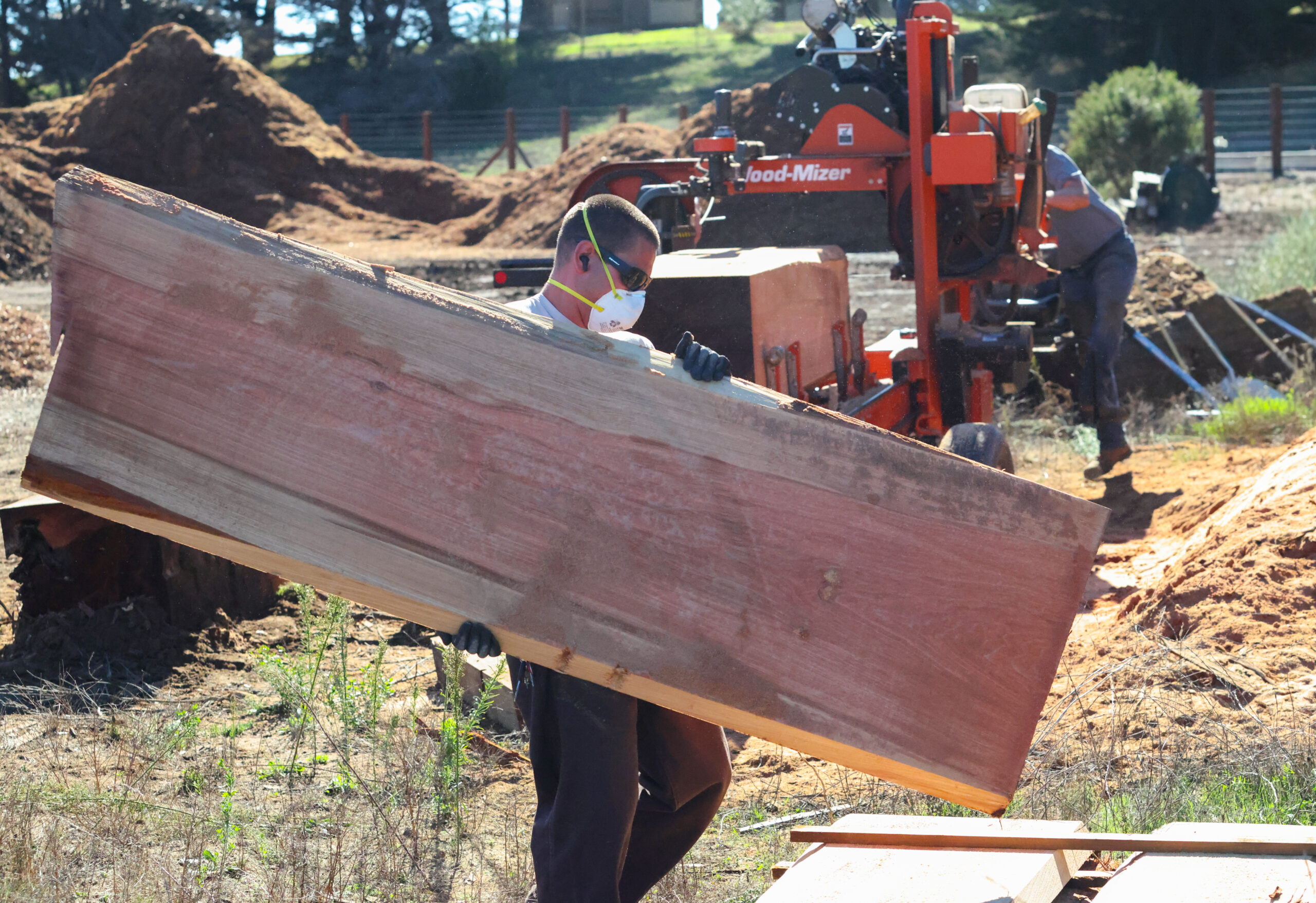
Carpenter Apprentice Anthony Mitchell carries a slab of newly milled redwood.
On most university campuses, a downed tree quickly becomes waste. At UC Santa Cruz, a fallen redwood becomes part of the next chapter in campus life.
Towering coastal redwoods are an iconic part of the university’s identity. They shade classrooms, line trails, and give the campus a setting unlike any other. But even these giants sometimes must come down for safety or construction.
In the past, those trunks were stockpiled for years before being ground into mulch. Now, thanks to an on-site milling program, they’re transformed into benches, picnic tables, historic sign replacements, and other long-lasting fixtures, keeping the wood and its story here on campus.
“This is about using what we have in the most responsible way possible,” said Structural Trades Superintendent David Jessen. “I’d rather see the redwoods standing, but if we’re going to take them out, let’s use them here.”
A more sustainable cycle
The shift began about five years ago, just before the COVID-19 pandemic. Jessen, oversees campus maintenance and small construction projects through the Carpenter, Lock, Paint, and Sign Shops and works closely with the campus tree crew, saw untapped potential in the piles of redwood logs stored at the Mesa between the farm and the Arboretum. Every five years, the stockpiled wood was fed into a tub grinder and turned into mulch.
“I started wondering why we weren’t marketing those logs to a local lumber company or at least finding a way to use them ourselves,” Jessen said.
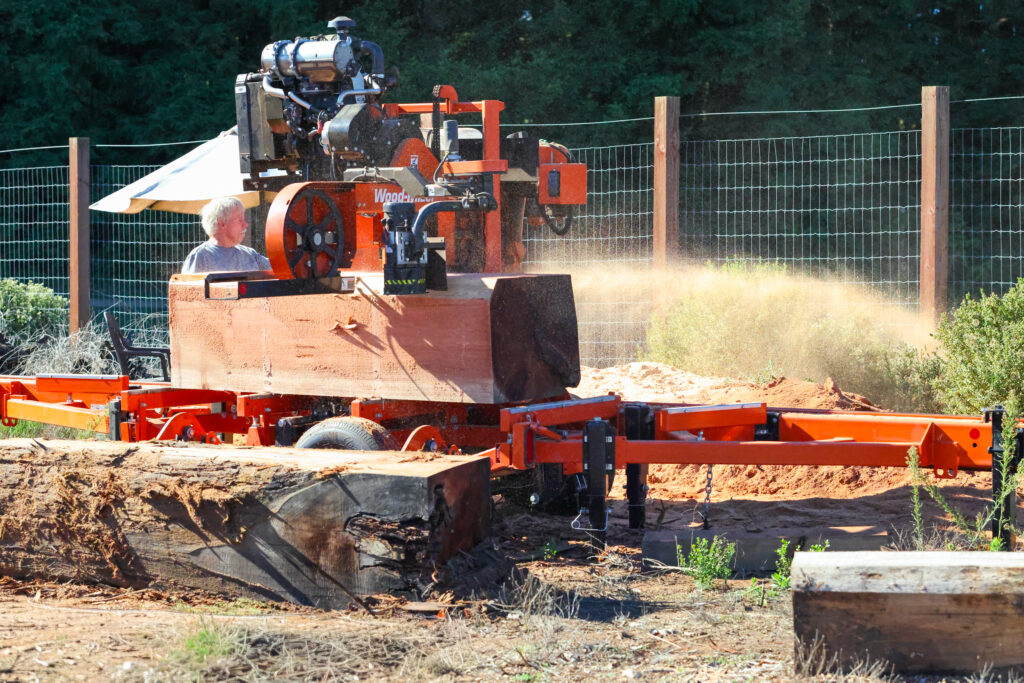
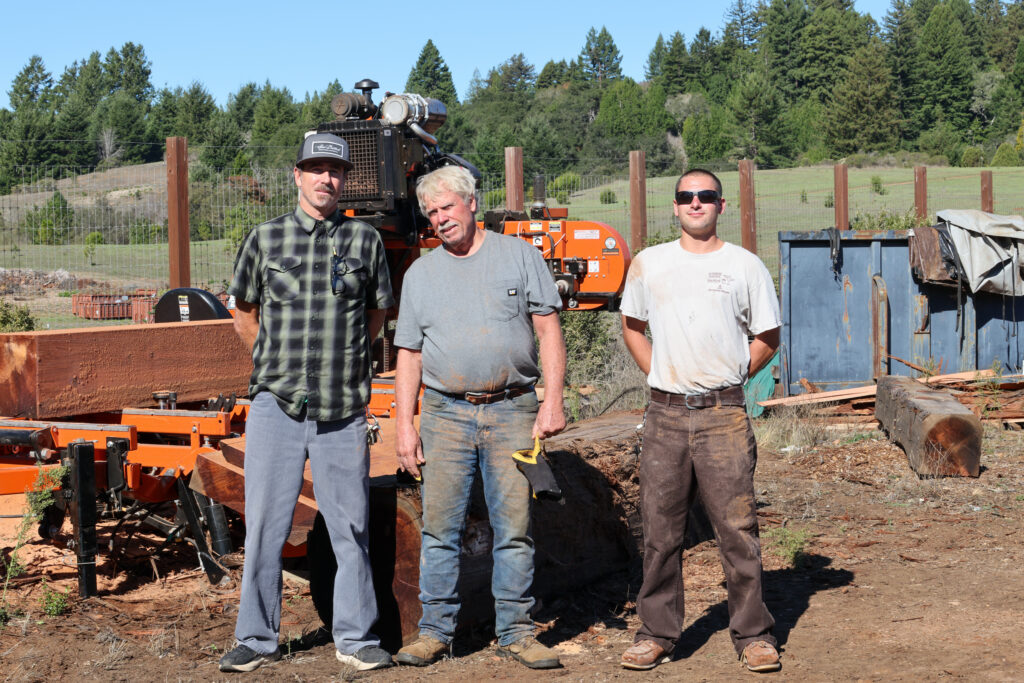
The solution came in the form of a portable sawmill and a skilled local sawyer. UC Santa Cruz partnered with Santa Cruz Sawmill in Felton, run by owner and expert miller David Smith, who brought a compact, mobile mill to campus. That means the redwood never leaves university property, cutting costs, shrinking the carbon footprint, and turning what was once mulch into custom-milled lumber for campus projects.
“It’s a good thing to do. It’s environmentally sound,” Smith said. “You’re not ordering lumber from Humboldt County and paying high prices for redwood.”
For now, the sawmill is parked permanently on campus unless Smith needs it for another job. Working together, Smith and the university’s trades crew aren’t limited to the standardized cuts of commercial lumber yards. They can shape each log to fit the needs of the project, from oversized slabs for benches to full-dimension boards for historic restoration.
Turning logs into legacy
The program’s first pilot project came when a large tree had to be removed from outside the Lionel Cantú Queer Center. The tree had grown too close to the building, and despite every effort to save it, removal was the only option. Instead of grinding it into mulch, Jessen’s team had it milled into dimensional lumber. The wood was air-dried at the Mesa, then transformed into timber-frame picnic tables that are now scattered around campus.
Since then, the reclaimed redwood has found new life across campus. It’s been crafted into picnic tables, slab benches, and timber-frame seating, often replacing aging log benches from the 1960s.
“When you sit on one of these benches, you’re sitting on a piece of campus history,” Jessen said.
The sign shop has used it to recreate and refurbish original campus signage, now installed with concrete footings and post-bases for greater longevity. It has also supported custom carpentry projects, from restoring materials in historic buildings to providing raw redwood for student art. And in special projects like the new tables for the Farm Chalet, located at the UC Santa Cruz Farm, the wood is helping create spaces where staff and student interns gather to prepare meals and share community.
Savings that add up
The benefits aren’t just environmental, they’re also financial. By milling redwood on campus, UC Santa Cruz pays about a quarter of what it would cost to buy comparable lumber from a yard.
The approach is simple and sustainable: trees that once shaded the campus now serve it in a new way, reducing waste and staying part of the landscape they helped define.