Campus News
In Memoriam: William Scott
The longtime professor of chemistry and biochemistry is remembered by family, friends, and colleagues for his immense intellect, generosity, and contributions to advance scientific research
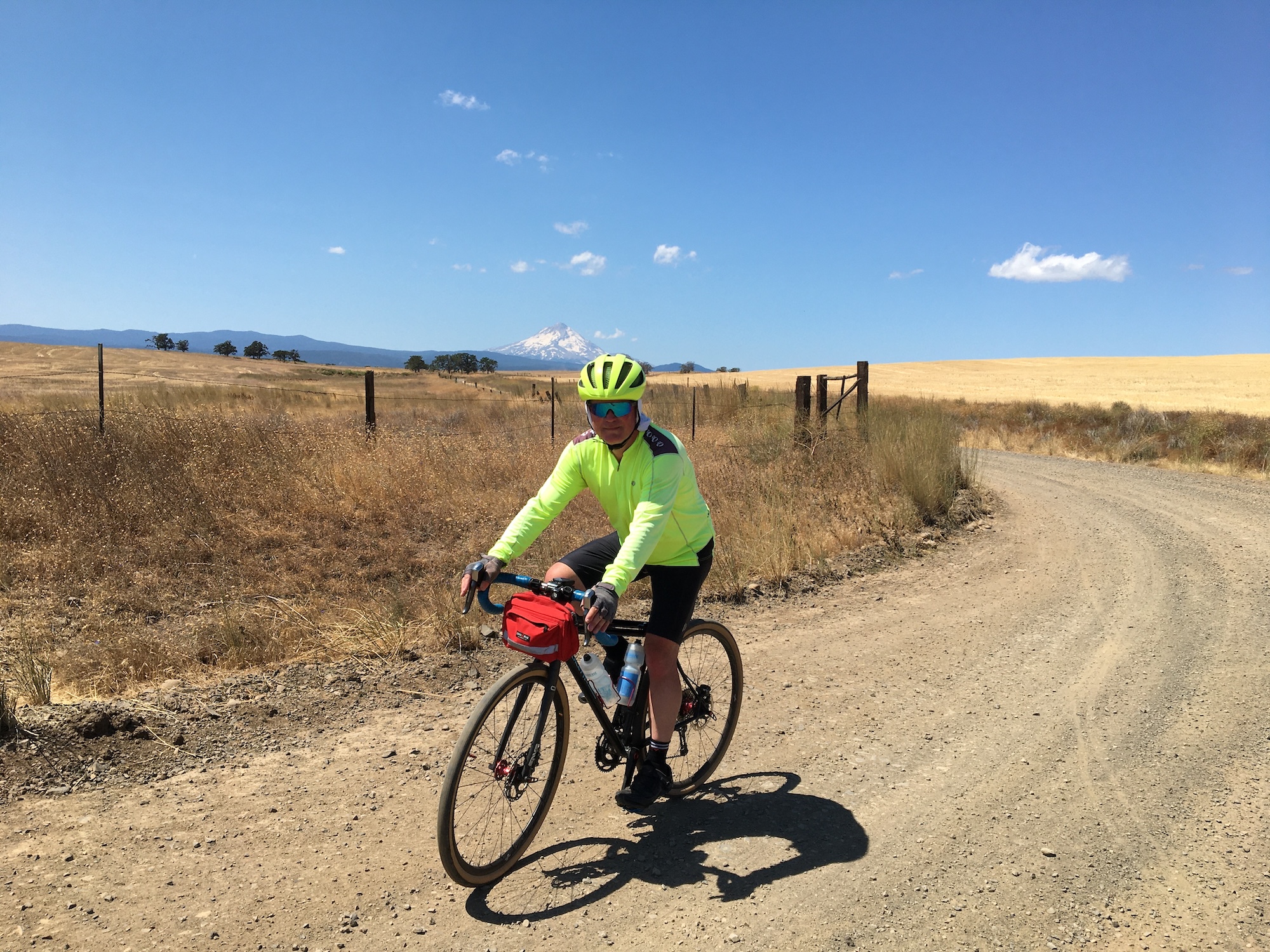
When not in the lab or in the classroom teaching, Scott was often on his bike. Here, Oregon’s Mount Hood looms in the background. (Photo courtesy of Sara O’Rourke)
William G. Scott, professor of chemistry and biochemistry at the University of California, Santa Cruz, died on October 7 from an aggressive form of cancer that was only recently discovered at a very late stage. He was cherished by a wide circle of family members, former students and peers, and neighbors in the local community. Scott was 62.
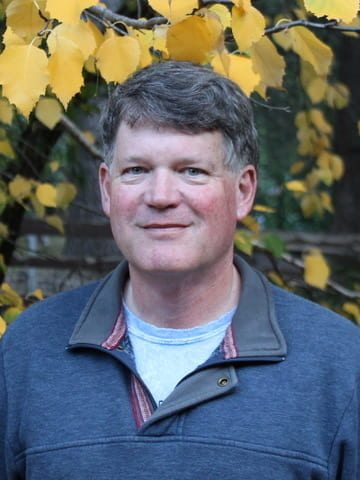
Scott’s scientific passion was understanding the mechanisms by which RNA can act as an enzyme in the context of the origin of life. A longtime faculty member in the Department of Chemistry & Biochemistry, Scott was a core member of the RNA Center at UC Santa Cruz—one of the largest communities of RNA scientists in the world.
His own lab on campus employed techniques from molecular biology and biophysical chemistry to understand how RNA can have enzymatic activity. On faculty at UC Santa Cruz since 1998, Scott fostered collaboration, openness, and a nonhierarchical environment in his lab.
One of Scott’s most notable research findings came when he and a graduate student he advised obtained a near-atomic resolution image of the three-dimensional shape of a full-length all RNA enzyme, or ribozyme, in which the atoms are uniquely arranged and poised for catalysis in the context of an intricately twisted and folded segment of RNA.
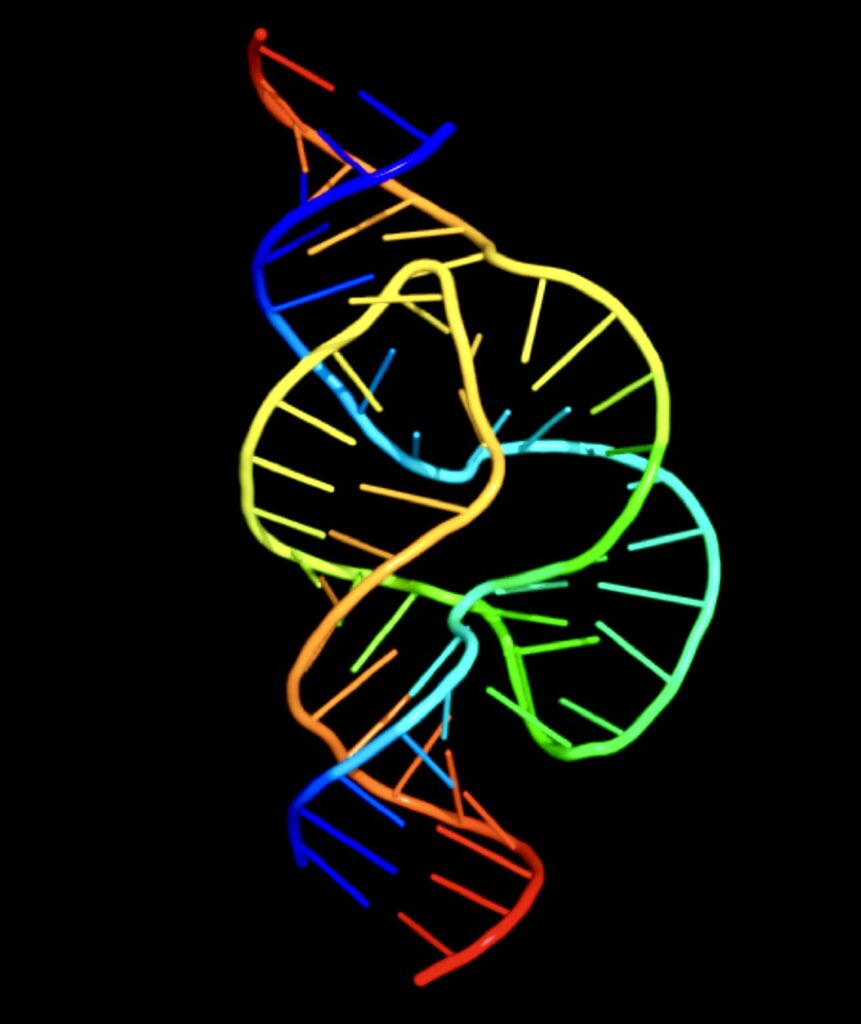
For Scott, the results were the culmination of 19 years of research on the structure of the “hammerhead ribozyme.” He started work on the project as a graduate student at UC Berkeley in 1987, a few months after the ribozyme was discovered. Later, as a postdoctoral researcher in Cambridge, England, he achieved his first breakthrough.
This work represented a significant stride in the RNA world, which collectively hypothesized that life on Earth began with a simple RNA molecule that could copy itself without help from other molecules. “Seldom do scientific research projects have this sort of fairy tale ending. It has been extremely rewarding as well as humbling,” Scott said when the findings were published in 2006.
“Bill was a brilliant structural biologist, computer programmer, talented, dedicated teacher and incredibly engaged family man,” said Distinguished Professor Glenn Millhauser, the former chair of Scott’s department, in a message to its faculty.
For 29 years, Scott was married to Sara O’Rourke, a staff scientist in the Biomolecular Engineering Department at UC Santa Cruz. Building on Millhauser’s sentiments, O’Rourke said that when Scott was a Ph.D. student at UC Berkeley in the 1980s, he was one of the few in the field who focused on RNA structural biology. After receiving his degree, he became a postdoc at the Medical Research Council Laboratory of Molecular Biology in Cambridge, where he was awarded the Max Perutz prize for “most promising young scientist.”
But, O’Rourke recounted, Scott was eager to start his own group and returned to the United States to continue his research at Indiana University. “After giving a seminar in Santa Cruz in 1994, Harry Noller and the RNA Center were on Bill’s radar,” O’Rourke said. “So when they expressed an interest in hiring him, he turned down a much more lucrative offer from an Ivy League university and headed to Santa Cruz.”
Throughout his career, Scott was also committed to serving the structural-biology community. For example, he spent many hundreds of hours adapting software required for x-ray crystallography to run on Mac laptops to improve accessibility for students and researchers.
In response to Scott’s passing, researchers around the world shared their fondest memories and deepest sympathies via an online bulletin board devoted to advancing x-ray crystallography:
Speaking on behalf of the myriad crystallography-based biochemists who came up in the 1990s, Bill was someone who many of us looked up to, learned from, and relied upon for practical solutions to common problems. Bill’s willingness to contribute so much time and effort to the greater community was exemplary.”
– Biochemistry Professor Tom Huxford, San Diego State University
Bill’s spectacular work on hammerhead ribozyme will no doubt remain his scientific legacy, but there was so much more to him as a person that any of this can convey. The world has not only lost a top-notch mind, but also a truly remarkable human being.”
– Structural biology Professor Luca Jovine, Karolinska Institute
Sentiments shared by Scott’s personal acquaintances speak to his immense kindness and sense of social justice. One friend recalled how Scott gave the family’s old minivan to a couple of graduate students who needed it—after learning that their soon-to-be-born child would have a disability that would greatly strain the new parents.
“He was incredibly generous, kind, and compassionate, and that will be his enduring legacy,” another friend told O’Rourke. “There are quite a few people riding around Santa Cruz on bicycles Bill gave them.“
Scott was born in 1963 in Evanston, Ill., to Dorothy Scott and then-State Treasurer William J. Scott, who later became state attorney general. In addition to his wife, Scott is survived by his sister Lisa Peterson and his children William, Anna-Marie and Michael.
Instead of flowers, the family encourages donations to the Middle East Children’s Alliance to support emergency aid to children in Gaza.