Climate & Sustainability
Symposium shows creativity, conviction are key to communicating climate solutions
From card games to virtual reality, innovative climate researchers are finding new ways to engage the public
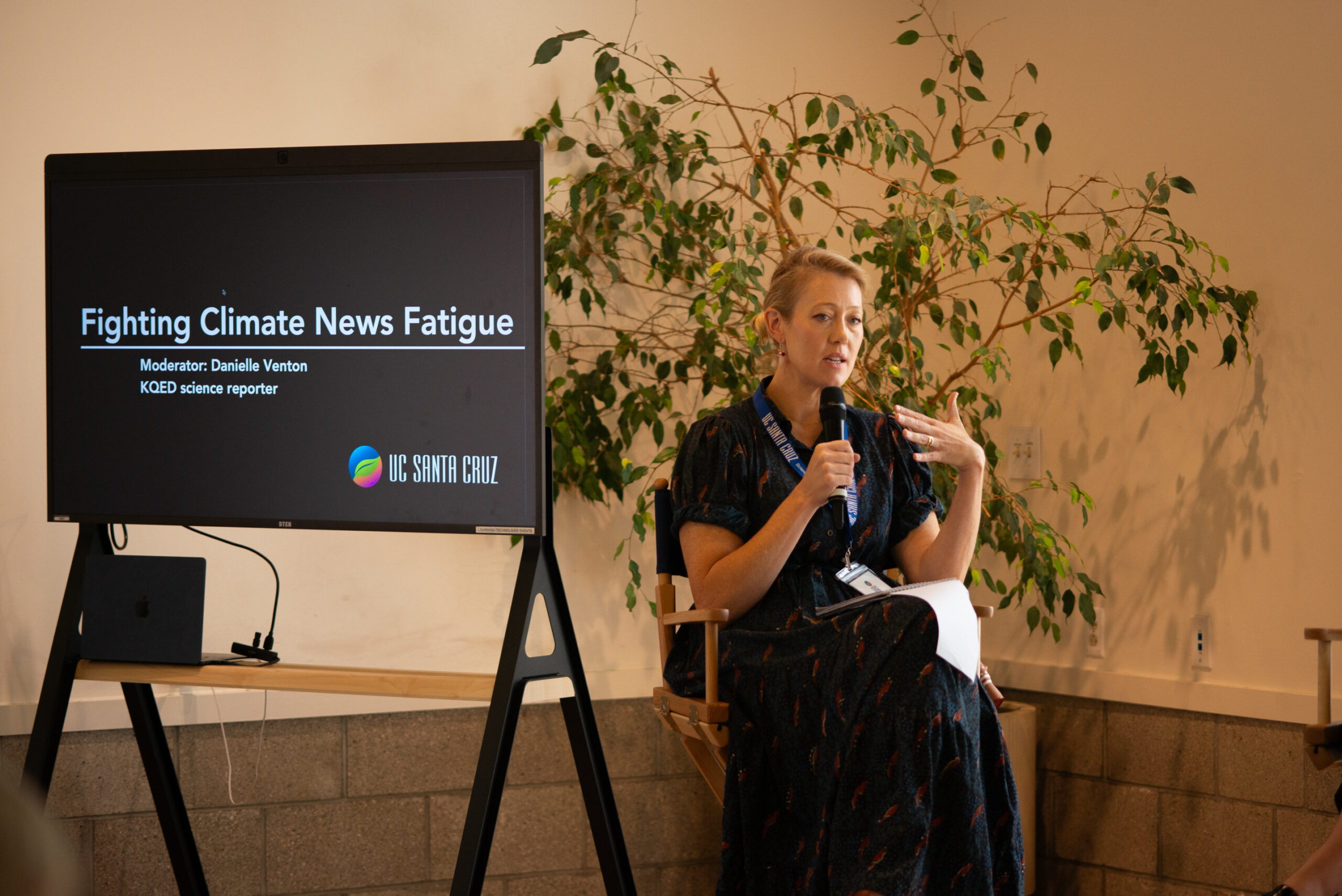
The inaugural Communicating Climate Solutions Symposium convened community leaders, local officials, researchers, and journalists like KQED’s Danielle Venton, who moderated one of the event's panels. (Photo by Erin Malsbury/UC Santa Cruz Science Communication Program)
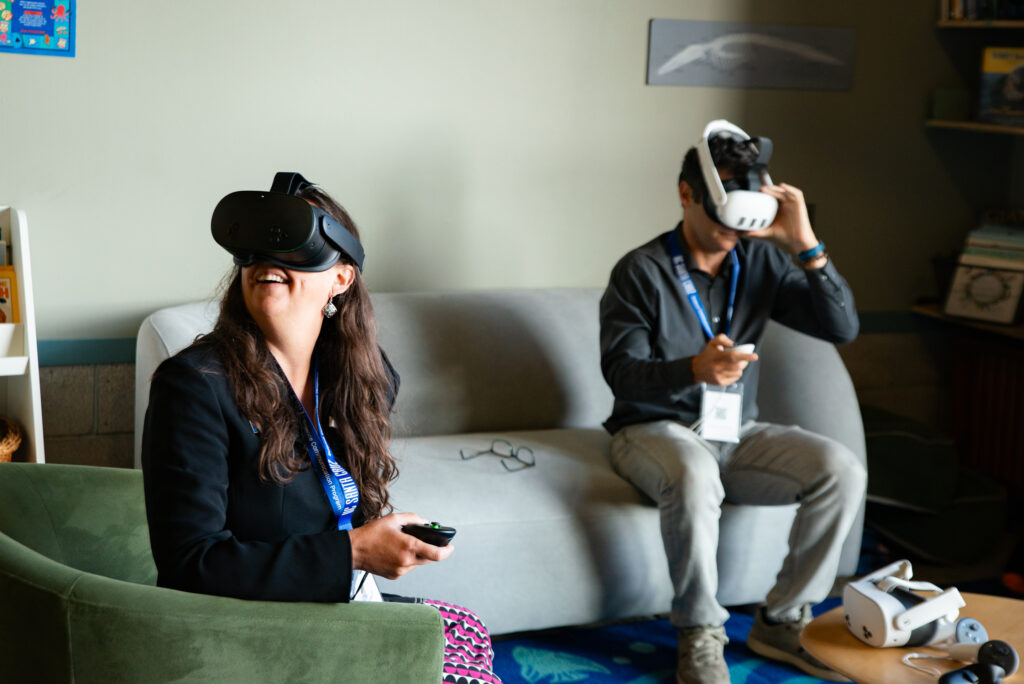
Olivia Maule felt like she was standing on a ledge overlooking the Santa Cruz boardwalk. “It looked so real, I was scared I might fall,” she said. When she took off the virtual reality goggles, she was back at the Communicating Climate Solutions Symposium at the University of California, Santa Cruz, with a new understanding of how flooding will impact the local coastline.
“The images are so powerful, it really puts the effects of climate change into perspective,” said Maule, a student in UC Santa Cruz’s Science Communication Program.
Wildfires, coastal erosion, and other climate disasters have arrived in California and around the world, but many people struggle to engage with dismal news and research that’s difficult to conceptualize. Virtual reality is just one of the ways UCSC researchers and alumni creatively package their data to help people understand these impacts.
The symposium, from September 15 to 17, was hosted by the Science Communication Program and UC Santa Cruz’s Center for Coastal Climate Resilience. Journalists, researchers, community leaders, and local officials gathered to identify opportunities and best practices for developing and communicating climate-change solutions with diverse communities.
After a full day of panel discussions, attendees heard a series of brief “flash talks” from UC Santa Cruz researchers who shared novel ways to communicate research that accommodate different learning styles, help prevent burnout, and encourage sustainable climate actions.
To kick off the series, Juliano Calil, founder of Virtual Planet Technologies and UC Santa Cruz alum, shared his virtual reality technology, which helps viewers like Maule visualize the impacts of climate change and explore how communities can respond. His company works with communities to create visual stories that promote knowledge, preparation, and inspire collective action.
“Studies show that immersive, interactive experiences can increase your sense of agency and self-efficacy,” said Calil. “All the data in the world won’t make a difference if people can’t connect to it.”
Katherine Isbister, professor of computational media and research director of the Social Emotional Technology (SET) Lab at UC Santa Cruz, shared her playful approach to climate resilience communication. Her team works with experts and community members to design climate-focused games, like a video game that allows players to trial wildfire-prevention techniques in residential areas.
“Play gives people agency over consequential choices and helps them become more proactive, so it’s an interesting complement to other types of media,” said Isbister.
Anja Ufeldt, visiting scholar and artist in residence at the UC Santa Cruz OpenLab, presented her sculpture series Art + Fog. Communities all over the world have engineered ways to harvest freshwater from fog. Ufeldt’s team designs sculptures inspired by the Namib beetle, one of which is installed behind the Seymour Center.

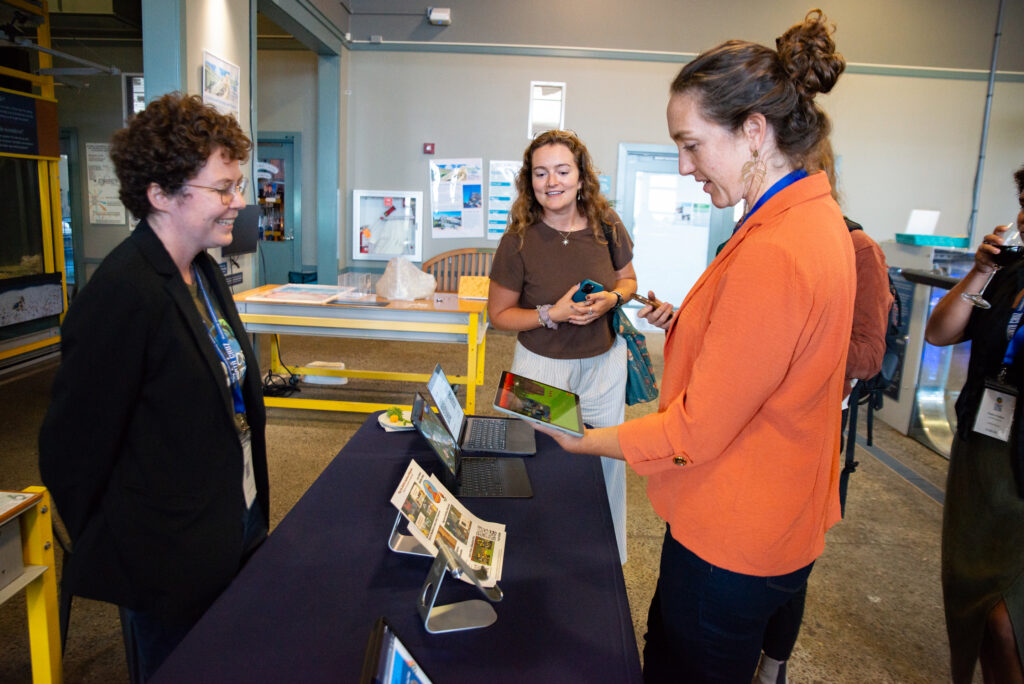
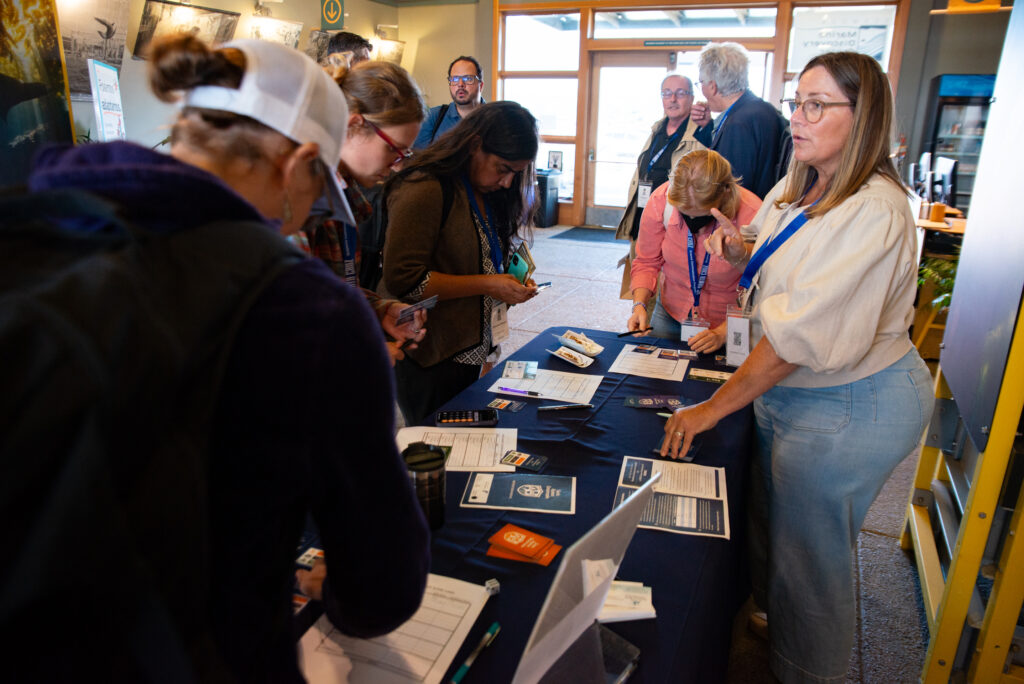
Tiffany Wise-West, City of Santa Cruz Sustainability and Resiliency Officer and UC Santa Cruz alumna, shared a series of creative strategies and games, including “Coastal Resilience Lotería” and “Cards against Catastrophe,” a climate-focused spin on the popular “Cards against Humanity.”
Her team works with Santa Cruz-based non-profit Coastal Watershed Council to design and distribute disaster-preparedness comic books with local youth in mind, and has made them available in both English and Spanish.
Javier Gonzalez-Rocha, assistant professor in the Department of Applied Mathematics and Jack Baskin School of Engineering, shared his path from aerospace engineering to climate science. “I wanted to engage communities that don’t typically have access to information in creative ways,” he said. “How do we take our data and turn it into decisions that make sense to them?”
Gonzalez-Rocha noticed that the areas in and around Santa Cruz with the highest air pollution following the CZU Lightning Complex fires had almost no air quality monitors. So, he worked with the community to build devices that inform the public of pollution levels in real time. The sensors are equipped with LED lights that change color depending on the air quality.
“If the air is good, they will be green, and on to yellow, red, purple, and so on,” said Gonzalez-Rocha. “Families in the area are telling me how this has been so useful for them to decide when they allow their children to go outside to play.”

With access to this data, residents of Watsonville and surrounding areas can run the network themselves and make disaster preparedness decisions.
Lastly, Will Gislason and Ian Costello from the Center for Coastal Climate Resilience’s visualization team shared how they use game engines and cinematic tools to model environmental data. They create interactive, 3D visualizations for comparing the results of flooding models. For example, what would the island of Saint Martin look like in a 50-year storm with and without healthy coral reefs?
“These types of comparative scenarios are at the heart of this research,” said Costello. “We can tell these stories in a compelling way that can maintain attention spans in this tight attention economy.”
Symposium attendees got a chance to use the technology to explore the Santa Cruz coast in great detail, toggling between climate scenarios and prevention techniques. “We are looking forward to applying these tools to new challenges, working with researchers from UC Santa Cruz and beyond,” said Costello.
The flash talks and demo hour helped solidify many theoretical scenarios brought up during the symposium. “I think the flash-talks provided some diverse, concrete examples of ways to communicate climate science, which complemented the panel discussions well,” said Daniella Garcia Almeida, a student in the Science Communications program.
These immersive communication tools help people understand the effects of a phenomenon that once seemed far away in time, space, and species. Human-caused climate change disasters are happening now, and UC Santa Cruz researchers hope these creative methods will help inform and motivate the public about opportunities for positive climate action.